

Netanyahu names Eyal Zamir as next IDF deputy chief of staff
Candidate is thought to be PM’s personal choice for top job; Netanyahu meets with IDF top brass for first time since also becoming defense minister
 Add ToI as a Preferred Source on Google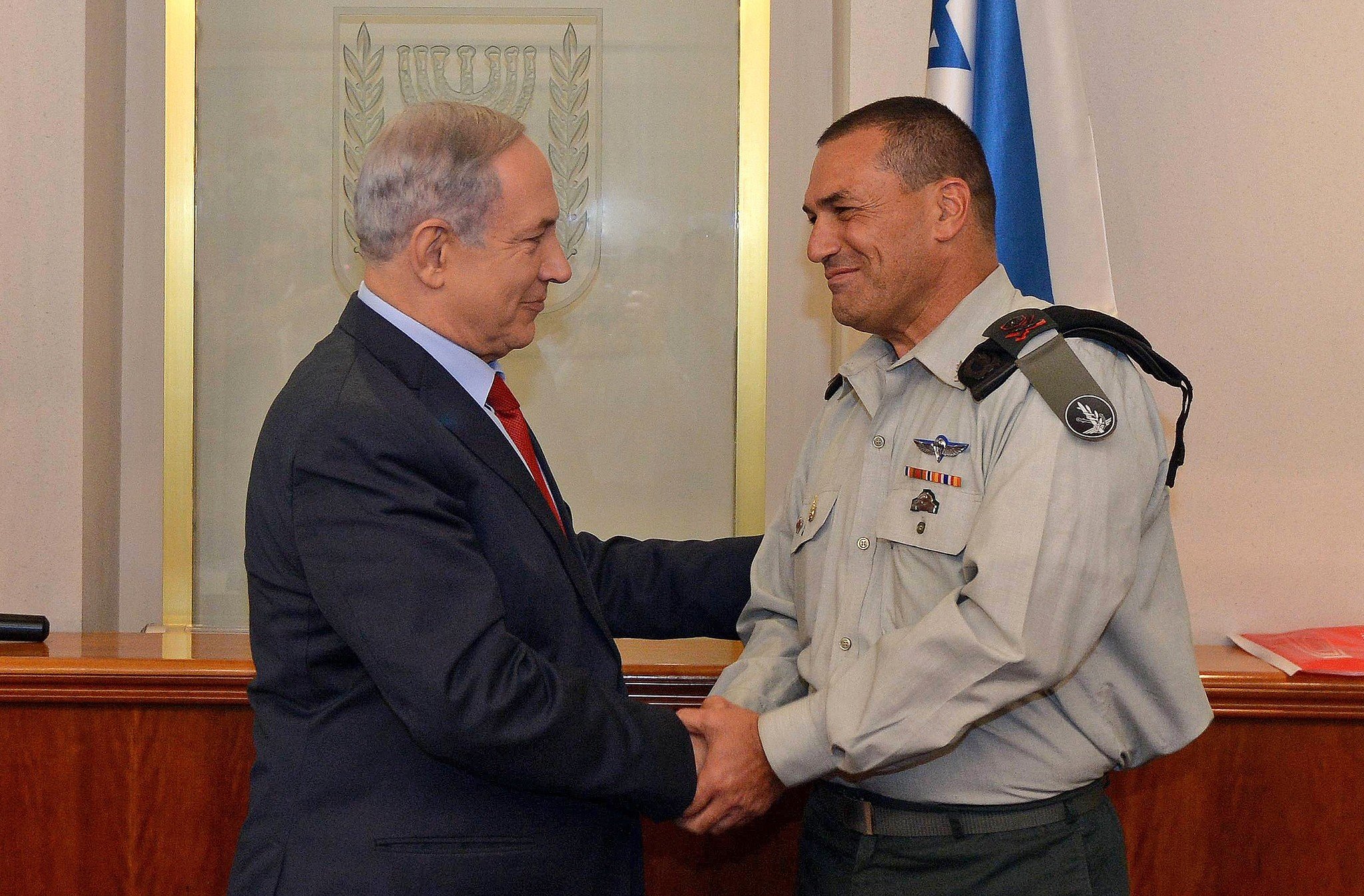
Prime Minister Benjamin Netanyahu on Thursday named Maj. Gen. Eyal Zamir as the next deputy chief of staff of the Israel Defense Forces in one of his first acts since he also took on the mantle of defense minister.
“Prime Minister and Defense Minister Benjamin Netanyahu today approved the recommendation of the incoming Chief of Staff Gen. Aviv Kochavi and appointed Gen. Eyal Zamir as the deputy chief of staff of the IDF,” the army said in a statement.
The appointment comes just weeks after Kochavi was chosen for the top military job by former defense minister Avigdor Liberman, who resigned last week in opposition to a ceasefire with the Hamas terror group in Gaza.
Zamir had also been a candidate for the top position and was thought to be Netanyahu’s preferred candidate. Zamir served until recently as head of the Southern Command, overseeing the construction of a massive underground barrier around the Gaza Strip to thwart terror groups’ border-crossing attack tunnels. Before that, he served as military secretary to Netanyahu.
On Tuesday, a vetting committee approved Kochavi’s candidacy for the position of IDF chief of staff, paving the way for him to step into the role at the beginning of next year. A final vote to approve Kochavi to take over as the 22nd commander of the Israel Defense Forces is scheduled to be brought before the cabinet on Sunday, November 25, according to Netanyahu’s office.
Earlier Thursday, Netanyahu held his first meeting with the IDF’s General Staff since taking over the defense portfolio.
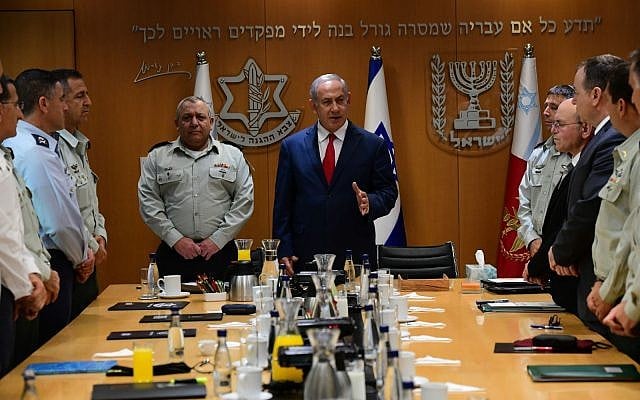
“We have a shared mission to safeguard the security of Israel on all fronts,” Netanyahu told the top brass.
“On the first front, Gaza, we are ready to act and do whatever it takes to protect the residents of the Gaza border communities and the south,” Netanyahu said.
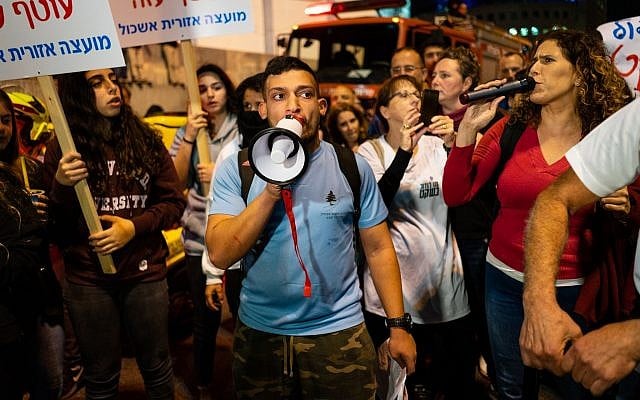
Netanyahu faced widespread criticism, particularly from residents of the south, over the recent Egyptian-brokered ceasefire, which they say has left Hamas poised to renew attacks at will.
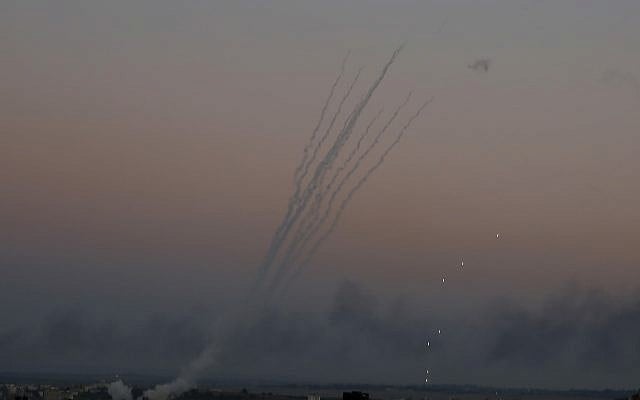
According to the military, over 460 rockets and mortar shells were fired at southern Israel in the span of 48 hours last week — more than twice the rate at which they were launched during the 2014 war and the largest-ever number of projectiles fired in one day. The Iron Dome missile defense system intercepted over 100 of them. Most of the rest landed in open fields, but dozens landed inside southern Israeli cities and towns, killing a Palestinian man in Ashkelon, injuring dozens, and causing significant property damage.
In response to the rocket and mortar attacks, the Israeli military said it targeted approximately 160 sites in the Gaza Strip connected to the Hamas and Palestinian Islamic Jihad terror groups, including four facilities that the army designated as “key strategic assets.”
The flareup ended when Israel and Hamas acquiesced to the Egypt-brokered truce.
Netanyahu also referred to the second front in West Bank, where he said that the IDF and Shin Bet had foiled more than 500 terror attacks.
With regard to the “third front, the north, Syria and Lebanon,” Netanyahu said Israel “continued to work to prevent the military entrenchment of Iran in Syria and the precision missile project of Hezbollah in Lebanon.”





The Times of Israel Community.