

Netanyahu rivals boost coordination, looking to optimize bloc ahead of next election
Eisenkot sits down separately with Lapid and Bennett; opposition figures agree to call meeting with Liberman and Golan to forge alternative to current Likud-led coalition
 Add ToI as a Preferred Source on Google
Sam Sokol is a former political correspondent at The Times of Israel. He was previously a reporter for the Jerusalem Post, Jewish Telegraphic Agency and Haaretz. He is the author of "Putin’s Hybrid War and the Jews"
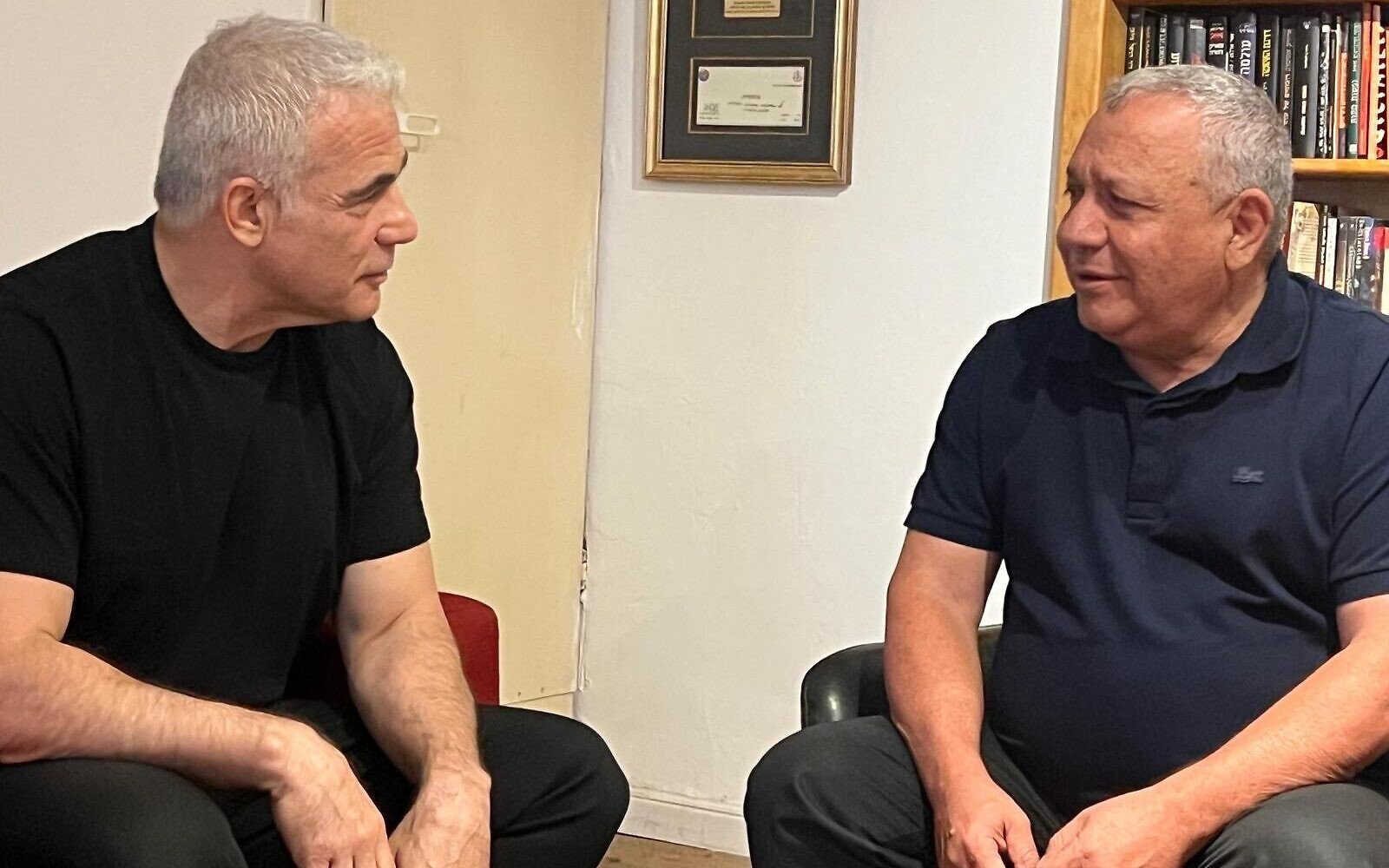
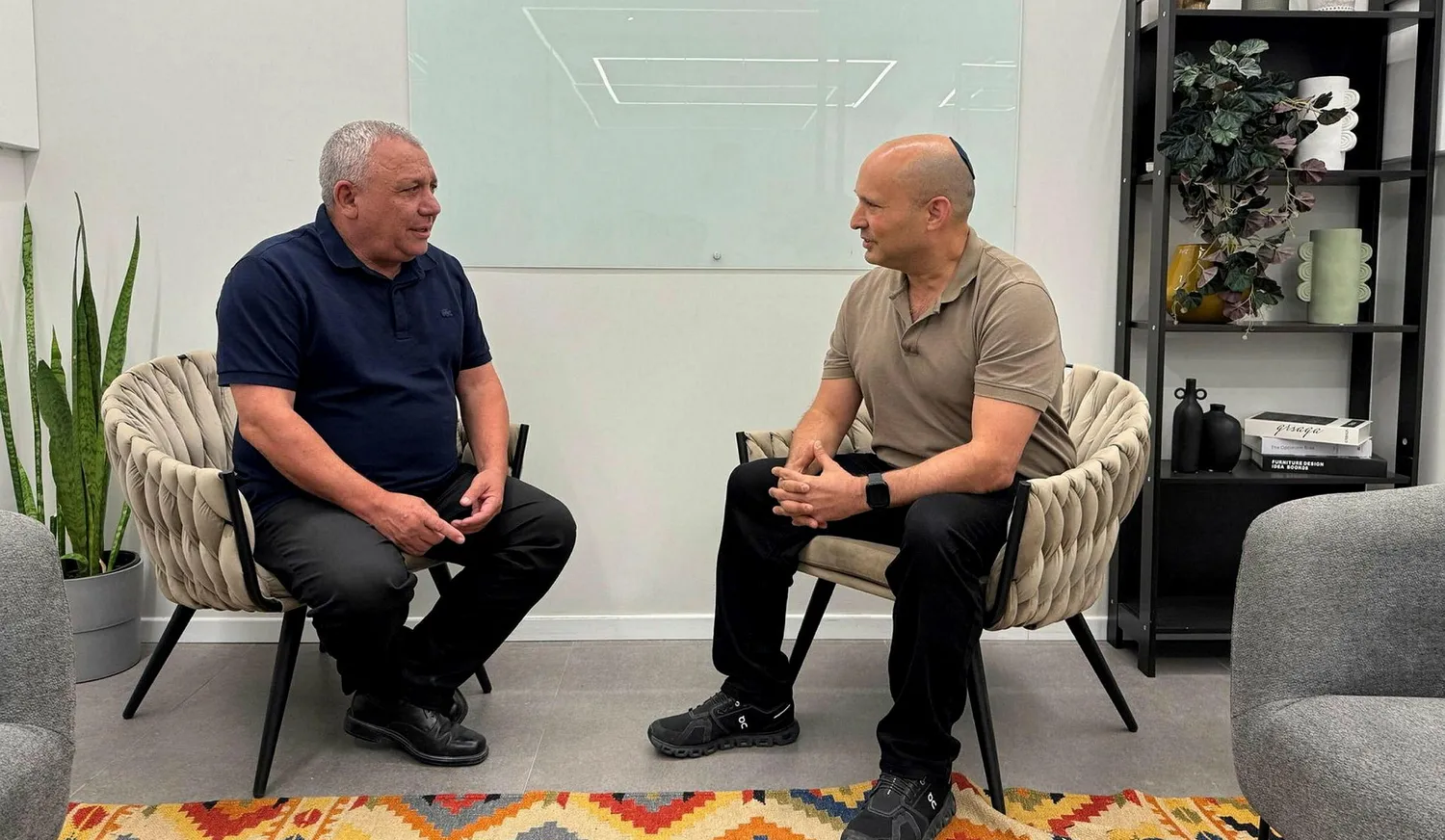
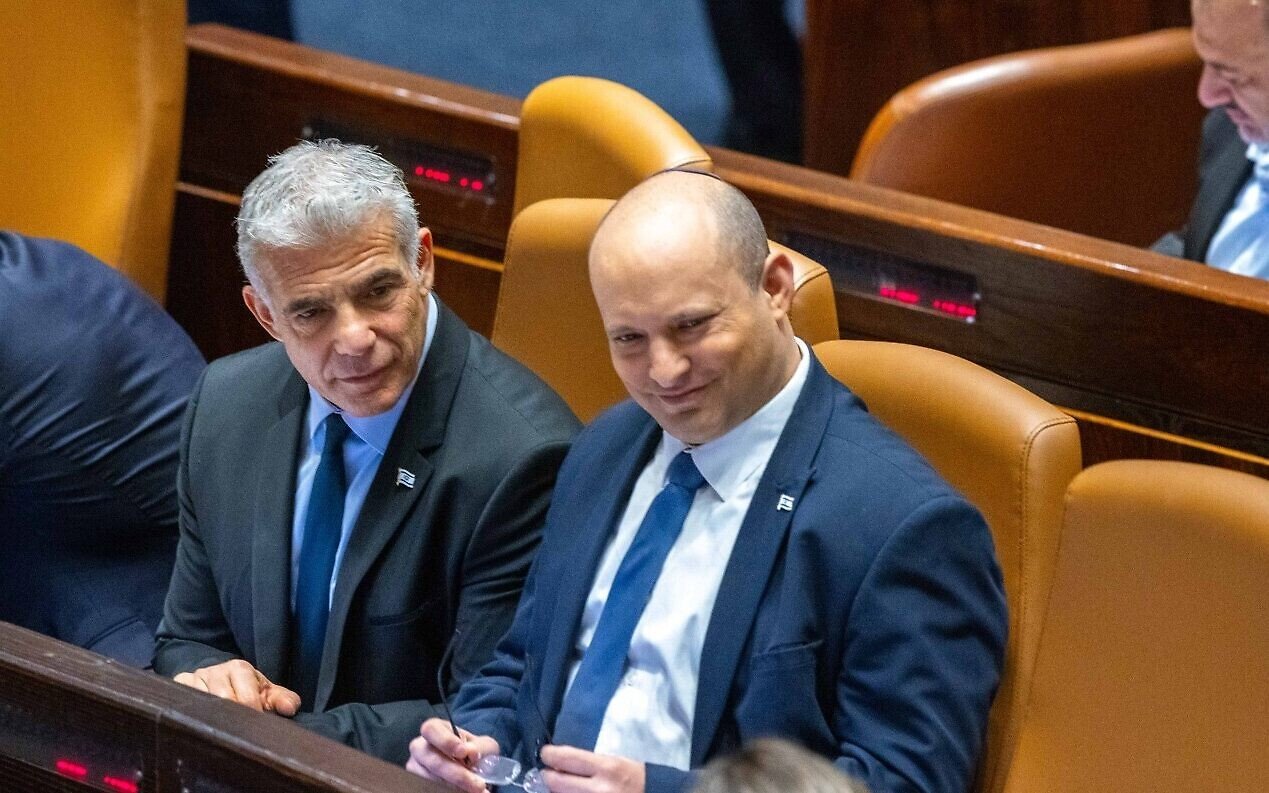
Former Blue and White-National Unity party No. 2 Gadi Eisenkot met separately Sunday with Opposition Leader Yair Lapid and Bennett 2026 party chairman Naftali Bennett, as a future meeting was set to include the main leaders of the bloc of parties opposed to Prime Minister Benjamin Netanyahu.
A spokesman for Lapid said Monday that the pair had agreed to convene the future meeting to “deepen coordination and begin formulating the basic guidelines for the next government, following the talks and meetings that have taken place in recent days.”
According to Lapid’s spokesman, the meeting was set to be attended by Lapid, Eisenkot, Yisrael Beytenu party leader Avigdor Liberman, former prime minister Bennett, Blue and White-National Unity chief Benny Gantz and The Democrats party head Yair Golan.
Speaking with The Times of Israel, an opposition source said that while “nothing specific” has yet been achieved, the anti-Netanyahu so-called “change bloc” is “far more coordinated than people realize, especially the central players. What you’ve seen over the past week or so is some of that now being made public.”
There have not yet been any serious efforts at merging any of the opposition parties — which consist of right-wing, centrist and left-wing slates — ahead of the next election, “but everyone is focused on making sure the bloc is built right this time,” the source added.
In the closely fought 2022 Knesset elections, the previously merged Labor and Meretz parties ran separately, causing the latter to fail to pass the electoral threshold and boosting the hard-right pro-Netanyahu bloc. Additionally, the Arab Balad party failed to enter the Knesset after splitting from the Hadash and Ta’al parties, after the three lists had previously been merged into the Joint List. There are efforts underway to re-merge all the Arab-majority parties ahead of the next election, which is scheduled for October 2026 but might be held before that.
Eisenkot, who had been No. 2 in Blue and White, quit both the faction and Knesset over the summer, stating that while he and Gantz had worked together for many years and respect each other, their differences eventually drove them apart politically.
Eisenkot later called on Gantz to step down because his party was hovering around the electoral threshold in opinion polls, risking failing to return to the Knesset in the next election.
The departure of Eisenkot, who said that it was necessary “to build a leadership alternative that would bring about victory in the next elections,” from Blue and White was quickly followed by those of other members of Gantz’s party, including MK Matan Kahana, who told The Times of Israel at the time that he would try to broker a political alliance with former prime minister Naftali Bennett.
Meetings with Bennett
In addition to meeting with Lapid, Eisenkot also sat with Bennett on Sunday to discuss an alternative to the current national leadership, according to a statement by Bennett’s team.
“The two discussed the war in Gaza and the urgency of returning the hostages, the deterioration of Israel’s international standing, and actions to establish a new and good leadership for Israel that would unite the people, strengthen security and rehabilitate the country,” the statement said.
According to the statement, the meeting followed several others the two held in recent weeks and is “part of a coordinated plan to prepare for a change of government.”
Bennett is not currently serving in the Knesset, but his eponymous new party, dubbed Bennett 2026, consistently finishes at or near the top of opinion polls, alongside Netanyahu’s Likud party.
He has been out of office since the 2022 collapse of his and Lapid’s diverse coalition government, which in 2021 ousted Netanyahu from the premiership after 12 consecutive years, and following a period of political turmoil that saw four national elections held in three years.
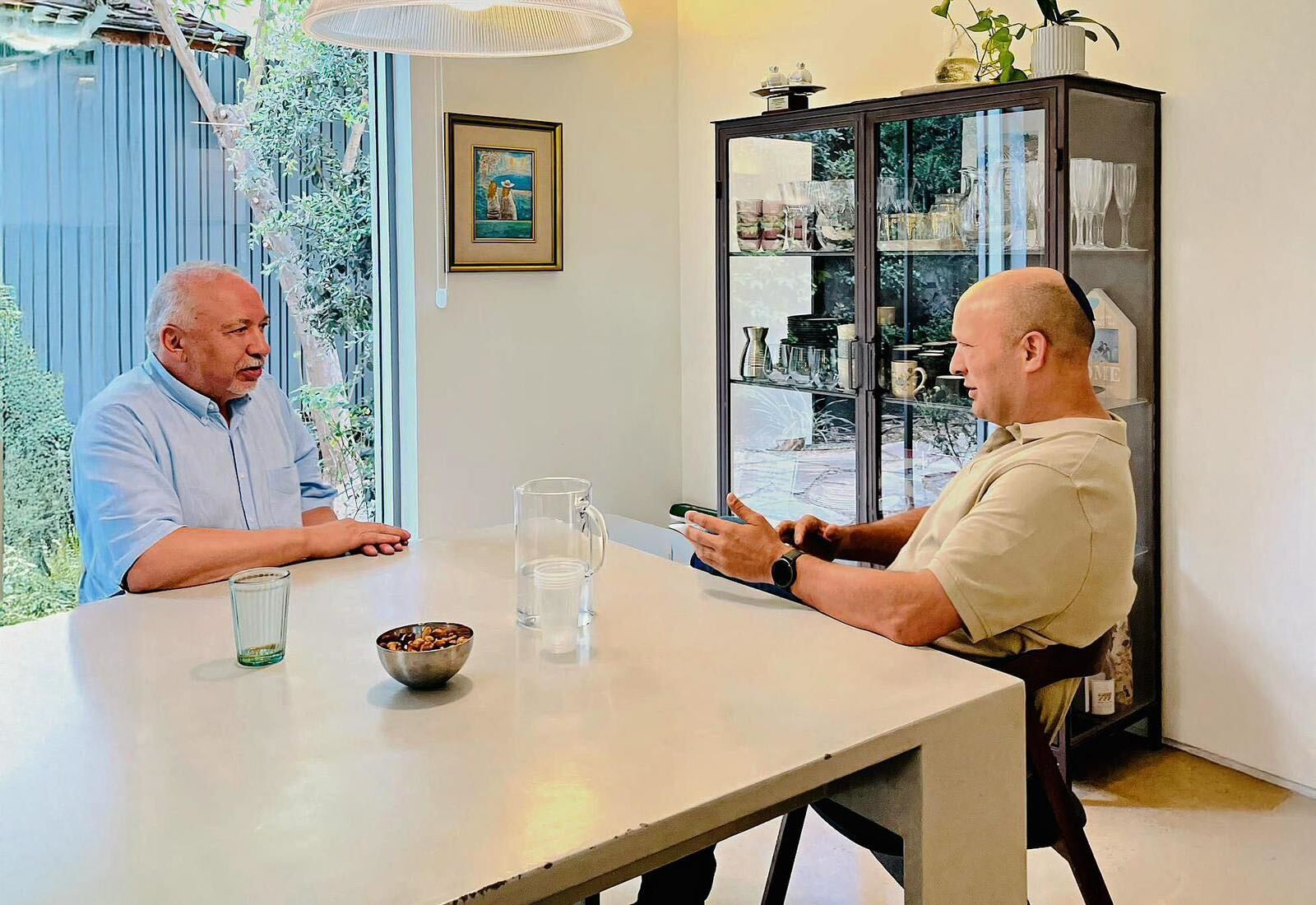
According to the Maariv daily, the meetings were part of Liberman’s larger effort to create a broad bloc to serve as an alternative to the current Likud-led coalition.
Liberman also met with Bennett last month as he sought to galvanize the “Zionist opposition party heads” to come up with a “basic outline” for the next government.
In a statement at the time about his meeting with Liberman reported by Hebrew media, Bennett said the two had discussed various issues, including “different ways to replace the government as soon as possible in order to fix Israel.”
The August meeting came shortly after Liberman sent a letter to Lapid asking him to call a meeting of the “Zionist opposition party heads” — along with Bennett and Eisenkot — for a discussion on “formulating the basic outlines of the next government.” Liberman told the opposition politicians that they would need to form a united alternative to the current government ahead of the next general elections.
Explaining some of his thoughts about the next government in a tweet on Sunday, Liberman wrote that if the current opposition takes power, it would “establish a constitution” limiting the size of the cabinet and establishing prime ministerial term limits, as well as “strengthening the judicial system” and making sure that everybody serves in the military.
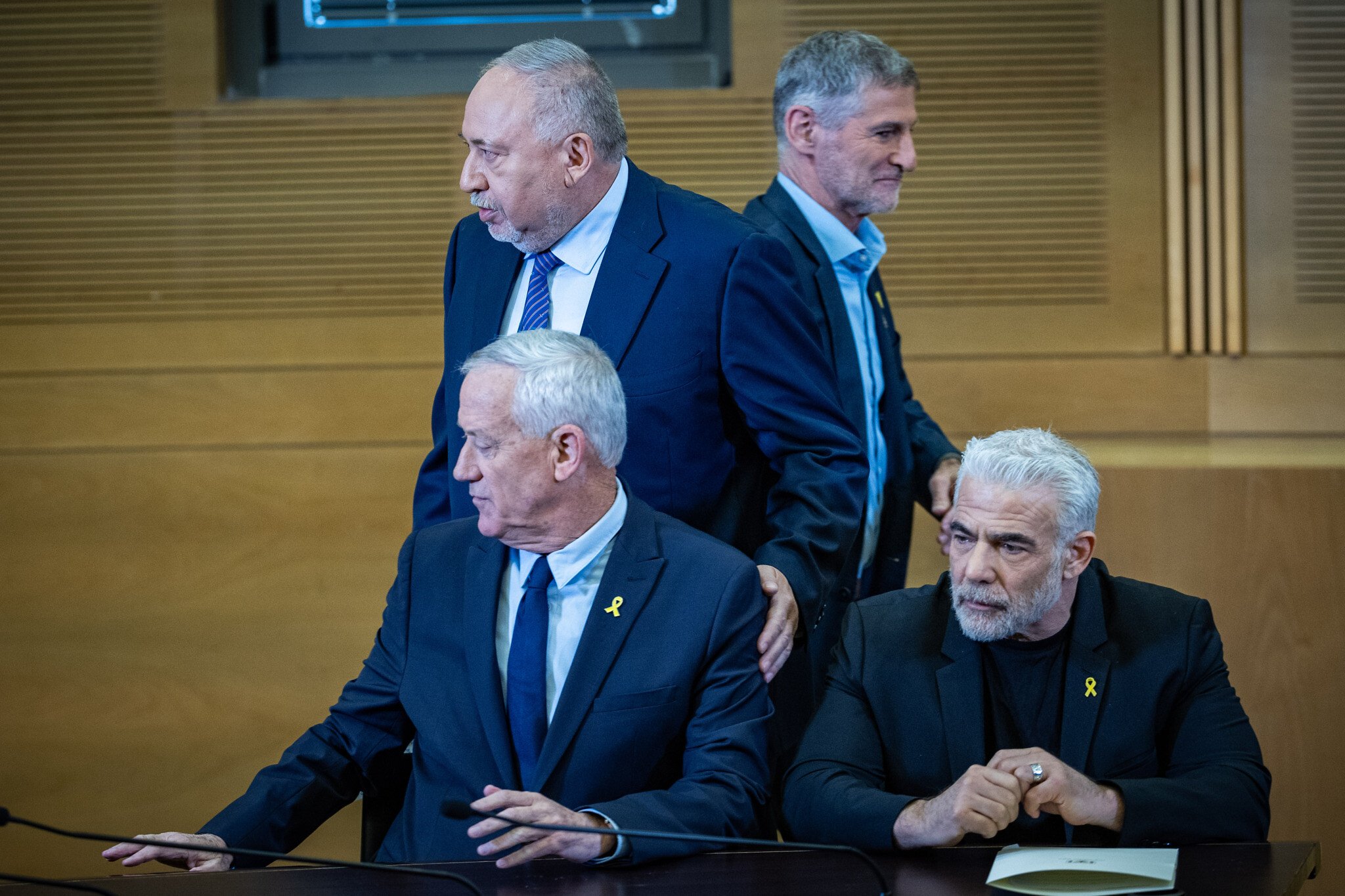
Last week, Gantz called on Lapid and Liberman to form a “government of hostage redemption” and join Netanyahu’s coalition to secure a hostage deal and set an election date. The two other opposition figures derided the idea as “pitiful,” saying there was “no reason” to join the government.
Gantz repeated his appeal on Monday.
‘One big party’
In leaked comments from a speech at a conference in Kfar Saba last week, published by the Walla news site on Sunday, Bennett declared that “we need to form a national Zionist unity government based on the ‘alliance of service’: those who serve and who accept the government’s guiding principles.”
“I have a role, and that is to unite the various centrist parties. We’ll talk to Liberman, to Eisenkot, and get everyone into one big party,” he said, telling the conference audience that their role was to “convince everyone to vote for this party and win a clear and decisive majority.”
Like Liberman, Bennett also said that, if this party were to take power, his plan would be to “lay down a constitutional foundation” and “pass a constitution for Israel,” something that he said he had thought was “unnecessary” in the past.
Bennett also raised the idea of a “united party with Yisrael Beytenu and Eisenkot” at a house meeting with representatives of Israel’s Russian-speaking community in Herzliya last week, according to an attendee who spoke with The Times of Israel on Monday evening.
“He requested that we vote for him and to persuade our peers and our neighbors and our friends to vote for him. He was careful enough not to say anything bad about Liberman,” said the attendee, who asked to remain anonymous and noted that Bennett “didn’t say that he will never be a part of a government with Likud.”
‘Maximize the bloc’
Asked about what could come of Bennett’s ongoing talks with other anti-Netanyahu politicians, a source close to the former prime minister’s thinking said that he is still flexible in terms of approach and that a final decision on any new combined list is likely some time off.
“I don’t think he’s married to one idea or another. He just wants it to work out. He’s willing to listen to everybody and hear everyone out and see what can be done to be able to maximize the bloc which he’s leading in the effort to defeat Netanyahu,” the source said.
Shared principles, not personalities
Asked about the possibility of a merger with Bennett, Yisrael Beytenu MK Evgeny Sova replied that Liberman’s main goal at the moment “is really to draft the basic principles of a Zionist government.”
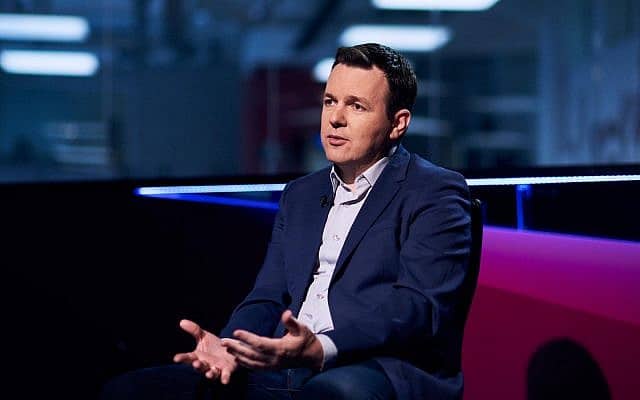
“As for who will head the bloc, that’s irrelevant right now. Maybe there will be [leadership] rotation,” he continued, arguing that while “polls may show separate lists get more seats, that doesn’t mean the parties shouldn’t coordinate closely.”



The Times of Israel Community.