

Arab parties meeting to discuss reuniting into Joint List bloc
Leadership dispute looms as Hadash party pushes Yousef Jabarin as head of revived merged slate, with Ra’am and Ta’al signaling willingness to compromise to keep alliance intact
 Add ToI as a Preferred Source on Google
Ariela Karmel is a political correspondent at The Times of Israel. She previously reported for Calcalist and Haaretz. She holds an MA in Middle Eastern and African History from Tel Aviv University and a BA in Political Science from the University of British Columbia.
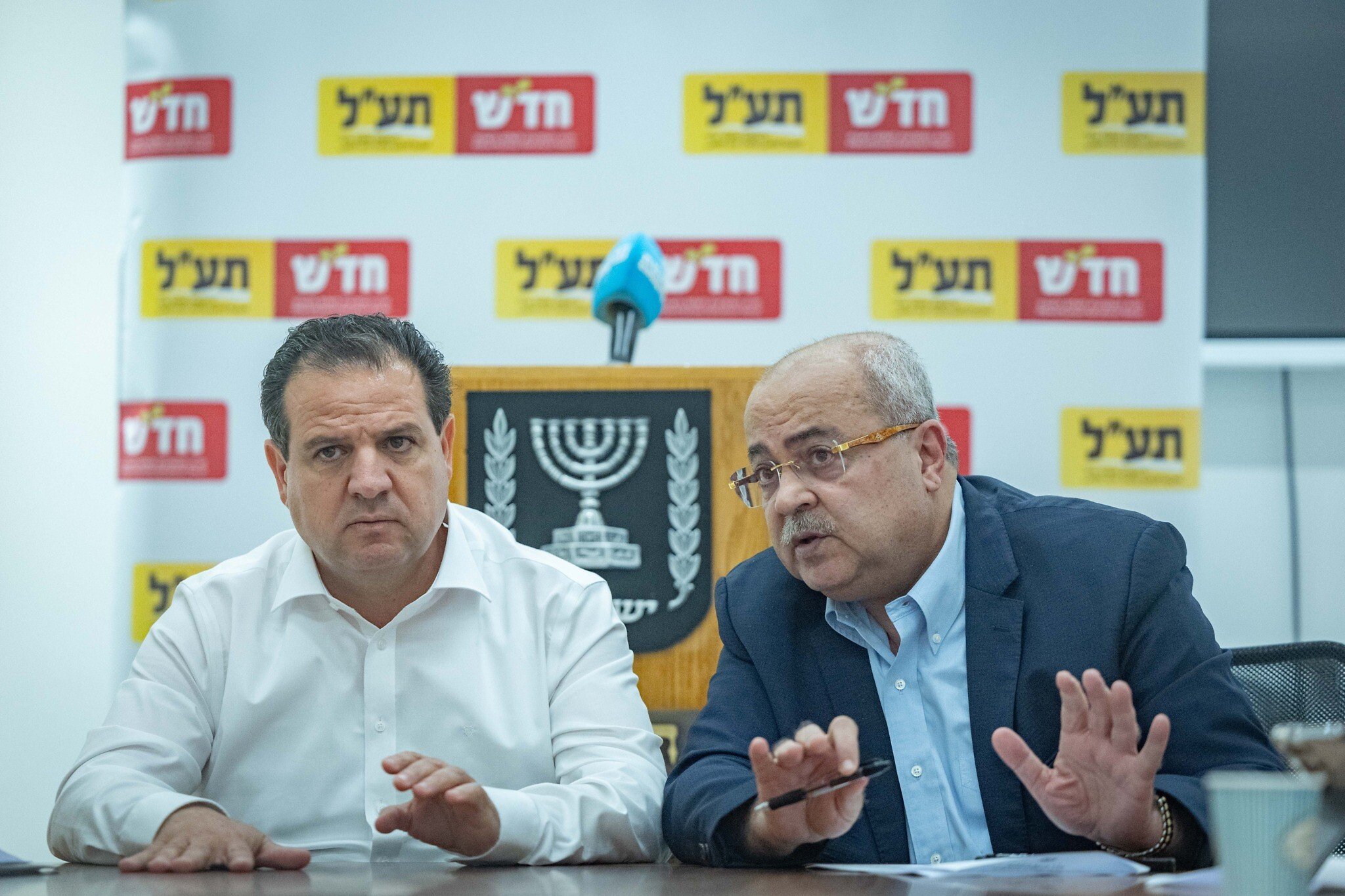
The four Arab parties — Hadash, Ra’am, Ta’al and Balad — are set to meet on Monday to discuss reviving the Joint List bloc ahead of the next elections, with the question of who will lead the potential slate shaping the talks, according to a source close to the joint Jewish-Arab party Hadash.
Hadash has insisted that former MK Yousef Jabarin, who is expected to win the party’s October primary, head the ticket. Jabarin served in the Knesset from 2015 to 2021.
He left parliament ahead of the 2021 election after being placed too low on the Hadash list under the party’s internal rotation system.
He is known within the Arab community as an active political figure and is seen as a fresh, “statesmanlike” alternative to outgoing Hadash leader Ayman Odeh, who was recently almost expelled from the Knesset, although he is less well-known than Odeh among Jewish voters.
Hadash is focused, the source said, on consolidating Arab votes for next election, “and then looking at votes in the Jewish community.”
This is not the first meeting between the party heads to discuss reviving the Joint List — a unified slate of Arab parties which, despite their sharply differing ideological views, had a track record of energizing Arab voters and bringing the community unprecedented political influence.
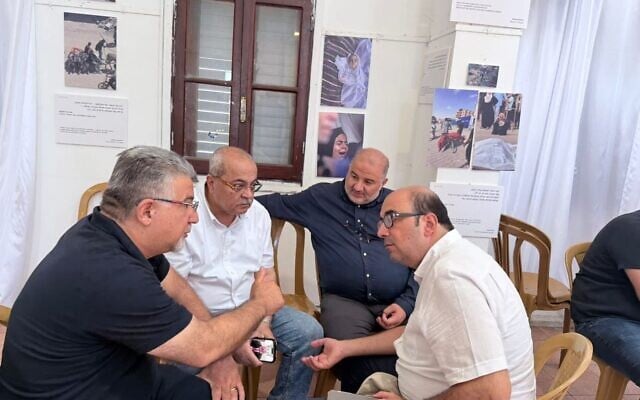
Last month, the Hadash party announced that it would promote direct dialogue with other Arab parties to explore the revival of the Joint List, which at its peak in 2015 and 2020 became the third-largest bloc in the Knesset and briefly held kingmaker influence.
The Hadash source said that several discussions have since taken place but that Monday’s was the first to be publicized, signaling “momentum.”
The bloc split due to internal fighting in 2021 when Mansour Abbas’s Islamist United Arab List (Ra’am) broke away and it collapsed the following year ahead of the 2022 election.
This time around, Abbas and Ta’al’s Ahmad Tibi, who both sought to lead the merged party, are willing to compromise in order to keep the alliance intact, the source said. Both Tibi and Abbas want the Joint List to remain merely a technical alliance to allow them the option to split after the elections and join a governing coalition separately.
As a result, Abbas, who may also step down from the leadership of his party, has reportedly insisted on at least five seats on the combined ticket in order to preserve Ra’am’s political influence and coalition potential.
This reflects growing support among Arab Israelis for an Arab party to be part of the governing coalition, as was the case with Ra’am, which joined a big-tent coalition following the 2021 elections. Data from a survey published in June by the Moshe Dayan Center at Tel Aviv University found that 73.3% of Arab respondents support the inclusion of an Arab party in the next governing coalition, and 41.8% said they would support joining any government, not only a center-left one.
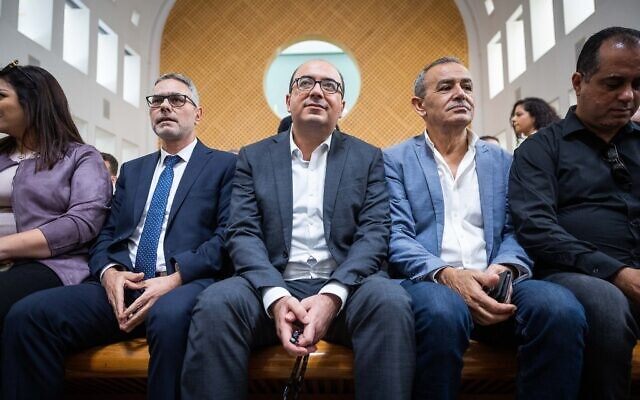
The source said that the Monday meeting follows Balad’s recent agreement to rejoin the Joint List, albeit with “ideological” conditions. The secular-nationalist party rejects participation in any Israeli government, even to block a right-wing coalition, and has reportedly demanded that the bloc’s platform define clear red lines regarding the ongoing war in Gaza, the current government and any future coalition.
However, Balad’s position is largely symbolic, the source said, since, having failed to win enough votes to enter the Knesset in the last election, the party lacks leverage and knows it cannot run independently.
Additionally, the source said that Balad fears that legal attempts to disqualify it from running would prove successful this time and it would not be able to rely on the High Court to overturn a disqualification, as it did in 2022.
Realistically, Balad is seeking two seats within the slate.
A Balad spokesperson told The Times of Israel that they “feel positive and are trying to reach agreement,” but emphasized that this is “an early meeting.”
A spokesperson for Hadash also could not say whether a decision would be made at the Monday meeting but said that “Hadash supports the reinstatement of the Joint List with all four of its constituent parties.”





The Times of Israel Community.