

Israel braces for Iranian missile fire after strike on Hezbollah target in Beirut
Tehran warns attack ‘will not go unanswered’; IDF says it hit command center in Lebanese capital’s southern suburbs, reportedly killing three
 Add ToI as a Preferred Source on Google
Emanuel (Mannie) Fabian is The Times of Israel's military correspondent
Israel was bracing for Iranian missile fire on Sunday after Tehran vowed that an Israeli Air Force strike on a Hezbollah target in Beirut’s southern suburbs earlier in the day would “not go unanswered.”
The strike in the Lebanese capital’s Dahiyeh district came shortly after Hezbollah fired drones into Israeli territory.
It was Israel’s first strike in a week in the Hezbollah stronghold, with the previous strike also a response to rocket fire on northern Israel. That attack led Hezbollah sponsor Iran to fire missiles at Israel, incurring Israeli airstrikes on the Islamic Republic. The two sides then halted their one-day clash under pressure from the US.
This time, too, the IDF said on Sunday afternoon that it was preparing for the likelihood of Iranian missile fire on Israel in the coming hours, with the Home Front Command adjusting guidelines for civilians to reflect this.
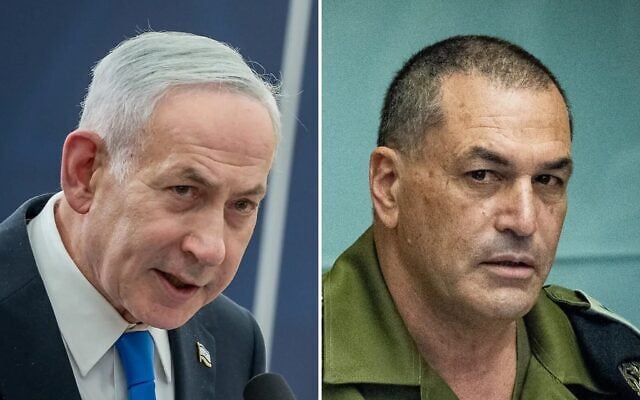
“The IDF has just struck Hezbollah terror targets in the Dahiyeh district of Beirut, in response to Hezbollah’s firing at Israeli territory,” Prime Minister Benjamin Netanyahu and Defense Minister Israel Katz said in a joint statement after the strike on the Hezbollah stronghold.
“Israel will not tolerate fire directed at its territory,” they added.
At least three people were killed, and 14 were injured in the strike, Lebanon’s National News Agency reported.
Footage from Beirut showed that the strike hit an apartment building.
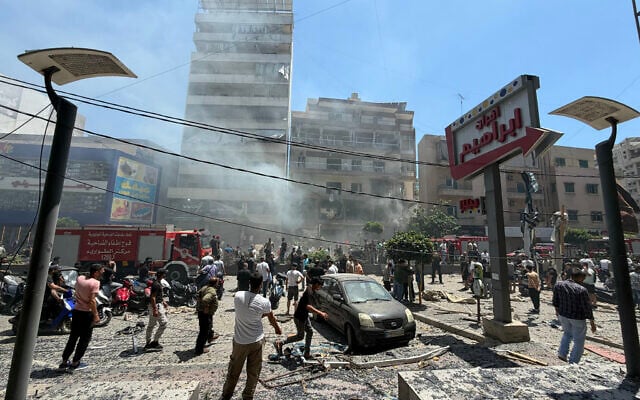
The IDF said it had carried out a “precise” strike on Hezbollah infrastructure. The military published footage of the attack, saying it hit a Hezbollah command center.
One apartment was seen heavily damaged in the strike.
????????المبنى المستهدف بالغارة الإسرائيلية على الغبيري pic.twitter.com/n8SXAig0Gn
— bintjbeil.org (@bintjbeilnews) June 14, 2026
Iranian officials sought to paint the attack as a threat to the emerging deal between Tehran and Washington to end the war launched by the US and Israel on February 28, and threatened to retaliate against Israel on behalf of Hezbollah.
“The Zionists’ incursion into Dahiyeh has once again shown that America either lacks the will to fulfill its commitments or the ability to do so,” wrote Iran’s top negotiator and parliament speaker, Mohammad Ghalibaf, on X. “By giving the green light to the regime, you cannot gain concessions. The game of bad cop and good cop is outdated.”
“If you lack the will and ability to fulfill your commitments, speaking of continuing the path is not possible,” he threatened.
A senior Iranian parliament member sent an apparent message to the United States in which he echoed similar sentiments.
“If you seek an agreement or understanding, you must discipline the Zionist regime. If this rabid dog is not controlled, it will bite your leg before the ink is dry on the agreement,” Ebrahim Rezaei, spokesperson for parliament’s foreign policy and national security committee, wrote on X.
Gen. Mohammad-Jafar Asadi, deputy chief of the Khatam al-Anbiya operational headquarters of Iran’s Armed Forces, told local media that the Dahiyeh strike “will not go unanswered.”
In the wake of those remarks, the IDF said it was prepared for Iranian missile fire on Israel in the coming hours.
It said that IDF Chief of Staff Lt. Gen. Eyal Zamir was conducting an assessment “with all relevant commanders,” and the current assumption was that Iran will fire missiles at Israel.
“The IDF continues to maintain readiness and alertness for a variety of defensive and offensive scenarios,” it said, adding that “the IDF will not tolerate fire toward the territory of the State of Israel.”
Following the assessment, the IDF Home Front Command said it was restricting gatherings nationwide to 5,000 people.
In communities on the northern border, there were no changes to the current guidelines, which restrict gatherings to 100 people outdoors and 400 indoors.
Schools were still permitted to operate across the country.
The military said the site it targeted in Beirut was used by Hezbollah to advance attacks on Israeli civilians and IDF troops operating in southern Lebanon.
“The strike was carried out after the Hezbollah terror organization launched aerial targets at the territory of the State of Israel earlier today,” the IDF said, referring to three drones that exploded in military zones in northern Israel.
בתקיפה מדויקת בדאחייה שבביירות: צה"ל תקף מפקדה של ארגון הטרור חיזבאללה
צה"ל תקף לפני זמן קצר מפקדה של ארגון הטרור חיזבאללה בביירות.
המפקדה שהותקפה שימשה את מחבלי ארגון הטרור חיזבאללה לקידום מתווי טרור נגד אזרחי מדינת ישראל וכוחות צה"ל הפועלים בדרום לבנון.
התקיפה בוצעה לאחר… pic.twitter.com/aErd5THKL9
— צבא ההגנה לישראל (@idfonline) June 14, 2026
The IDF said no injuries were caused by the drone attacks, which were under further investigation.
Some areas adjacent to the border with Lebanon are off-limits to civilians and are sometimes used by the army as staging grounds.
An initial pair of drones triggered sirens in several communities in the Western Galilee, before impacting near the border community of Shlomi.
Later in the morning, another Hezbollah drone struck a military zone near the community of Shomera, close to the border with Lebanon, the IDF said. Sirens had sounded in several communities in the Upper Galilee.
❗️BLATANT CEASEFIRE VIOLATION: HEZBOLLAH LAUNCHED 3 PROJECTILES TOWARDS NORTHERN ISRAELI COMMUNITIES
The projectiles fell near the communities of Shomera and Shlomi. This is in addition to 2 projectiles that crossed into Israeli territory over the weekend as part of Hezbollah’s… pic.twitter.com/5IC9WE8duY
— Israel Defense Forces (@IDF) June 14, 2026
Since Friday, four Hezbollah drones have struck Israeli territory, and one drone was shot down over northern Israel, according to the IDF.
The IDF had not struck in Beirut following the previous incidents. Israeli leaders have vowed to hit Hezbollah in the Lebanese capital in response to attacks on Israeli communities, but have been more vague on attacks that do not target residential areas. There is mounting frustration among northern Israeli residents that the fighting has dragged on for months without providing them the security and quiet they need to return to their daily routines.
After the first two drones struck on Sunday, the IDF warned 29 villages and towns in southern Lebanon to evacuate ahead of strikes on Hezbollah. Residents of 16 locales were instructed to evacuate at least one kilometer away, and those of 13 other towns were ordered to head north of the Zahrani River.
Demanding a harsh response, Finance Minister Bezalel Smotrich said that “the attack on northern communities is a test” of Israeli leaders’ vow to strike Hezbollah strongholds in Beirut in retaliation to attacks on Israeli towns.
He called on Netanyahu “to fulfill it with determination and with strikes even today to bring down buildings in [Beirut]. These days are critical to shaping the arena for years to come.”
Fellow far-right minister Itamar Ben-Gvir also said he would clarify to Netanyahu during the weekly cabinet meeting later Sunday that “for every drone — a rocket [fired back]. For every [ceasefire] violation — attack.”
He said Beirut’s Dahiyeh neighborhood should “quake” and that “for every hair harmed on an IDF soldier’s head, a thousand Hezbollah terrorists [must pay].”
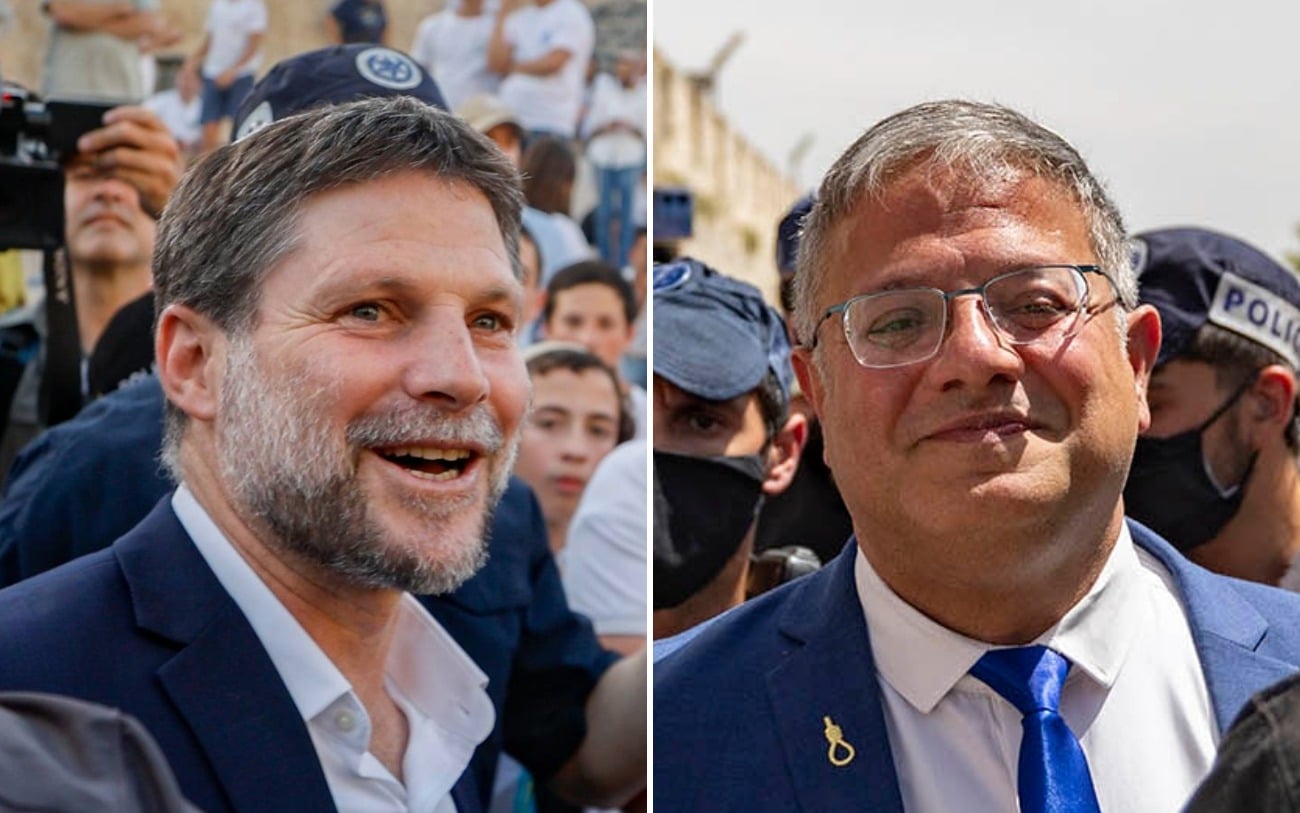
Last week, Katz threatened that any Hezbollah attack on northern Israeli communities would be met with strikes on the Dahiyeh district.
Earlier Sunday, the IDF said that suspected drone infiltration sirens that sounded in the Lebanon border towns of Metula and Ghajar were triggered by a Hezbollah drone that fell in an area of southern Lebanon where Israeli troops are operating. It said there were no injuries.
Sirens had also sounded in Metula on Saturday night when Hezbollah fired a rocket at troops in southern Lebanon. The rocket was intercepted, and there were no injuries in that attack either.
Meanwhile, Lebanese media reported Israeli artillery shelling in the southern towns of Majdal Zoun and al-Mansouri as troops advanced in the area.
On Saturday night, Lebanese media reported that the IDF had advanced toward Majdal Zoun, located to the north of Israel’s “forward defense line.”
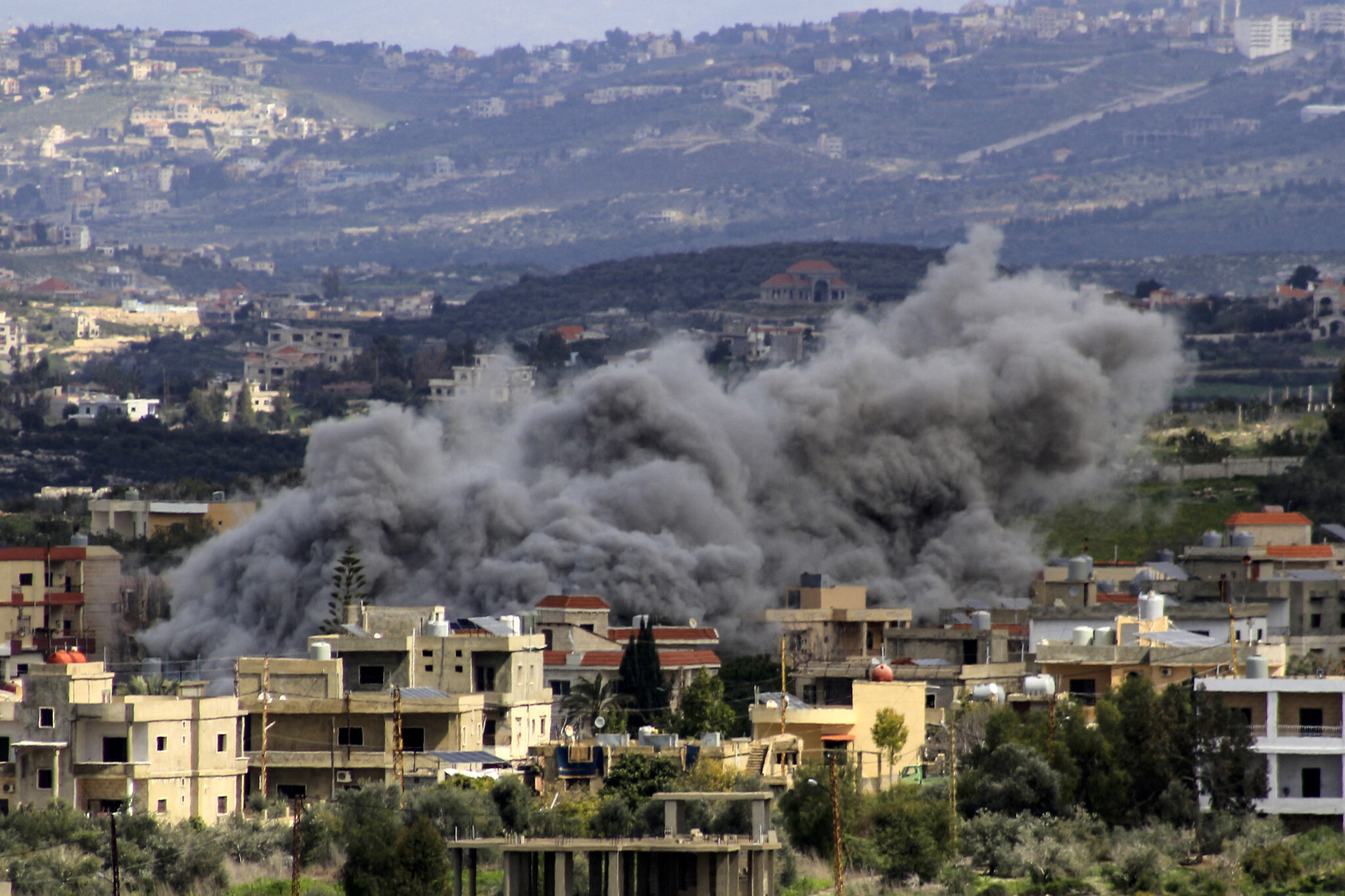
On Friday, Hezbollah published a statement claiming to have thwarted an Israeli advance on Majdal Zoun after ambushing troops.
Israel also has begun a major advance on the southern city of Nabatieh, also considered a Hezbollah stronghold.
The current bout of conflict began when Hezbollah started attacking northern Israel with rockets and drones in support of Iran, days after the US and Israel launched the war with the Islamic Republic in late February.
An April ceasefire in Lebanon collapsed, and the fighting has continued despite a new conditional truce deal announced earlier this month after Lebanese-Israeli talks in Washington.
Thirty IDF soldiers and one Defense Ministry civilian contractor have been killed in southern Lebanon amid fighting against Hezbollah since hostilities escalated amid the Iran war. Two civilians were also killed by Hezbollah rockets, and an Israeli civilian was mistakenly killed in the north by Israeli artillery shelling.
In Lebanon, the Israeli military has said that it has killed over 2,500 Hezbollah operatives, including hundreds of members of the terror group’s elite Radwan Force, since early March.


The Times of Israel Community.