

Contact? Groundbreaking Israeli method may soon detect life in outer space
Weizmann Institute of Science researchers say their statistical toolbox will be used aboard planned Israeli Aerospace Industries spacecraft, Eureka, set to reach Jupiter’s smallest moon in the 2030s
 Add ToI as a Preferred Source on Google
Reporter at The Times of Israel
A team of Israeli and American scientists says they have found a new way to search for life beyond Earth.
The team’s peer-reviewed study, which introduces a breakthrough method for detecting alien life by analyzing the diversity of molecular groups, was led by the Weizmann Institute of Science and appeared in Nature Astronomy.
“We’re talking about the building blocks of life,” lead researcher Dr. Gideon Yoffe, a postdoctoral fellow under the supervision of Prof. Yohai Kaspi and Prof. Itay Halevy of Weizmann’s Earth and Planetary Sciences, told The Times of Israel in a teleconference call. “This is what we’re looking for in the solar system and beyond.”
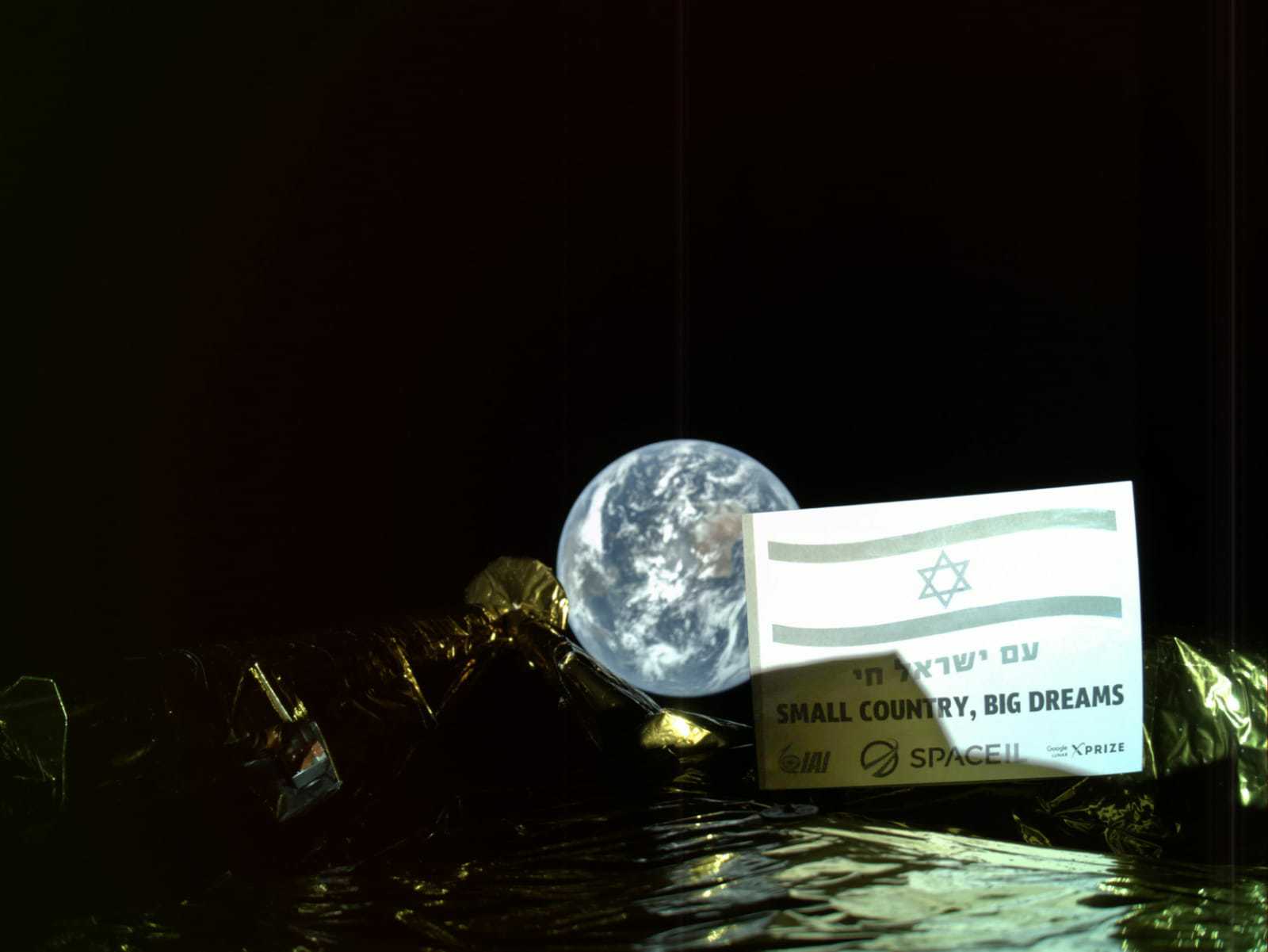
The team plans to use this method on Eureka, an Israeli spacecraft concept currently being planned by Weizmann researchers with the Israeli Aerospace Industry.
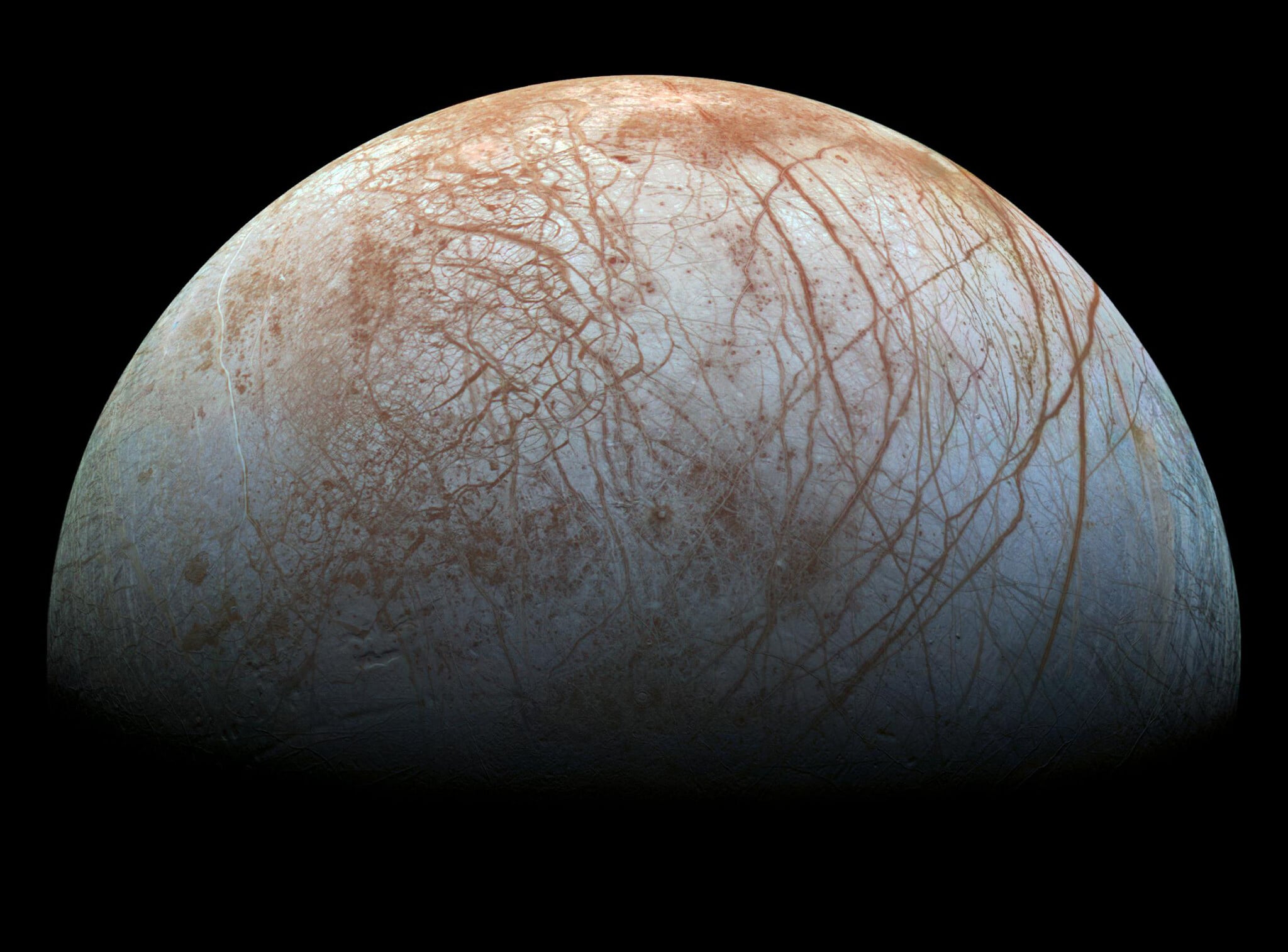
Eureka is scheduled to explore the smallest of Jupiter’s four large moons, Europa, in search of signs of life in the early 2030s.
“Our approach is among the very few ways to examine whether molecules, which form both through biological and nonbiological processes, were created by life,” Yoffe said.
The study also included Dr. Fabian Klenner of the University of California, Riverside, and Dr. Barak Sober of the Hebrew University of Jerusalem.

Searching for extraterrestrial life
In the past five decades, scientists have searched for biosignatures, chemical or physical traces known as the fingerprints of life. These traces help scientists distinguish living matter from nonliving chemistry.
“These carbon-based molecules make proteins, DNA, cellular membranes, on which all life on Earth is based,” Yoffe said.
There are various methods to determine whether a biological process generated these molecules, but currently, they aren’t feasible for measuring in space.
Spacecraft are unable to bring a lot of heavy scientific equipment into space, he said. In addition, extraterrestrial samples of organic material can degrade, become contaminated, or be very scarce.
“Many current methods of searching for extraterrestrial life are limited because they require either complicated processing of organic material or highly specific analytical methods,” Yoffe said. “This work cannot currently be performed in outer space at a reasonable cost.”
But Yoffe’s method relies on data and statistics.

The method quantifies the statistical patterns in groups of molecules, such as amino acids.
“Using only this information, only this statistical pattern, the method can distinguish between these groups of molecules that come from a biological or nonbiological origin,” Yoffe said.
Testing the method on rocks and dinosaur feathers
Life on Earth is created from a set of 20 amino acids.
However, life in outer space might be made of entirely different chemicals.
‘It’s difficult to look for the building blocks for life in the solar system’
“It’s difficult to look for the building blocks for life in the solar system,” Yoffe said.
“Space is a harsh environment,” he explained. “Any material that might be found has a limited lifetime because it will degrade, change chemically, and will not survive for long.”
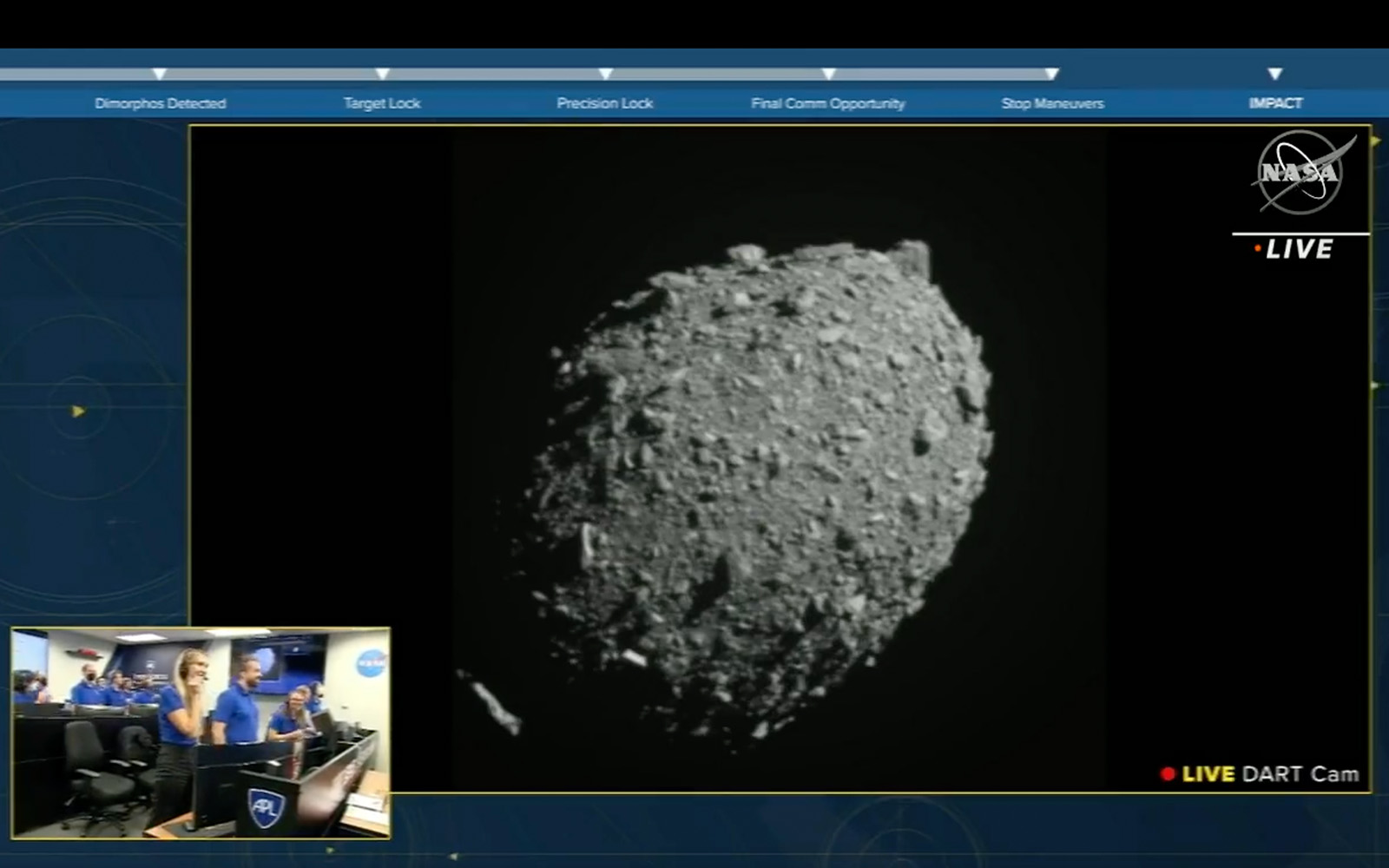
The scientific team’s method is a combination of astrobiology and data science. They tested it on more than 100 organic and nonorganic samples, including material from three-billion-year-old Earth rocks, dinosaur eggshells, and fossilized dinosaur feathers caught in amber. It also examined samples collected in space from two asteroids.
Each time, the scientists’ statistics successfully separated the organic from the nonorganic molecules.
“The objective is biological or astro-biological,” Yoffe said, “but the toolkit is statistics.”’
Has life existed elsewhere in the solar system?
“The only search for life on another planet ever conducted was on NASA’s Viking missions to Mars in 1976,” Chris McKay, a NASA senior scientist, told The Times of Israel by email.
McKay, who was not involved in the Weizmann research, explained that three biology instruments on each Viking lander on Mars attempted to detect life by growing it in a chamber.
Scientists are still arguing about the results of these biological instruments 50 years later, McKay said.
“The paper by Yoffe and colleagues is the culmination of a new approach,” McKay said. “It is trying to detect life based not on growth, but on looking at the distribution of molecules that make up the life form.”
He said this approach is “powerful” and “likely to be less ambiguous than growth experiments because it can “detect life that is dead.”
The samples from outer space that might be found now are likely to be dead.
“Some recently dead, some very long dead,” McKay said.

Israel aims for Jupiter
Currently on route to Jupiter are the European Space Agency’s JUICE mission and NASA’s Europa Clipper mission, scheduled to arrive in the early 2030s.
Both spacecraft will pass close to Jupiter’s moon, Europa, where they will confirm the existence of its underground ocean, which, Weizmann scientists believe, permits some form of life.
While the European and American missions cost “billions of dollars,” Yoffe said, “the Israeli venture will be a low-cost mission with a narrow, high-risk, high-gain science question.”
“You cannot land on Europa because it’s a very harsh environment,” Yoffe said. “But what you can do is perform a very quick fly-by, close to the surface.”
A possible method for detecting molecules without landing on Europa is laser-induced fluorescence, Yoffe explained.
This is a highly sensitive scientific imaging technique that detects which molecules are present by the color in the fluorescent glow.
‘This method underpins the uniqueness of Israeli thinking’
“Once you have detected these molecules,” Yoffe said, “knowing only their relative proportions may already help in assessing whether or not they’re of biological or nonbiological origin.”
“This method underpins the uniqueness of Israeli thinking,” he said. “You have a tailor-made solution to a very interesting question in a manner that’s really feasible.”
“Going to space is extremely expensive. Doing science in space is even more expensive,” Yoffe declared. “It requires interest, it requires investment on a national level, support from the government and academia, and collaboration on an international level.
“The expertise is here, and the motivation is here, and the creativity is here. Israel definitely has the potential to become a world leader in the exploration of the solar system.”










The Times of Israel Community.