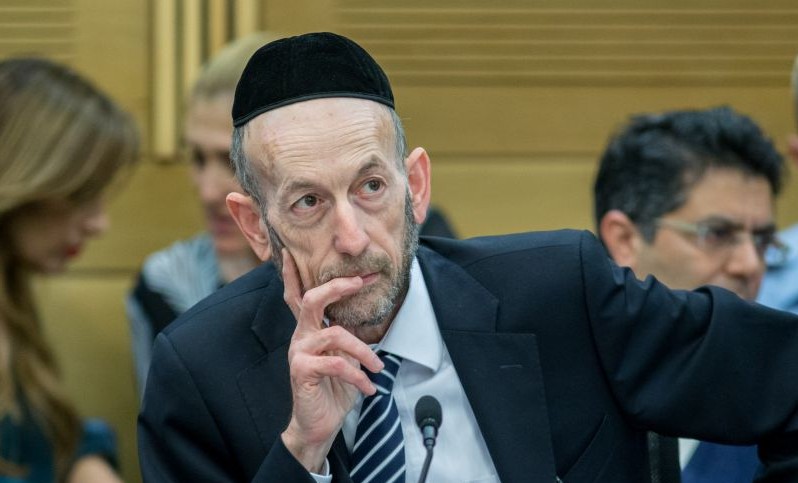
United Torah Judaism MK Uri Maklev in the Knesset on February 16, 2016. (Yonatan Sindel/Flash90)
New legislation initiated by three ultra-Orthodox Knesset members proposes to increase the number of seats in the Israeli parliament from 120 to 140.
United Torah Judaism MKs Uri Maklev, Ya’akov Asher and Moshe Gafni note that the figure of 120 seats in the Knesset was determined 70 years ago, when the State of Israel was just founded and had less than a million residents.
“Since then, it’s become clear that the workload for MKs only increases,” they wrote in the draft, publicized Thursday, pointing to the numerous permanent and temporary committees and caucuses the parliamentarians sit on, and saying that they “do not manage to properly execute their work.”
The ministers also pointed to other parliamentary democracies with similar populations that have higher representation.
In Finland, for example, with a population of 5.5 million, the parliament has 200 seats; in Denmark, with 5.6 million residents, parliament has 179 seats; Belgium, with over 11 million residents, has a parliament of 150.
Get The Times of Israel's Daily Editionby email and never miss our top stories
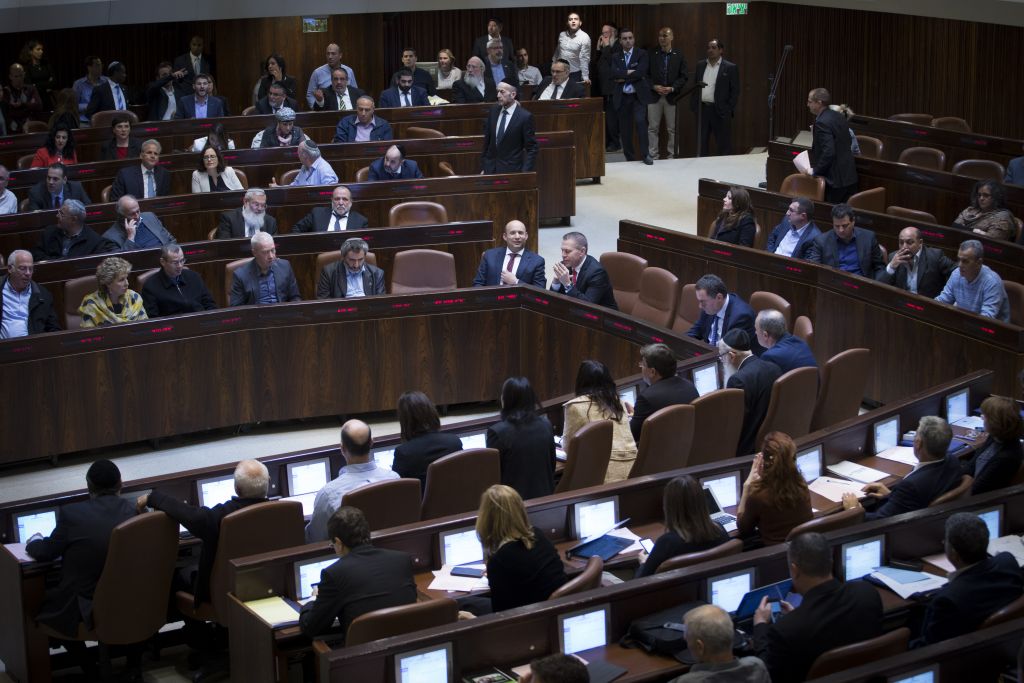
View of the plenum hall in the Knesset on February 06, 2017. (Yonatan Sindel/Flash90)
The MKs also argue that many democracies have bicameral parliaments whereas in Israel, with a population of over 8 million, 120 MKs in one parliament do all the work.
An increase of 20 MKs in the Knesset would cost tens of millions of shekels, the ministers acknowledge, but counter that more efficient work by parliamentarians would save the state 60 times the expense, according to a Channel 2 report.
Bills to increase the number of seats in the Israeli legislature have been proposed in the past, most recently in 2006, but did not get approved.
Advertisement
Help us report truthfully on social media
As a multimedia journalist, my job is to take the quality, fact-based journalism produced by The Times of Israel newsroom and make it accessible across every platform — from Instagram posts to podcasts to short-form videos.
This is how many, especially young people, consume news these days. But misinformation is rampant on social media. Our team at ToI produces accurate, responsible short-form reporting on Israel and the Jewish world.
If you believe in the importance of factual social media journalism, please consider joining our reader support group, The Times of Israel Community. Your financial support is essential to sustain responsible multimedia reporting.
We’re really pleased that you’ve read X Times of Israel articles in the past month.
That’s why we started the Times of Israel - to provide discerning readers like you with must-read coverage of Israel and the Jewish world.
So now we have a request. Unlike other news outlets, we haven’t put up a paywall. But as the journalism we do is costly, we invite readers for whom The Times of Israel has become important to help support our work by joining The Times of Israel Community.
For as little as $6 a month you can help support our quality journalism while enjoying The Times of Israel AD-FREE, as well as accessing exclusive content available only to Times of Israel Community members.
Thank you, David Horovitz, Founding Editor of The Times of Israel


 Add ToI as a Preferred Source on Google