

On World AIDS Day, Health Ministry reports 22% decrease of new HIV cases in 2024
Israel recorded 317 diagnoses last year, though the head of the Israel AIDS Task Force says carriers of the virus often avoid testing for it due to ‘stigma’
 Add ToI as a Preferred Source on Google
Reporter at The Times of Israel

On World AIDS Day, the Health Ministry reported that Israel saw 317 new cases of HIV in 2024, a decrease of approximately 22% compared to 2023.
Yet the stigma connected to the virus prevents people from being tested, so there may be more unreported cases, Israel AIDS Task Force CEO George Avni told The Times of Israel.
“People still think that this disease is only for gay people, for men having sex with men, for people who work in the sex industry, or for people who inject drugs,” said Avni. “We know it’s not true. This is a virus. It’s a human virus. It can transfer to every human being.”
He said the task force, which turned 40 this year, is trying to raise awareness and minimize those undiagnosed cases.
“Our main goal is to encourage people to get tested,” he said. “It’s the first link of the chain. If people get tested, they get diagnosed, they get treatment, and then there will be no new infections.”
AIDS, or Acquired Immune Deficiency Syndrome, is a collection of clinical symptoms that weaken the body’s immune system, making it unable to protect the body from infections.
AIDS is first caused by HIV, or Human Immunodeficiency Virus, which is transferred between humans.
HIV is transmitted when infected bodily fluids enter another person’s bloodstream, most commonly through unprotected intercourse, the sharing of used syringes, or from mother to child during pregnancy, childbirth, or breastfeeding.
On its website, the Israel AIDS Task Force states that there is no chance of passing on the HIV infection through “sweat, tears, or saliva.”
The importance of HIV testing
“Medical monitoring and regular drug treatment prevent the deterioration of the medical condition of HIV carriers,” said Dr. Or Krieger, deputy head of the Health Ministry’s public health division.

“At the same time, it can prevent the transmission of the virus to others,” Krieger said.
The ministry recommends HIV testing for people who have sex with new partners, for those who have multiple sexual partners, for new immigrants who come from areas where the prevalence of HIV among the general population is high, and for every pregnant woman.
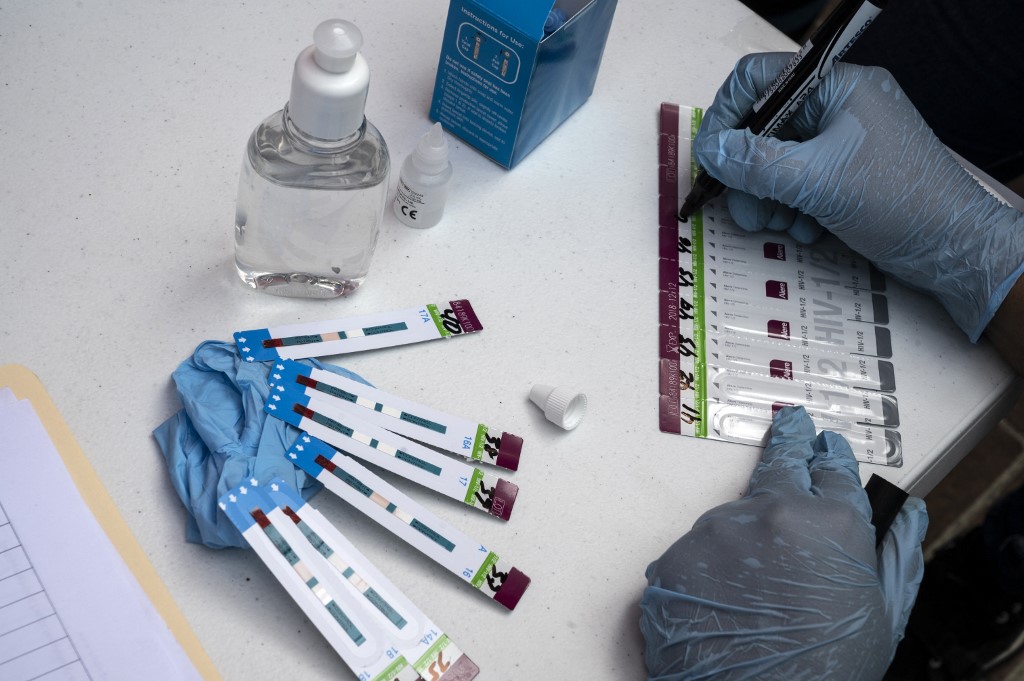
The ministry stressed that the appropriate blood test, which is free of charge, can be performed at healthcare clinics, HIV clinics, and designated testing sites such as the AIDS Task Force’s testing center.
According to the World Health Organization, 1.3 million people worldwide were diagnosed with HIV in 2024, the same figure as in 2023, the Health Ministry said.
Some 630,000 people died from HIV-related diseases, including tuberculosis, recurrent pneumonia, and lymphoma. As of the end of 2024, there were 40.8 million people worldwide living with HIV.
“We have very good treatments for AIDS/HIV,” said Avni.
Antiretroviral Therapy (ART) can reduce levels of HIV and keep the immune system healthy. Not everyone with HIV will develop AIDS, which is the most severe stage of HIV infection. The progression depends on several factors, including access to medical care, adherence to treatment, and coexisting conditions.
According to the National Institutes of Health, the ART therapy cannot cure HIV, but it can lower the virus to undetectable levels, thereby significantly reducing the risk of transmission.
“People no longer have to take a cocktail of medications as they did in the past,” said Avni. “The therapy is keeping people so healthy that their disease is undetectable, meaning they cannot infect their partners.”
“The World Health Organization now states that ‘undetectable equals untransmittable,'” Avni said.
What’s in a name
The treatment has been so successful that AIDS is now called a “clinical condition.”
“We don’t even call it a disease anymore,” Avni said. “Someone can live with HIV and not be sick. You just have a condition that you have to take a pill for, and it has very few side effects, like something for your heart or for your blood pressure.”
He said that because the treatment allows people to live with HIV, they are living longer.
“It isn’t like in the 80s and the 90s when people with AIDS all died young, a few years after they got infected,” Avni said. “Now, they can live with HIV for 30, 40, or 50 years.”
But, he said, it is still believed that biological age — a measurement of organ function, cellular aging, and overall health — is higher compared to actual chronological age in carriers of HIV.
The organization is pushing for more research on the impact of HIV/AIDS on aging.
“People in the medical community don’t know yet about aging with AIDS,” Avni said. “They’ve never seen it before.”










The Times of Israel Community.