 Add ToI as a Preferred Source on Google
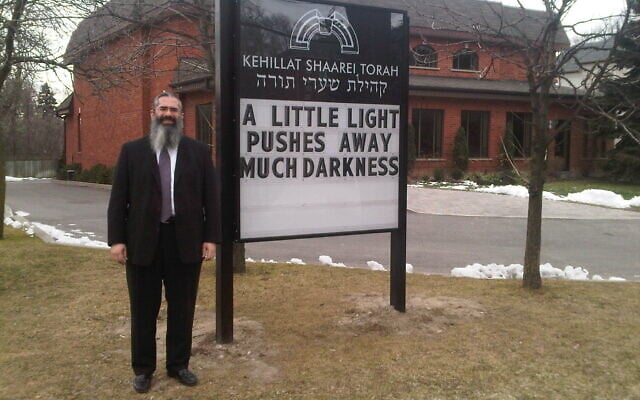
After his synagogue in Toronto was attacked earlier this month for the 10th time in a year and a half, Rabbi Joe Kanofsky of Kehillat Shaarei Torah says he is frustrated by the repeated hostilities but confident that his community will endure.
“These attacks haven’t deterred people from coming to pray,” Kanofsky told The Times of Israel. “If anything, it has increased people’s determination to show up and show solidarity. People understand that it is important to convey that we are united.”
In the most recent attack, a vandal was caught on video jumping with a hammer to smash five of Shaarei Torah’s exterior windows. Previous attacks, believed to involve a few different suspects, have included rock throwing, graffiti and attempted arson.
“I joke with my congregants that I wish everyone were as determined to get to synagogue as these guys,” Kanofsky said. “They’ve climbed our fences, even as we’ve increased security. It used to be that synagogues wouldn’t even lock their doors, but we are living in uncertain times.”
Antisemitism was already on the rise in the Great White North in the years before the Hamas-led invasion of Israel on October 7, 2023, which left 1,200 slaughtered in Israel and 251 taken hostage to the Gaza Strip, sparking the war. But hate crimes have grown astronomically since then. Many locals insist that while government efforts to clamp down on attacks have been lackluster, rising extremism is largely attributable to a small number of bad actors, not a fundamental change in the tolerance the country is known for.
According to a report published by B’nai Brith Canada in April, Canadians experienced 6,219 antisemitic incidents in 2024, or an average of about 17 incidents of harassment, vandalism and violence per day. That was 125% higher than in 2022, and about 7% higher than in 2023, when hatred exploded after October 7.
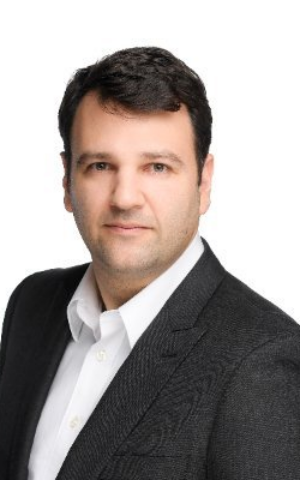
Antisemitism was already increasing to record levels before October 7, according to Noah Shack, CEO of the Centre for Israel and Jewish Affairs (CIJA), which represents the country’s Jewish Federations.
“Now, we’re seeing synagogues firebombed, shootings at schools, people assaulted, and discrimination and hate in schools, universities and in the workplace,” Shack said. “This isn’t just about our community, it’s about the threat that this extremism poses to the Canadian way of life.”
‘It was never just about Israel’s actions in Gaza’
Since Israel reached a ceasefire agreement with Hamas last month, attacks against Jews in Canada have actually escalated, not declined, as extremists have become more emboldened, Shack said. A document shared by CIJA lists a dozen attacks on Jewish targets over the last month in Toronto alone.
“What we’re seeing is that for these extremists, it was never just about Israel’s actions in Gaza,” Shack said. “The conflict in the Middle East may have provided a focus for their extremist activities, but now that there’s a path to peace, they’re doubling down on their attacks, because for them it’s not about peace, it’s about tearing down Israel and the Jewish people.”
Canada thus far has not sustained a major deadly attack on Jews such as those in the United States and France, which garnered global attention, although Shack said police have thwarted half a dozen terror plots against Jewish communities in the past two years. While a report this summer by the Diaspora Affairs and Combating Antisemitism Ministry called Canada the global “champion of antisemitism” due to a reported 670% rise in attacks in 2024, it is not clear where that number came from.
“Thankfully, we haven’t had a catastrophic event like those that have played out in places like Manchester, Washington, DC, or Boulder, Colorado. But the question is, how long will we be safe from those types of threats?” said Shack.

Jews first arrived in Canada in the 1700s, and the country is now home to the world’s fourth-largest Jewish community, with more than 400,000 people, or approximately 1.4% of the Canadian population, according to Canadian census data. About half of these live in Toronto and a quarter in Montreal, with the rest spread out in Vancouver, Ottawa, Winnipeg and other communities.
For several decades starting in the 1980s, Canadian Jews experienced a golden age of social acceptance and freedom from oppression, as they enjoyed unprecedented levels of safety, public visibility and upward mobility. Recently, prime ministers including Stephen Harper and Justin Trudeau prided themselves on their special relationships with Israel, even as the latter was often critical of Israeli policies, especially late in his term. A 2021 University of Toronto Press collection titled “No Better Home?” went so far as to ask whether Canada was really the best home that Jews have ever had.
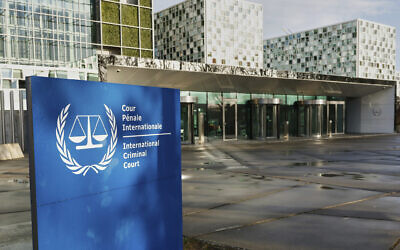
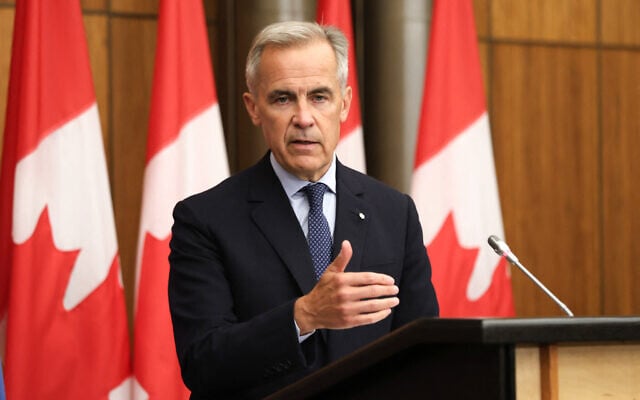
More recently, Canada’s new prime minister, Mark Carney, has shifted the country’s diplomatic tone regarding Israel. In September, Canada officially recognized a Palestinian state for the first time, after stating for years that it would only do so at the conclusion of a peace agreement with Israel. Last month, Carney also said he would arrest Prime Minister Benjamin Netanyahu if he traveled to Canada following an arrest warrant issued by the International Criminal Court.
Words are cheap
Carney and his predecessors have spoken out harshly against rising levels of antisemitism, but many of Canada’s Jews believe the government has not done enough to stem the rising tide of hatred.
“Our elected leaders keep proclaiming that violence has no place in our society, but I roll my eyes every time I hear that,” said Kanofsky. “What they need to say instead is, ‘We’re not going to tolerate this anymore, and we’re going to use all of our resources to stop it.’ People need to know that if they threaten a synagogue or a church or a mosque, they are going to go to jail. That would be a different story.”

Jewish organizations were frustrated in March when a National Forum on Combating Antisemitism, initiated in the aftermath of a series of high-profile attacks on Jewish institutions, offered little to help stem the tide of hatred.
This summer, Canada’s envoy for combating antisemitism, Deborah Lyons, retired from her post earlier than expected, saying that she was frustrated by a lack of interest from government officials.
“I’ve become quite despondent and despairing about the fact that it was hard to get people to speak up, to speak with clarity, to speak with conviction about what we were seeing happening here on Canadian soil,” she told The Canadian Jewish News.
‘Most Canadians are good people’
In 2023, Canadian police reported 959 hate crimes against Jews, 45% higher than a year earlier, with the majority reported after October 7. In 2024, that number inched down slightly, but Jews were still 25 times more likely to experience a hate crime than any other demographic, according to Statistics Canada.
Jews have begun to worry about their futures in their home country. In September 2024, a CIJA survey found that 82% of Canadian Jews believed the country had gotten less safe since October 7. Several months later, the Jewish Medical Association of Ontario (JMAO) released a shocking survey showing that 31% of Jewish doctors in Ontario were strongly considering or considering leaving the country due to rising levels of antisemitism in hospitals and academia. Others have also noticed a similar rising sentiment.

However, despite the sea change, many in the Jewish community attribute the rise to a small group of extremists rather than to a fundamental change in Canadian society.
“The vast majority of Canadians are good people with strong values. That’s why Jews have flourished here until now,” said Shack. “Canadians understand that this is the work of a small group of extremists with a dangerous agenda, who want to uproot the values for which Canadians stand. What we need to do is push back together against what is fundamentally a threat to our core values and our way of life.”
Rachel Chertkoff, vice president of countering antisemitism and hate at the UJA Federation of Greater Toronto, agreed.
“People here care about Canadian values. Antisemitism and hate are contrary to Canadian values,” she said. “We have more friends and allies than we realize, and we are working to mobilize them together as allies.”

After his synagogue was attacked, Kanofsky noted that police forces in his synagogue’s precinct were extremely helpful and attentive to his congregation’s needs, but that government efforts were lacking.
“I told the chief of police that he was here so often we were going to make him a member,” Kanofsky joked. “I just wish we had the same level of support from local and federal government.”
Kanofsky said that following the attack, Toronto’s city council was expected to offer a grant to boost the synagogue’s security, on top of the previous grants it has already received.
“I’m like, ‘Great, do you want us to make our wall higher, or build another wall around it?'” he said, exasperated. “At what point do you realize you need to try another approach?”

The Times of Israel Community.