

Report: US plan has Palestinian state in most of West Bank, E. Jerusalem capital
White House dismisses Israeli TV report on ostensible US peace proposal — which also details fate of settlements, but not of Gaza or refugees — as unfounded speculation
 Add ToI as a Preferred Source on Google
The Trump administration’s Israeli-Palestinian peace proposal provides for a Palestinian state in 85-90 percent of the West Bank, with the sovereign capital of Palestine located in “most of the Arab neighborhoods” of East Jerusalem, an Israeli TV report claimed Wednesday.
Based on what it said was information conveyed by a participant at a recent briefing by “a senior American,” the Channel 13 news report specified that the so-called “deal of the century” provides for Jerusalem to be divided, with Israel maintaining sovereignty in west Jerusalem, parts of east Jerusalem and the “holy basin,” including the Old City and its immediate environs. However, it added that the “holy basin” area would be “jointly run” with the Palestinians, Jordan and possibly other countries.
The White House dismissed the story as unfounded speculation. “As in the past, speculations regarding the peace plan are inaccurate. We have no further reaction,” it said in a statement quoted by Channel 13.
In addition to the 85-90% of the West Bank coming under Palestinian sovereignty, the Trump administration will reportedly also propose various land swaps — enabling Israel to extend its sovereignty into unspecified areas of the West Bank, in exchange for current Israeli territory. Channel 13 news (the new iteration of what until Tuesday was Channel 10 news) said the scale of such land swaps was not yet clear.
Regarding settlements, the TV report said major settlement blocs would be annexed to Israel. “Isolated” settlements — it named Yitzhar and Itamar as examples — would not be forcibly evacuated, but would also not be allowed to expand, and would thus be “dried out.” Outposts defined as illegal under Israeli law would be evacuated.
The report made no mention of the plan’s proposals regarding Palestinian refugees, nor of the intended fate of the Hamas-controlled Gaza Strip.
It said the Americans anticipate that the Palestinians will reject the proposal in its current form; Mahmoud Abbas’s Palestinian Authority has been boycotting the Trump administration since President Donald Trump recognized Jerusalem as Israel’s capital in December 2017.
It said that the administration expects Israel, by contrast, to say yes to the proposal.
The TV report noted that the proposal would not be publicly unveiled until after Israel’s goes to the polls on April 9.
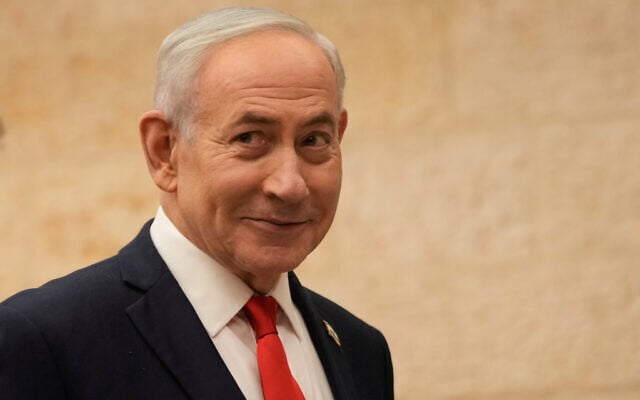
The reported terms of the accord, the TV report assessed, are not as good as those offered by Israel to the Palestinians, without success, by prime ministers Ehud Barak and Ehud Olmert. Prime Minister Benjamin Netanyahu, by contrast, has ruled out full Palestinian statehood in the foreseeable future though he has in the past expressed conditional support for a two-state solution. He has also insisted on Israel maintaining overall security control of the West Bank, has rejected the notion of dividing Jerusalem, and has said no settlements will be evacuated.
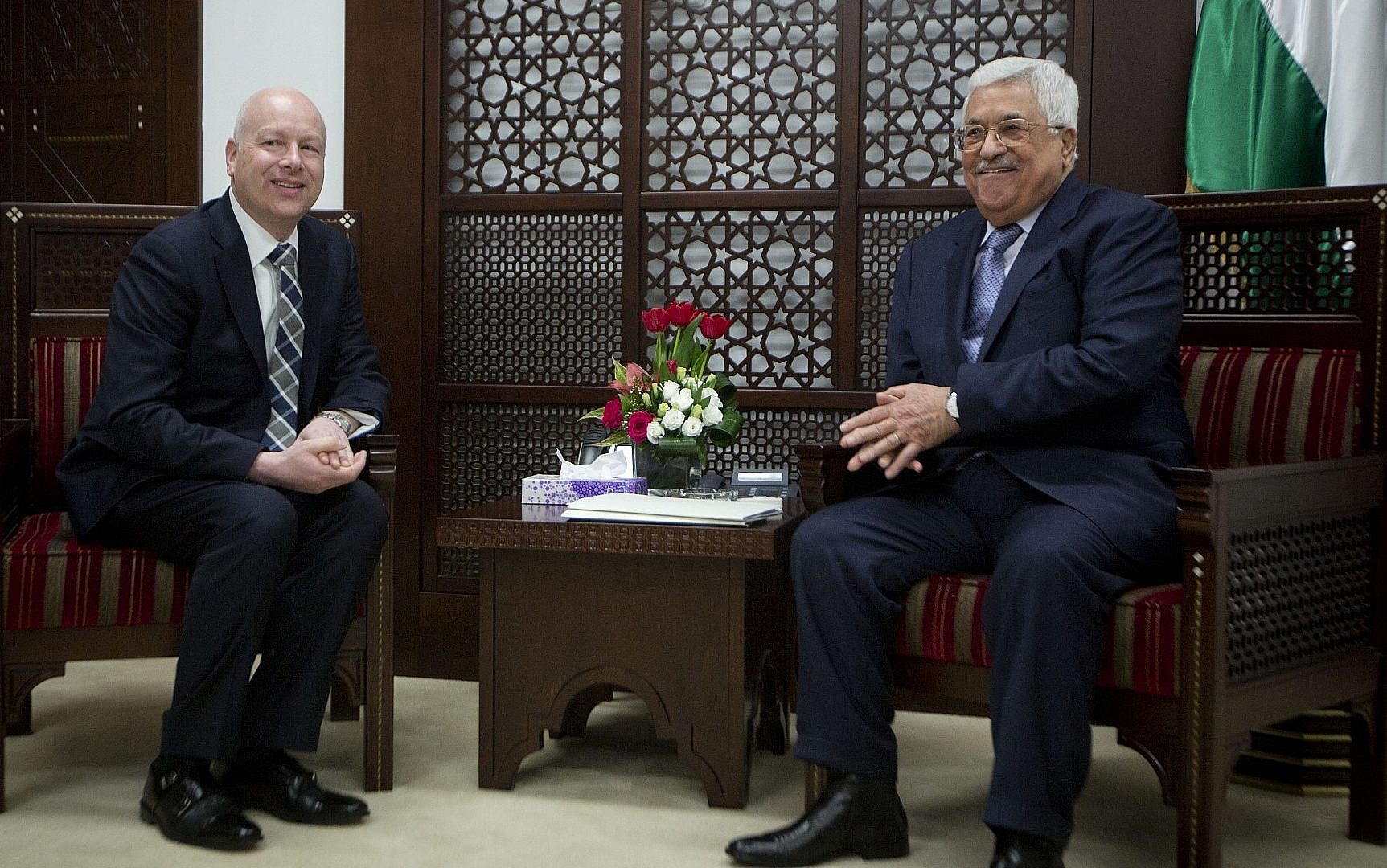
In rare public comments on the Trump plan last October, Jason Greenblatt, the president’s special envoy for international negotiations, told The Times of Israel in New York that the proposal “will include a resolution to all of the core issues, including the refugee issue, and will also focus on Israel’s security concerns.” In fact, Greenblatt added, the proposal will “be heavily focused on Israeli security needs.”
“But we also want to be fair to the Palestinians. We have tried hard to find a good balance. Each side will find things in this plan that they don’t like. There are no perfect solutions,” he added.
Those comments came soon after Trump, in a September 26 meeting with Netanyahu on the sidelines of the UN General Assembly, for the first time publicly expressed his preference for a two-state solution, though he later clarified that he would back any framework that Israelis and Palestinians agreed on.
At the time, a senior US administration official, speaking on condition of anonymity, told The Times of Israel that Palestinians should see Trump’s comment about his preference for a two-state solution “as an opportunity to start engaging with us” but that the administration would release its peace plan “even if the Palestinian leadership does not talk to us.”
“We think the Palestinian people deserve to see it and decide if it is the right path forward. They certainly should not be prevented from seeing it and considering it. The reality is that we are trying to help them achieve a free society. A leadership that blocks this effort is the opposite of what it means to have a free society,” this official added.
As opposed to previous peace proposals, the current blueprint will be “very detailed,” the official added.
“Previous peace proposals were brief and vague, and no one really understood what exactly was meant by some of the terms used. We will present something that will give both the Israeli and the Palestinian people a concrete idea of what a peace deal could look like,” he said.
“It’ll be very specific so that they can tell their leaders what they think about it. In the end, we want people to think about whether our plan can make their lives better and is worth the compromises.”







The Times of Israel Community.