

Syrian rebel groups seen behind some errant fire in Golan
Israel has said it holds Assad regime responsible but recently warned that it will not hesitate to act against opposition forces

 Add ToI as a Preferred Source on Google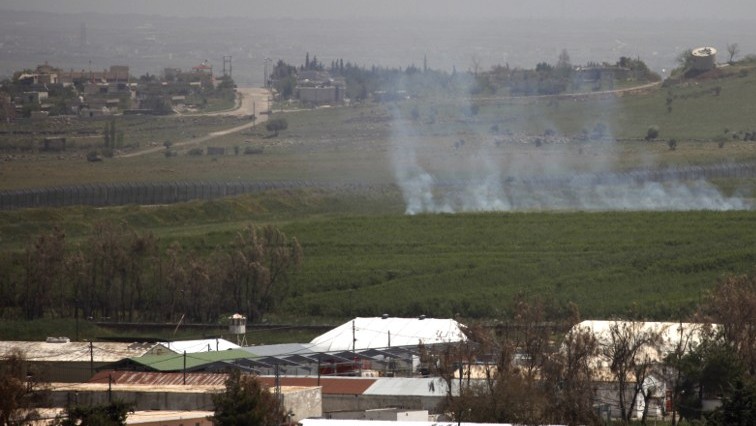
Errant projectiles from Syria that have landed on the Israeli side of the Golan Heights over the past two weeks have been fired by Syrian opposition groups as well as by Syrian army forces, Israeli security sources told the Times of Israel on Thursday.
Some of the errant fire has come from the former al-Qaeda affiliate Jabhat al-Nusra, an extremist group which recently rebranded itself as Jabhat Fath Al-Sham, according to the sources.
There was no indication presently that the mortar fire was intentional. Rather, it is seen as a part of the ongoing civil war in the neighboring country and the struggle over territory, specifically areas in the Syrian Golan Heights between Hader and Quneitra, parallel to the Israeli side, the sources said.
Israel routinely retaliates against stray missile strikes inside its territory by striking Syrian army targets, which it holds responsible for all spillover fire, regardless of the source.
However, the army also said this week, following another projectile strike, that it “will not hesitate to act against any opposition forces in Syria,” in what could be seen as a departure from recent policy.
[mappress mapid=”5897″]
It is not yet clear if the IDF plans on changing its tactics, as ties between Israel and some Syrian opposition groups are described as “adequate” and even “good,” the security sources said.
The policy of striking Syrian army positions has led to claims in Damascus and elsewhere that the Israeli army is working to protect and even aid the rebel fighters. The IDF says it is not involved or taking sides in the Syrian fighting.
The Israeli military has in the past treated wounded Syrian civilians who arrive at its borders and is also said to have transferred injured opposition fighters from moderate groups for medical care inside Israel.
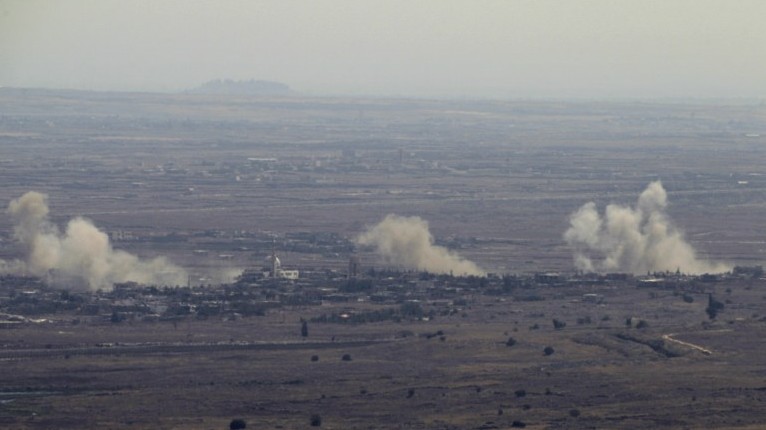
The most recent incident involving errant fire came on Wednesday evening when a mortar shell struck the northern Golan Heights, exploding in an open field near Israel’s border with Syria.
It was the sixth such incident this week and came as fighting between Assad regime forces and the numerous rebel groups in southern Syria escalated in recent weeks.
In light of the increased errant fire hitting the Golan Heights, the United States embassy in Israel urged American citizens Wednesday “to carefully consider and possibly defer travel to that area until the situation stabilizes.”
In addition, the embassy temporarily forbade US government employees from “personal travel into the area north of Route 87 and east of Route 918 in the Israeli-occupied Golan Heights.”
The recent upsurge in stray fire stems from the growing success of President Bashar Assad’s forces in recent days, which has forced rebel fighters into areas closer to the Israeli border, Israeli analysts said earlier this week.
Wednesday was the third day in a row that apparently errant fire from the fighting in Syria landed inside Israeli territory.
A total of four projectiles from Syria struck the Golan Heights on Monday and Tuesday, also thought to be errant fire, shortly after a ceasefire brokered by Russia and the United States took effect in Syria.
In response to the incidents, Israeli jets targeted Syrian regime artillery batteries near the border early Tuesday morning and then again late that night.
Following the early morning strike, Syrian state media announced Tuesday that Assad’s forces had shot down an Israeli plane and a drone — a claim firmly dismissed by Israel.









The Times of Israel Community.