

Syrian violence intensifies as cease-fire goes into effect
Omar Suleiman clashes with Islamist opponents in Egypt and Iraqi Prime Minister Nuri Maliki faces fire from all sides
Elhanan Miller is the former Arab affairs reporter for The Times of Israel
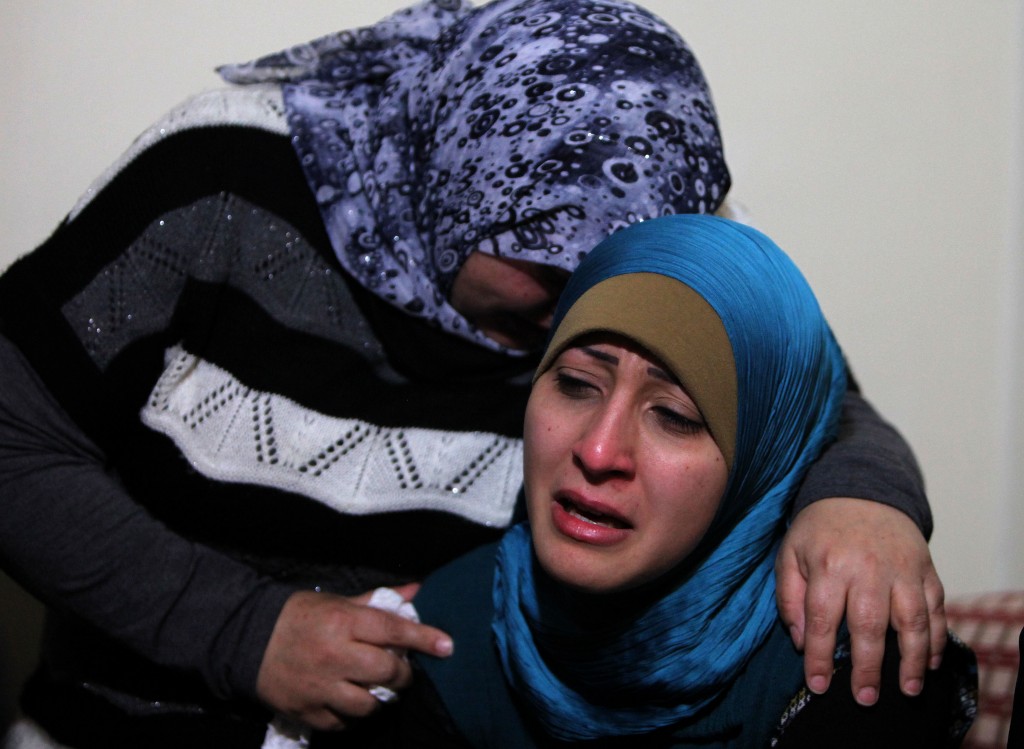
As an internationally brokered ceasefire between government and opposition forces is due to begin Tuesday, the body count in Syria rises dramatically. All major Arab dailies lead with news from the ground in Syria, mostly featuring images of tanks on the streets.
“Annan’s stay drowns in blood and debris,” read the headline of London-based liberal daily Al-Hayat. The daily reports at least 150 fatalities on Monday, noting that Syrian government forces have shot at refugees in sovereign Turkish territory, as well as Syrians fleeing to Lebanon.
Saudi-owned daily A-Sharq Al-Awsat also emphasizes the “internationalization” of the Syrian government attack, calling Monday’s onslaught “a new Syrian massacre.”
News website Elaph dedicates an article to Lebanese TV reporter Ali Shaaban, who was killed by Syrian fire while covering events in the Wadi Khaled area near the border.
“Shaaban … wrote with his blood a new chapter in the organized premeditated terror still practiced against journalists,” writes Elaph’s Rima Zahar from Beirut. “This is simply the regime’s physical and intellectual terrorism against the media.”
Most editorials Tuesday focus on Syria as well, with the main motif emanating from Saudi-owned media being “we told you so.”
“Annan’s initiative failed. What next?” asks the headline of an editorial by A-Sharq Al-Awsat editor Tareq Homayed.
“There is no doubt that Mr. Annan’s initiative was a failure even before it began. We said this time and again, but today, after Assad announced he would not implement Annan’s agreement, we can officially say the mission has failed and Annan must declare so himself. Therefore, the question now is: what next? Is there another initiative granting Assad another opportunity to kill?”
Al-Hayat columnist Elias Harfoush agrees that Annan’s initiative was “a stillborn,” and he wonders why the Assad regime agreed in the first place to an initiative that demanded him to withdraw his forces 48 hours before the opposition had to withdraw theirs. This agreement is even more baffling, argues Harfoush, seeing as it undermines the regime’s narrative whereby the opposition forces are “terrorist gangs” that the government was forced to react to.
“The Syrian regime’s gamble in agreeing to Annan’s plan was out of character … because it contained an agreement to leave the ball in its own court and assume responsibility for breaking the stalemate by taking the first initiatives.”
Omar Suleiman clashes with Egypt’s Islamists
Egyptian presidential candidate Omar Suleiman, who served as Hosni Mubarak’s right-hand man, announced Monday that he had received death threats from Muslim Brotherhood activists on his mobile phone immediately upon declaring his intention to run for office. The story is receiving wide coverage in the Arab media.
“Omar Suleiman opens fire and blames Islamists for threatening to kill him,” reads the headline in A-Sharq Al-Awsat. The daily reports that Muslim Brotherhood candidate Khairat Shater replied to Suleiman, saying that his very candidacy was an affront to the revolution and the spirits of the martyrs, and that his victory would surely lead to a second revolution.
Al-Hayat reports that the Egyptian parliament is attempting to pass legislation banning members of the former regime from running for office, a move being blocked by the military.
But Suleiman may have received a fatal blow from his allies in Israel. Arab-nationalist daily Al-Quds Al-Arabi reports that statements by Israeli politician Binyamin Ben-Eliezer praising Suleiman as a “strategic asset for Israel,” may become “an early death kiss” for Suleiman.
Ben-Eliezer’s statements “have given credence to the onslaught of criticisms Suleiman is facing from revolutionary forces, and especially Islamists, since he announced his candidacy days ago,” writes the daily.
Iraqi prime minister between a rock and a hard place
Iraqi Prime Minister Nuri Maliki is facing challenges and criticism from all directions in Tuesday’s news.
Qatar-based news channel Al-Jazeera reports that Masoud Barazani, president of the autonomous Kurdistan region in northern Iraq, is again calling Maliki a dicatator and threatening to withdraw a confidence from his government. Barazani, who is visiting the United States, also signaled that he may push for a referendum on the establishment of an independent Kurdish state.
Meanwhile, A-Sharq Al-Awsat reports on its front page that Maliki may also face opposition from his own Shiite sect in Iraq. Shiite hardliner Muqtada Sadr hinted that he may be interested in forming the next government, but the decision belongs to “supporters of the movement.”
Maliki and his government officials have been recently shunned by the highest Shiite cleric in Iraq, Ayatollah Ali Sistani of Najaf. Sistani refused to meet parliament speaker Usama Nujeifi last February during his visit to the holy Shiite city of Najaf.



The Times of Israel Community.