

The cost of quiet: 9 things to know for August 19
As negotiators wrap up Gaza ceasefire talks, Israeli and Arab newspapers take a look at what a possible Israel-Hamas truce could mean for the region
 Add ToI as a Preferred Source on Google
Tamar Pileggi is a breaking news editor at The Times of Israel.
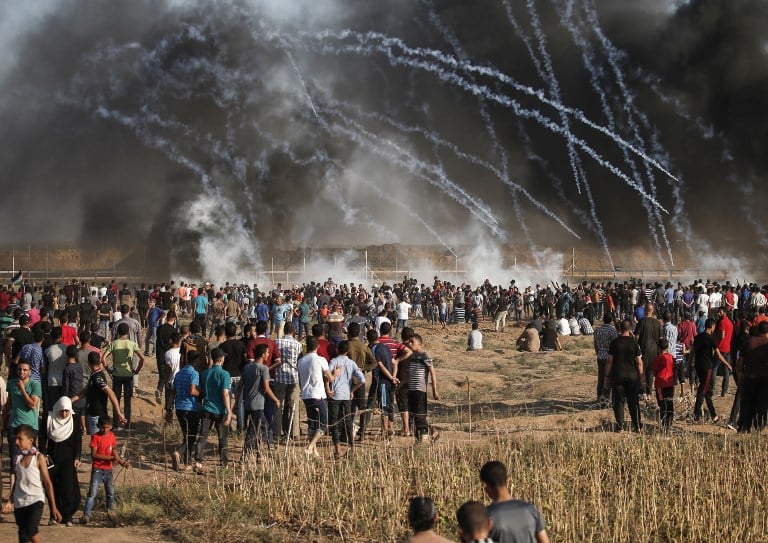
1. As Egyptian and UN efforts to broker a long-term ceasefire agreement between Israel and Hamas enter the final stretch, newspapers examine the wider implications a possible Gaza truce would have on Israel, the Palestinians and the rest of the Middle East.
- Yedioth Ahronoth leads its Sunday paper with a public disagreement between Defense Minister Avigdor Liberman and Education Minister Naftali Bennett, who castigated Liberman for “giving in” to Hamas by supporting negotiations. Bennett told Yedioth that Liberman would lead Israel to another war in Gaza. “Anyone who gives in to terror will bring about terror,” he told the paper.
- Liberman swiftly hit back at Bennett’s criticism, questioning his political motivations and attendance at recent security cabinet meetings. “Government policy is decided by the cabinet, or at least by those who are present at the relevant meetings,” he said in a statement. “Anyone willing to sacrifice the blood of our soldiers for the sake of political considerations should not be involved in security matters.”
- Though Bennett and Liberman have publicly clashed over security policy in the past, Yedioth plays up the spat between the two that began on Friday, dedicating the majority of its front page to the “serious confrontation” between the ministers that has Netanyahu’s government “reaching its boiling point.”
- Israel Hayom makes no mention of cabinet opposition to a possible Gaza deal, choosing to focus its coverage on the Palestinian Authority’s opposition to an Israel-Hamas truce. On its front page, the pro-Netanyahu daily declares that PA President Mahmoud Abbas and the Ramallah government were the main “obstacle” to reaching a Gaza ceasefire.
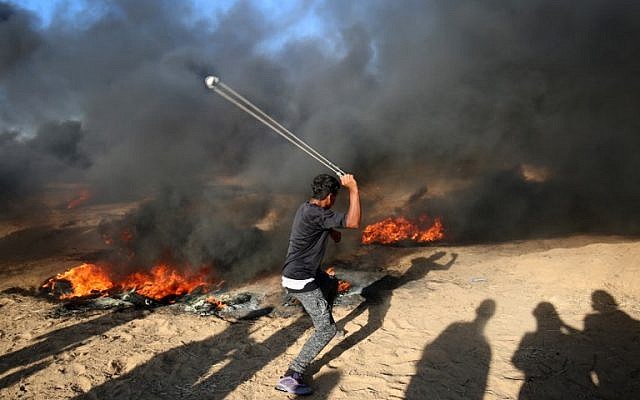
A Palestinian protester uses a slingshot next to burning tires during a demonstration at the Israel-Gaza border, east of Khan Yunis in the southern Gaza Strip on August 10, 2018. (AFP PHOTO / SAID KHATIB)
2. As Hamas officials met with UN and Egyptian officials in Cairo to hammer out details of a possible truce with Israel this week, Palestinian protesters continued the weekly “March of Return” protests along the Gaza border.
- Though Friday’s demonstrations were subdued compared to previous weeks, protesters threw rocks and firebombs from behind clouds of black smoke of burning tires at Israeli troops, who responded with tear gas and sometimes live fire.
- The IDF said Palestinians also threw improvised explosives and firebombs at the fence and that several were spotted briefly crossing into Israeli territory. It said troops “fired live rounds selectively according to standard operating procedures.”
- The Hamas-run health ministry in Gaza reported that two men were killed and around 250 injured, of which at least 25 were said hit by live fire.
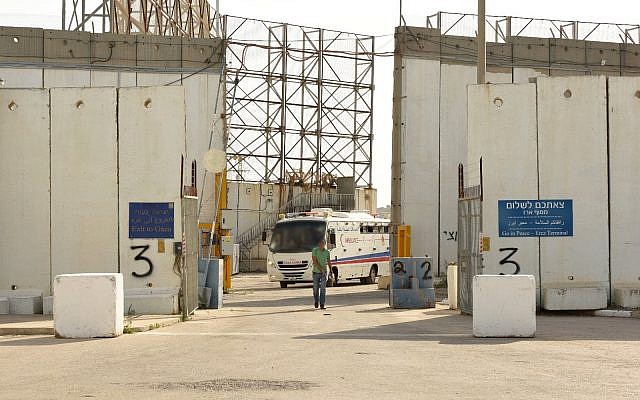
- On Sunday, Liberman announced the closure of the Erez border crossing in response to weekend violence in Gaza. Reports in Palestinian media said the border crossing, which acts as the only pedestrian crossing between Gaza and Israel, would still be open for medical emergencies.
3. The Times of Israel’s Avi Issacharoff warns that even if a deal with Hamas is reached, it would be unlikely to bring an end to all of the attacks against Israel. Issascharoff says that Hamas might agree to stop firing rockets and mortars at Israel, but will not clamp down on the border violence or arson attacks because it sees them as part of the popular Palestinian uprising against Israel.
- “This perception may be at odds with the discourse in Israel, where many expect a ceasefire deal with the terror group to include a cessation of the months-long border clashes and arson attacks,” he says, hinting at potential backlash in Israel over the deal.
4. Haaretz leads its Sunday paper with a look at how the possible deal between Israel and Hamas would impact regional Arab politics. Zvi Barel writes that Qatar’s growing involvement in the negotiations, and its recent commitment to pay the salaries of tens of thousands of Gazans, was part of its “rehabilitation” efforts in the wake of the diplomatic rift with Gulf states.
- Barel contends that even Israel is willing to look past Qatar’s support for regional terror groups, as its efforts to negotiate the return of the Israeli civilians and bodies of IDF soldiers from Hamas could prove successful.
- “It turns out that rising diplomatic and military needs can result in amazing flexibility even when it comes to principles that are cast in concrete,” Barel writes.
5. Meanwhile, the London-based Al-Hayat daily newspaper reported Sunday that Abbas’s opposition to the Egypt-brokered truce was creating tensions between Ramallah and Cairo.
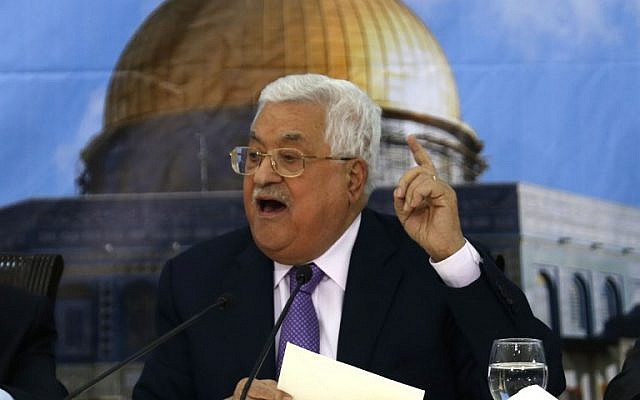
- The report said Abbas’s insistence that Egypt prioritize reconciliation between his Fatah party and its rival Hamas as part of the framework for the ceasefire deal has led to “very tense” ties between Cairo and Ramallah.
6. Over the weekend, Iran announced several upgrades to its military hardware, amid increasing tensions with the United States over its withdrawal from the 2015 nuclear deal and the re-imposition of economic sanctions.
- Iranian Defense Minister told the semi-official Tasnim news agency on Saturday that a new fighter jet and upgrade of its missile defenses were aimed to counter threats from Israel and the US.
- “Our first priority is our missile capability and we must enhance it… given the enemy’s efforts in missile defense,” said Amir Hatami said, noting the repeated Israeli and US threats that “all options are on the table” in dealing with the Islamic republic.
7. US National Security Adviser John Bolton arrived in Israel on Sunday for two days of talks expected to heavily focus on Iran and its military presence in Syria.
- The White House has been mum on the agenda of Bolton’s trip, and US embassy official in Israel only said the discussions with Netanyahu and other Israeli officials would include “regional security issues.”
Just arrived into Israel. I’m looking forward to meeting with PM Netanyahu and other officials beginning today to discuss bilateral concerns and a range of national security issues.
— John Bolton (@AmbJohnBolton) August 19, 2018
- On Twitter, Bolton was equally vague, saying only that he was “looking forward to meeting with PM Netanyahu and other officials beginning today to discuss bilateral concerns and a range of national security issues.”
8. Kofi Annan, a charismatic global diplomat and the first black African to become United Nations secretary-general, who led the world body through one of its most turbulent periods, died early Saturday at age 80.
- Tributes flowed in from around the world after his foundation announced his death in the Swiss capital, Bern, after a short and unspecified illness. The statement remembered the Nobel Peace Prize winner as “radiating genuine kindness, warmth and brilliance in all he did.”

- Prime Minister Benjamin Netanyahu extended his condolences on Sunday, saying Annan would be remembered as someone who fought anti-Semitism and Holocaust denial. The Foreign Ministry also praised the late UN chief for combatting “attempts to delegitimize Israel” at the world body.
9. On Sunday, more than 2 million Muslims began the annual hajj pilgrimage at first light on in Saudi Arabia, circling the cube-shaped Kaaba in Mecca that Islam’s faithful face five times each day during their prayers.
- The five-day hajj pilgrimage represents one of the world’s biggest gatherings every year, and is required of all able-bodied Muslims once in their life.









The Times of Israel Community.