 Add ToI as a Preferred Source on Google
Naama Lazimi has filled her Knesset office with books on socioeconomic policy, posters of the hostages still held in Gaza, and a miniature Wonder Woman figurine standing beneath a rainbow pride flag printed with the Torah verse: “Love your neighbor as yourself.”
A self-described left-wing Zionist, Lazimi insists that the principles of Jewish statehood, democratic values, and the pursuit of peace are not only compatible but inseparable.
Her positions place her on the political margins. The Zionist left, which once built the state and governed it for its first three decades, has dwindled to near irrelevance.
In the last election, the Labor Party barely crossed the electoral threshold. It has since merged with Meretz to form The Democrats, a rebranded faction fighting to stay afloat in a landscape dominated by the right and center.
For Lazimi, The Democrats represents true patriots.
“Those who reject peace, democracy, and equal rights aren’t Zionists,” she tells The Times of Israel. “They undermine the state and distort Zionism.”
‘Those who reject peace, democracy, and equal rights aren’t Zionists’
Elected to the Knesset in 2021 after serving on Haifa’s city council, Lazimi, 39, has emerged as one of the few progressive lawmakers in Israeli politics. She is a feminist, social democrat, and rare Knesset voice still pushing for a two-state solution.
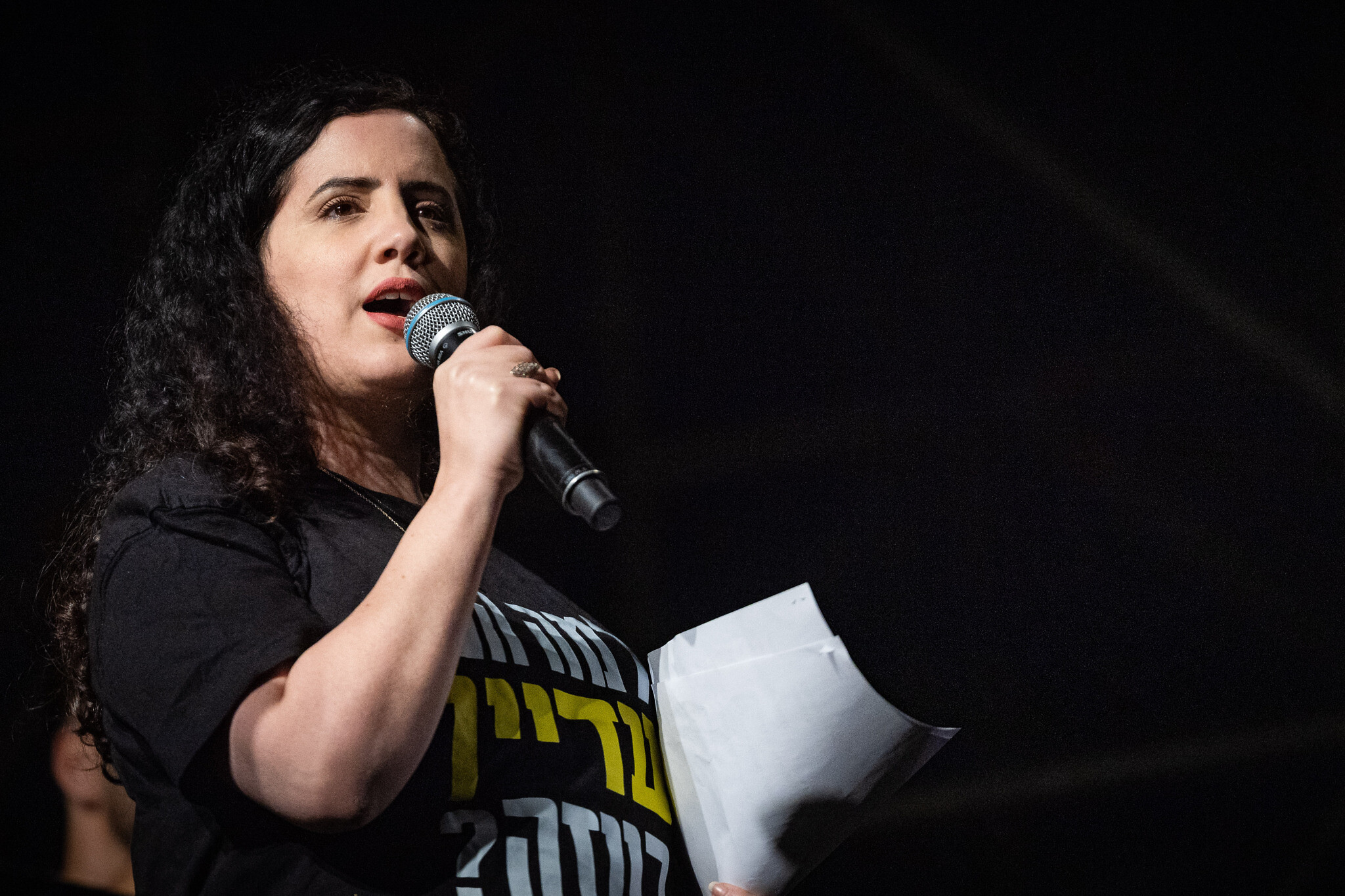
She is also one of the most outspoken critics of the Netanyahu government, an advocate for ending the war in Gaza and bringing home the hostages, and a constant presence at anti-government protests led by hostages’ families, where she has physically defended protesters from police.

Following the cabinet’s unanimous vote to dismiss Attorney General Gali Baharav-Miara on Monday, Lazimi accused the Netanyahu government of “once again” breaching the public trust.
“I haven’t been this shocked since coalition members unanimously voted last week to appoint a rape suspect [Likud MK Hanoch Milwidsky, who is under police investigation for rape, as head of the Knesset Finance Committee], and, just now, to appoint a chair of the Foreign Affairs and Defense Committee for draft dodging during wartime,” Lazimi told The Times of Israel, referring to Boaz Bismuth replacing Yuli Edelstein at the helm of the Foreign Affairs and Defense Committee, reportedly due to Edelstein’s refusal to support legislation granting draft exemptions for yeshiva students.
“All this is happening while 50 hostages [20 living] are being starved to death and abandoned in Gaza, while soldiers are falling in a political war that should have ended long ago, and the prime minister sleeps soundly with a clear conscience,” she said.
A false binary
At first glance, Lazimi may seem like the last woman standing — a remnant of a bygone era — but she maintains that this isn’t the case.
“The majority of the Israeli public opposes nearly every step this government is taking. It’s a government operating without a public mandate on any front,” she notes.
Polling, she says, reflects that sentiment: Over 80% of Israelis support ending the war through a comprehensive deal to return the hostages and want a state commission of inquiry established immediately. More than 90% support an equal draft law and reject sweeping exemptions from military service.
‘It’s a government operating without a public mandate on any front’
While polling does show widespread frustration with the government’s handling of the war and hostages, it’s less clear how many Israelis support the broader political vision Lazimi espouses — including a return to negotiations with the Palestinians on a two-state solution.
The government’s repeated failure to pass its judicial overhaul legislation is proof, she claims, that determined resistance works.
“Despite the war, despite the hostages, despite thousands of reservists called up, they’ve still failed for three years,” she notes.
In the wake of October 7, she adds, many Israelis are fearful of rising antisemitism and the country’s future as a Jewish nation-state, but equally about the erosion of democratic norms and liberal values. She believes a renewed Zionist left is uniquely placed to serve as a bridge between these two camps — protecting both Jewish identity and liberal democracy.
In today’s political landscape, the Israeli right and even much of the center reject Lazimi’s views as naive or worse, while large parts of the global left view her Zionism as inherently incompatible with progressive values.
She rejects that binary.
“I want to raise my children in a Jewish and democratic state, and I’m not giving up on either of those values,” she says. “Not because of a criminal prime minister who has decided to destroy us, and not because of an extremist minority who have managed to seize control of the centers of power.”
At the same time, she argues that the anti-Zionist left has abandoned its universalist values.
“I’ve been fighting this extremist, nationalist, corrupt, and messianic government for three years,” she says. “Criticism of Israel is legitimate — and there is plenty to criticize. But those who deny the right of the State of Israel to exist are not my partners.”
In her view, genuine progressives must support the right of both Israelis and Palestinians to live in peace and security. That includes, she says, accepting the Jewish people’s right to a national homeland, but it does not negate a commitment to alleviating suffering in Gaza or resolving the broader conflict.
“Just as people rightly look at what is happening in Gaza and understandably want a different life for Palestinians, they also need to comprehend that the reality that Israelis have lived with for two years is not normal or acceptable,” she says. “Whoever is unable to understand the yearning of Israeli citizens to live in security — an essential human right — is not a humanist.”
‘There doesn’t need to be a contradiction between civil equality for all who live here and aspire to peace and coexistence, and the desire for Israel to be the nation-state of the Jewish people’
Lazimi is one of a handful of Israeli lawmakers still advocating for a Palestinian state as part of a negotiated solution to end the conflict. She regularly attends peace conferences with Palestinian speakers and activists and has hosted similar events at the Knesset.
“There doesn’t need to be a contradiction between civil equality for all who live here and aspire to peace and coexistence, and the desire for Israel to be the nation-state of the Jewish people,” she says.
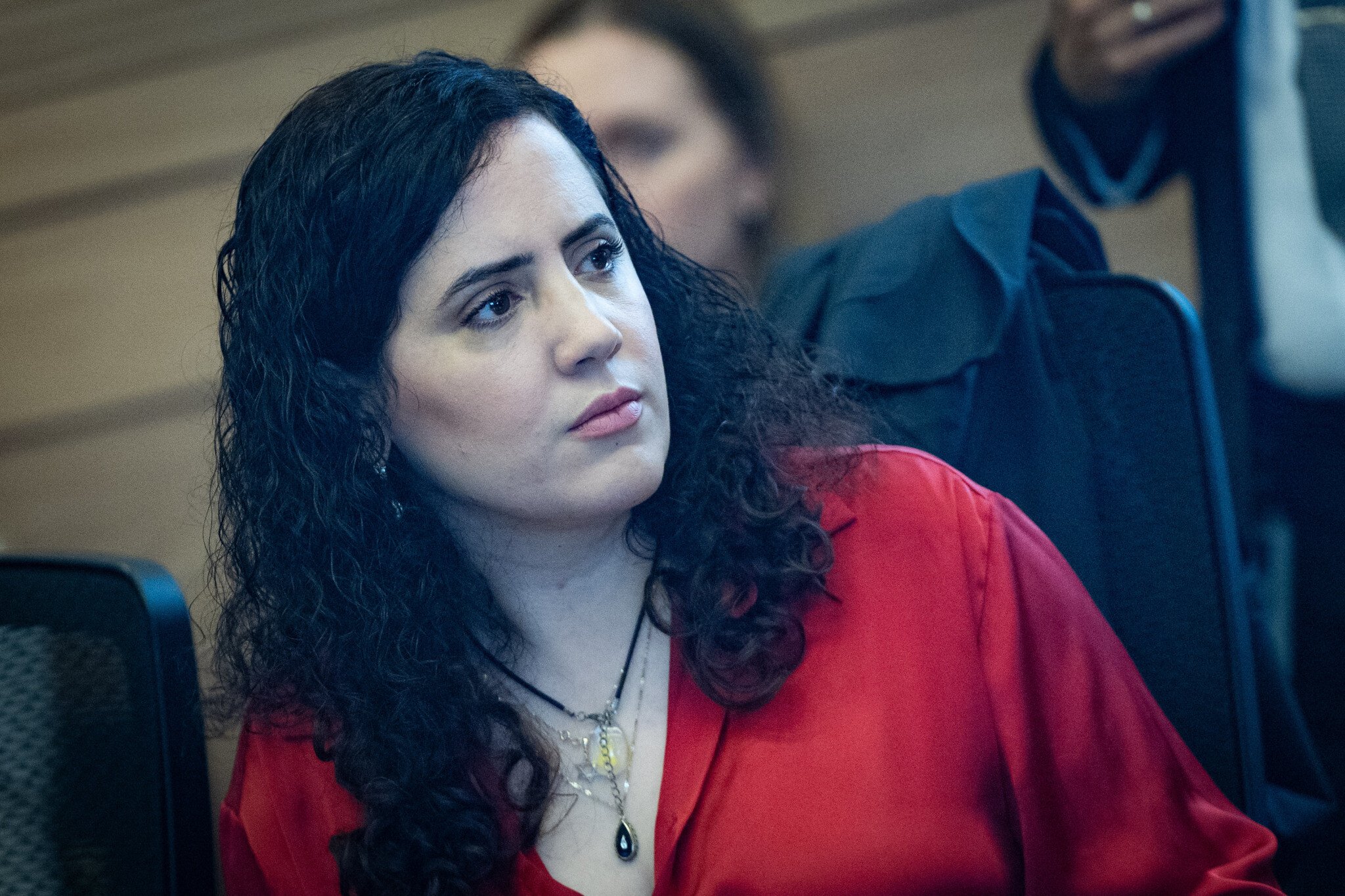
While many say that the two-state solution is dead, Lazimi says that October 7 and the ongoing war in Gaza have proved the cost of refusing to pursue a negotiated solution.
With the war grinding on and 50 hostages still in Gaza — living and dead — she says the burden of proof now lies with those advocating a military solution to the conflict since most captives have been freed through negotiation.
“We must understand that the Palestinians are here to stay. We need to act on that truth and begin the process of moving toward a different, more hopeful future. The reality right now is bloody and painful, and healing will take time, but it has to start,” she says.
‘We must understand that the Palestinians are here to stay. We need to act on that truth’
“We will not defeat Hamas just by killing every terrorist,” she says. “Only a regional diplomatic arrangement will ensure peace, security, and quiet here.”
Yet, with no functioning Palestinian leadership in Gaza, and little appetite among the Israeli public for further territorial concessions after October 7, it’s unclear what such a negotiated regional solution would look like — or who would support it.
What is evident, she says, is that the public has grown weary of the government’s “endless war” and deepening international isolation, all to promote the agenda of an extremist minority.
The notion that the pursuit of peace has now become synonymous, for many on the right, with treachery is perhaps the clearest example of how distorted their values have become, she claims.
“Peace is one of the most integral parts of the Jewish religion. It’s in every morning prayer,” she says. “Netanyahu’s government has forgotten what Jewish values are, not me.”
Shock doctrine in action
Three years ago, Lazimi was most concerned with socioeconomic issues like public and affordable housing, a higher minimum wage, and gender equality.
“The day I can return to dealing with these issues means we have managed to stop efforts to dismantle democracy and have begun rebuilding,” she says. “When I can return to discussing workers’ rights and making a living wage, I will know that we have succeeded in bringing back the hostages, ending the war, and that Israeli democracy is no longer threatened.”
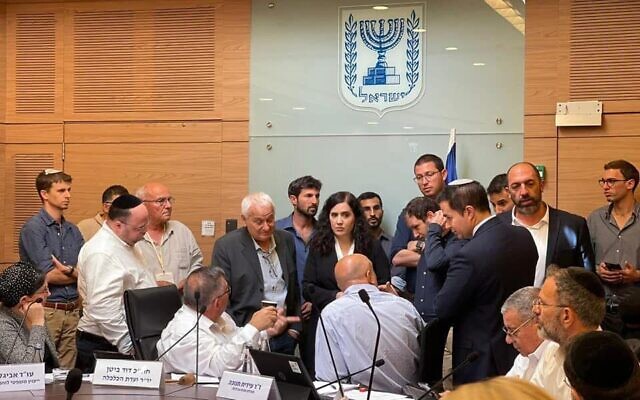
Lazimi currently serves on the powerful Knesset Finance Committee. She describes budget allocations as deeply sectoral, factional, and shaped to serve the political survival of the ruling coalition rather than the public good.
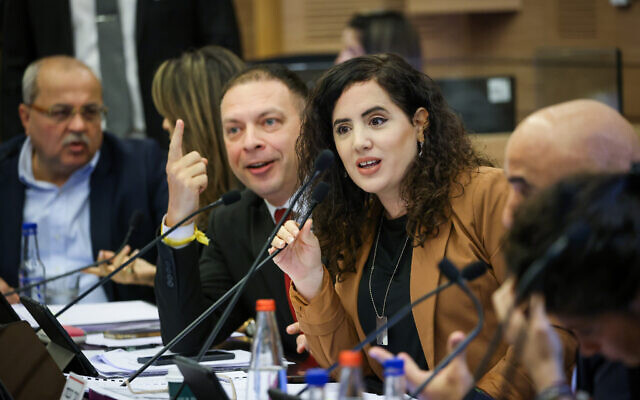
She emphasizes that the current budget fails to address the state’s urgent needs, from mental health care to badly needed new infrastructure and adequate funding for education.
Instead, she says, coalition funds are diverted to politically motivated causes: enabling ultra-Orthodox draft evasion in exchange for political alliances, directing money beyond the Green Line to settlements and isolated areas, and handing out deals to friends.
“They [coalition politicians] keep us preoccupied with the brutal reality of hostages held in Gaza, soldiers being killed, ongoing rockets and bombings, and endless war. Meanwhile, they use the budget to enrich themselves and push through a governmental coup.”
In the years since the collapse of the peace process, the Israeli left has been accused of ideological rigidity and political irrelevance. Critics accuse it of insularity — often dominated by Ashkenazi elites — and a disconnect from Mizrahi, Russian, religious, and working-class communities, with unrealistic appeals for coexistence and peace aimed at international audiences rather than domestic ones. Once a hegemonic force in Israeli politics, the left is now often seen as more preoccupied with moral preaching than with building broad-based public support.
“If we become a camp that simply repeats ‘I told you so,’ then we’ve given up, and a camp that has given up is a camp that has lost,” she says. “I haven’t given up.”
‘If we become a camp that simply repeats ‘I told you so,’ then we’ve given up… I haven’t given up’
In answer to those who say her vision of two states for two peoples is dated, or good in theory but practically impossible, her retort is swift: “So, what is practical? To give up and say this place is finished? To wring your hands and say it’s not worth it? That’s practical?”
“That’s not practical — it’s to surrender to extremists and nationalists. The most practical thing to do is to fight. So, to those who have given up — fine. Stay on the sidelines and stop getting in our way,” she says.

The Times of Israel Community.