

TV anchor Even-Sa’ar quits ahead of husband’s expected political comeback
With elections announced for April, former Likud minister Gideon Sa’ar is set to return to politics after four-year hiatus
 Add ToI as a Preferred Source on Google
Television anchor Geula Even-Sa’ar announced her surprise departure as anchor of the Kan public broadcaster’s main nightly newscast Monday evening, signaling the return of husband Gideon Sa’ar, a former minister, to the political fray.
Even-Sa’ar’s sign-off came hours after the governing coalition announced it would dissolve the Knesset and call new elections for April 9.
Even-Sa’ar said at the end of the main evening news program: “This was the last newscast I am anchoring, and it has been a great privilege to host it.” She added that she had submitted her resignation earlier in the day.
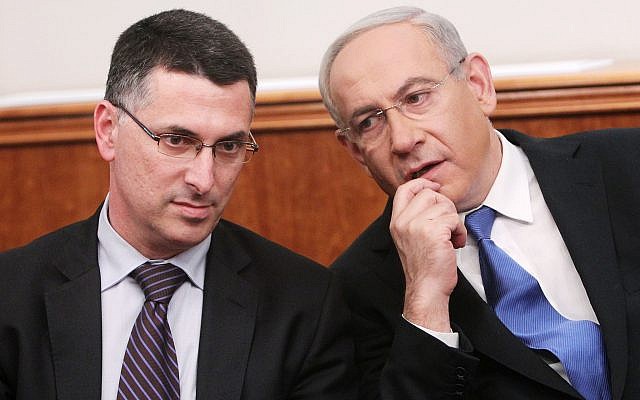
Sa’ar, a former education minister and interior minister, is seen as a potential challenger to Prime Minister Benjamin Netanyahu from within the ruling party. He quit politics in 2014 amid reported tensions with Netanyahu, but said last year that he would return and run in the next party primaries.
Even-Sa’ar has been hosting Kan’s newscast since the broadcaster began operating in May 2017. Her resignation on the day the coalition announced it was calling early elections for April of next year was seen as a move necessitated by her husband’s upcoming return to the public sphere.
In October, Netanyahu accused Sa’ar of plotting behind the scenes to replace him as premier. According to a report in the pro-Netanyahu Israel Hayom daily Sa’ar hoped to convince the president after the elections to task Sa’ar with forming a government.
The accusation had spurred legislation that would force the president to choose only among party leaders when tasking someone to form a government, though the bill will seemingly die along with the 20th Knesset later this week.
Under current law, after elections, the president consults with the heads of all factions before asking the lawmaker deemed to have the best chances of forming a government to begin negotiations with potential coalition partners. The person tasked with forming a government is generally the one that receives the most recommendations from other parties, and is usually — but not necessarily — the head of the party that has won the largest number of seats.
According to the Israel Hayom report, President Reuven Rivlin was mulling the possibility of tasking someone other than Netanyahu with forming the government — another MK within Likud, if the party wins resoundingly, or a lawmaker from another party, if the margin of victory is narrower — in light of the ongoing corruption investigations against the prime minister.
Police have recommended indicting Netanyahu in three separate corruption cases, and lawmakers close to him have launched repeated attacks on the press and police, proposing various pieces of legislation to limit their ability to report on or investigate public figures, respectively.
Sa’ar dismissed the Israel Hayom report as a “ridiculous conspiracy theory.” Rivlin also dismissed it in unusually strong terms, calling it “paranoia.”








The Times of Israel Community.