

A Rosh Hashanah Miracle on Bograshov St
A rabbi in desperate need of a building and the caretaker of an abandoned Tel Aviv synagogue meet just in time for the holidays
 Add ToI as a Preferred Source on Google
Melanie Lidman is an AP reporter and former Times of Israel reporter
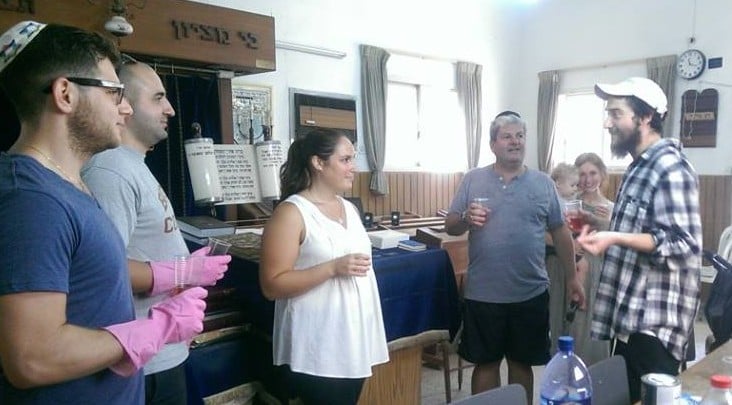
TEL AVIV — It sounds like a story lifted from a Hassidic tale: With Rosh Hashanah fast approaching, a new rabbi was in need of a synagogue. After running around town trying to secure a location for the holidays, he had all but given up, until he met a 92-year-old gabbai (warden) who just happened to have the keys to an abandoned synagogue across the street.
But the story is true, and it happened on Tel Aviv’s trendy Bograshov Street, where Rabbi Eli Naiditch is organizing a Chabad synagogue for the city’s English-speaking olim. He and his wife moved to Tel Aviv less than a month ago from Safed to start Chabad on the Coast. He’d spent the last few weeks running around the city, meeting with hotel managers, desperate to find a place to hold the holiday services.
“For English speakers, Rosh Hashanah and Yom Kippur are a huge time to go to services,” Naiditch told The Times of Israel amid last-minute holiday preparations. “You’ve got those Yom Kippur Jews, and suddenly people are looking for a place to pray. We’re not charging membership fees, which makes people feel more comfortable.”
One late August morning, Naiditch ducked into a synagogue on Bograshov Street for the morning Shaharit services. He began his familiar appeal, asking if anyone knew where he could find a synagogue for rent. Pesach Steiner, 92, overheard the conversation. They walked across the street and Steiner opened the door to a small synagogue called Hug Chacham HaSofer, which has been closed for almost a decade.
“Everything was covered in a thick layer of dust, and there were boxes and boxes of old books from the 1800s and early 1900s just in shreds,” said Naiditch.
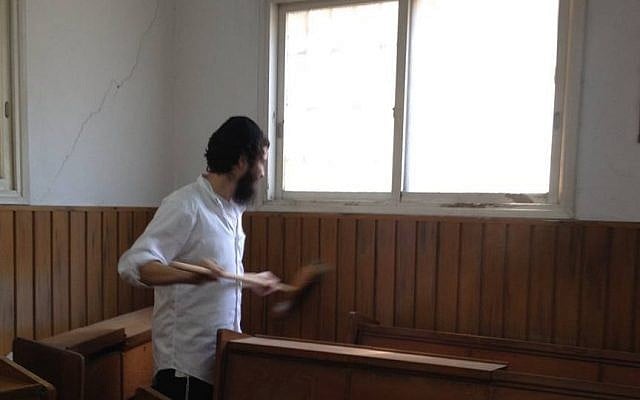
“The truth is the place is a little neglected, there’s been very little activity there,” said Steiner.
Austrian Jews from Vienna who fled Europe just as Hitler came to power founded the synagogue in Tel Aviv in 1938. Rabbi Yoel Pollak, the head of a religious Jewish school in Vienna, was the leader of the congregation. They followed the traditions of Chacham HaSofer, a famous rabbi from Slovakia who lived approximately 200 years ago, Steiner explained. They prayed with a special version of Ashkenazi melodies and traditions designed by Chacham HaSofer.
The original synagogue was on Geula Street in Tel Aviv, though they eventually outgrew that location and rented a few more buildings before eventually purchasing the property at Bar Kokhba 18, next to Bograshov.
“With time, the older generation passed away and the young people went all over the country,” Steiner said. “The minyan [quorum of 10 people necessary for Jewish prayer] was in decline until it stopped totally.”
Steiner organizes classes there on a regular basis to keep some life in the building, but they are very small. Naiditch said when they opened the ark to check the Torah scrolls, it was the first time the ark had been opened in a decade. The scrolls were so old that the ink was peeling off of the parchment paper.
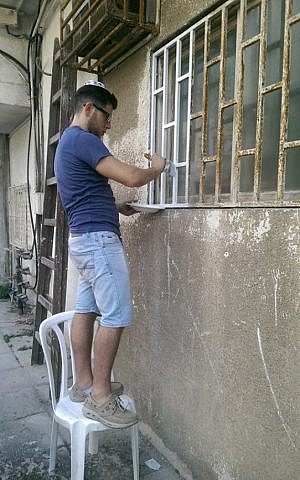
Steiner immediately gave Naiditch a copy of the key and said they could use the shul rent-free for Rosh Hashanah, as long as they cleaned the place up. So Naiditch went to work for a “revamp party”, along with volunteers from Germany, South Africa, and the United States. They tackled the dust, painted the bathroom, polished the furniture and organized the old books, some of which dated back to the 1870s in Vienna.
The synagogue can hold up to 200 people, and about 100 have RSVPed for the holiday meal at Naiditch’s house, so he’s expecting a good turnout.
For now the agreement is temporary, until both the rabbi and the gabbai decide what comes next.
“I’m really happy that there will be activity there,” said Steiner. “I don’t want it to be sealed and closed. There are a lot of synagogues in Tel Aviv that are closed because there aren’t enough people to pray in them.”

He also appreciates that the synagogue founded by Austrian immigrants will continue to serve other new immigrants. “It was a successful match,” said Steiner. “I’m really happy to give him the place.”
“I was going around speaking to hotel managers and everyone and it just seemed like it was going nowhere,” said Naiditch. “Then out of the blue this just fell into our laps. It’s a blessing… it was a gift, but also a lot of work to get it up and running.”

What touched Naiditch the most was finding the old books in the synagogue. “There was one mahzor [prayerbook for the high holidays] from 1879 that was beautiful, just this remnant of the past,” he said. “People brought books with them when they came here from Vienna and Hungary.”
Steiner said when he visited the revamp party, he was excited to see boxes of new mahzors, this time with an English translation.
“It shows that this is not a ‘lost ark,’ it’s our future,” said Naiditch. “It’s not just our history. It’s vibrant, it’s alive.”









The Times of Israel Community.