

Biometric database test set to continue, despite experts’ misgivings
Knesset subcommittee votes to extend a trial program that would electronically record sensitive personal data on Israelis
 Add ToI as a Preferred Source on Google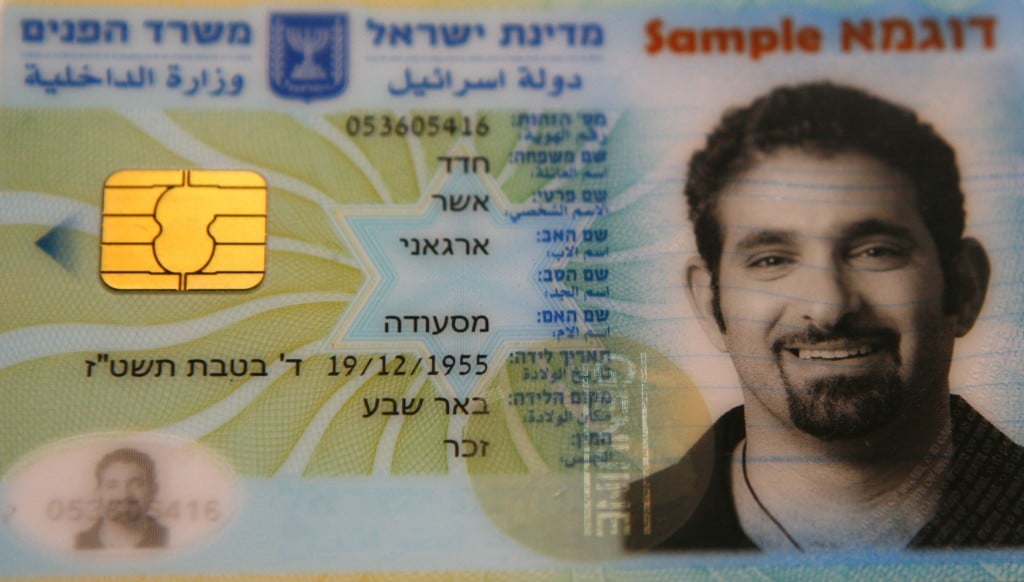
Despite a last-minute appeal from some of Israel’s top data scientists, a Knesset committee voted Monday to approve extension of a trial of the project through next March.
The approval of the extension by the Ministerial Committee on Biometric Applications through March 2016 requires the validation of the Knesset as well.
A petition signed by 74 of the top staff at all of Israel’s universities, called the database a “security threat” that is vulnerable to hacking and data leakage. The scientists asked Prime Minister Benjamin Netanyahu and the Knesset to back off the plan “before Israeli citizens and the country’s security are badly damaged.” The petition was delivered to Netanyahu and MKs on Sunday night ahead of Monday’s vote.
The biometric database test project has been going on for some two years now, with Israelis seeking to obtain an identity card given the option of getting a “smart” card that digitally encodes their personal information, fingerprints, photo, and facial profile (the contours and other details of the face). The data is stored in a chip attached to the card, which contains printed data including the person’s name, gender and birth date.
Currently, the cards are available at almost every Interior Ministry office in the country, and some 650,000 Israelis have volunteered to sign up for one. Participants in the program can get a smart passport as well as ID card.
The main purpose of the database, according to its advocates, is to prevent identity theft and to ensure that terrorists are unable to pass as Israelis and gain access to population centers to carry out attacks. The law was first proposed and promoted in 2009 by then-interior minister Meir Sheetrit, and it was approved on condition that a pilot program lasting two years first be run in order to gauge the law’s effects.
The trial program did not begin until July 2013 because of controversy surrounding it – but now that the two years are up, the law is due to be revisited by the Knesset, which is supposed to evaluate the results of the past two years’ experience and decide whether to require all Israelis to register with the database. Lawmakers are still very divided over the matter; hence the decision to extend the trial.
Big mistake, said petitioners against the project. “As cyber-security and data security experts, we appeal to the prime minister and to members of the Knesset to take into consideration the many dangers involved in requiring all Israelis to enroll in the biometric database,” the petition said. “The database will not only harm the privacy of individuals, but it is likely to harm the security of the state as well.”
Among the signers were Israel Prize winner and former National Sciences Academy director Yaakov Ziv, as well as Israel Prize winners David Harel, Noga Alon, and David Harel. Each of the signers is either the head of faculty or a top department member in computer science, engineering, or math and science faculties of Hebrew University, Haifa University, the Technion, the Weizmann Institute for Science, Tel Aviv University, and Bar Ilan University.
If the objective of the government is to prevent identity fraud, there are far better ways of accomplishing that than through the biometric database, the petitioners said. “Steps to protect against identity theft can be implemented more quickly, cheaply, and far more safely and less intrusively than required by the biometric database. Stop the test and cancel the program altogether before terrible damage is done to Israelis, their privacy, or their country’s security.”









The Times of Israel Community.