

After backlash, Karhi drops bid to grant Netanyahu additional power over media before election
Opposition MKs decry last-minute amendment to controversial broadcast overhaul bill, which one quips ‘suddenly appeared in the middle of the night’; comms minister mocks ‘clowns’
 Add ToI as a Preferred Source on Google
Ariela Karmel is a political correspondent at The Times of Israel. She previously reported for Calcalist and Haaretz. She holds an MA in Middle Eastern and African History from Tel Aviv University and a BA in Political Science from the University of British Columbia.
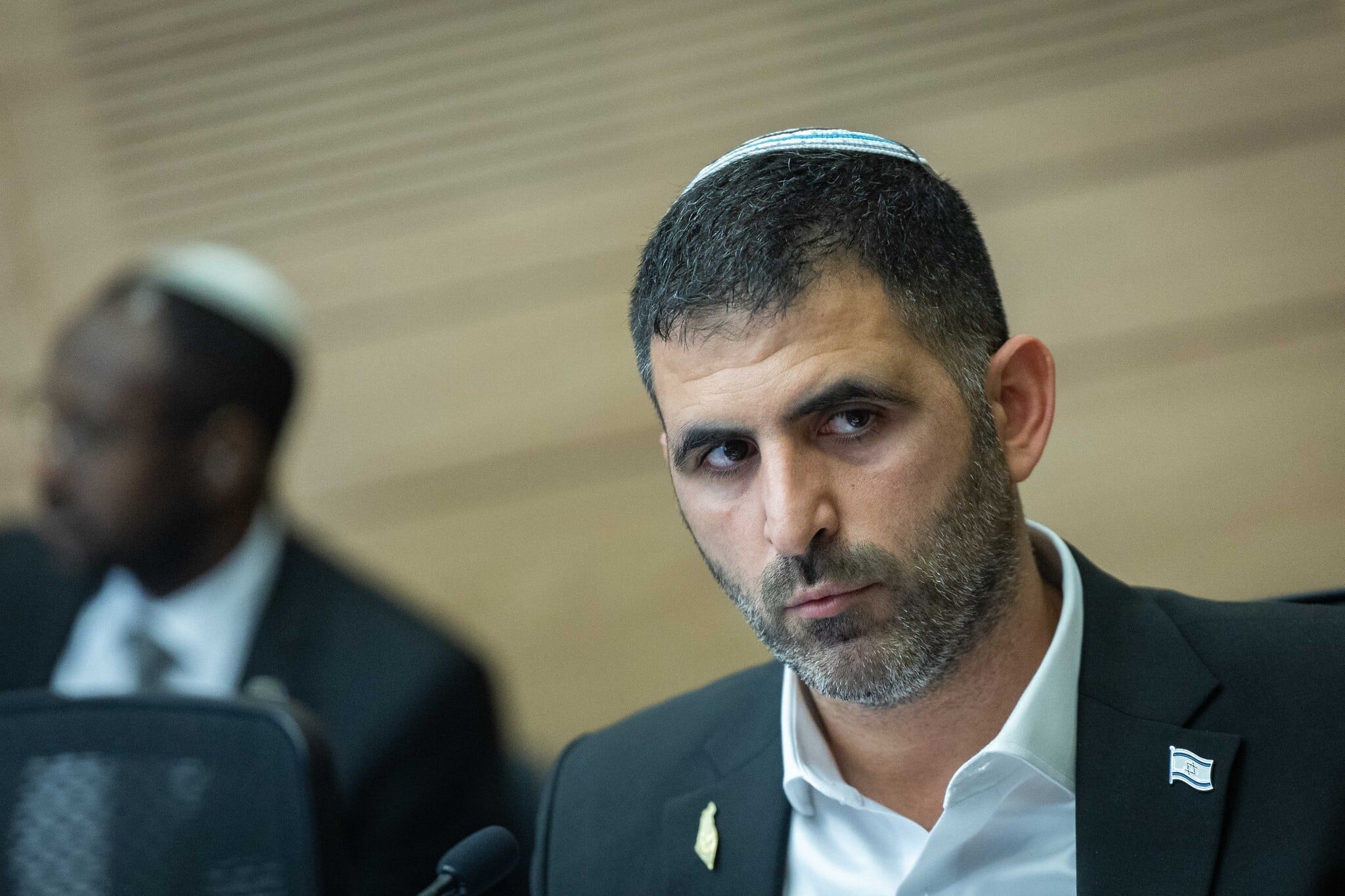
A clause granting Prime Minister Benjamin Netanyahu expanded authority over media organizations was inserted into Communications Minister Shlomo Karhi’s controversial media overhaul bill Thursday, before being removed after outrage from opposition lawmakers, who warned it could grant the government sweeping powers over news organizations just months before national elections.
The bill was advanced in a vote in the Knesset in January and requires two more votes before it can be passed into law.
A similar provision, to go into effect during states of emergency and which would apply to communications distribution platforms such as cable TV, had previously been removed from the legislation. The revised clause that surfaced overnight would also apply to news broadcasters and other content providers, giving the prime minister unprecedented power over news organizations while campaigning and into elections, including the authority to shut them down after consulting with Shin Bet chief David Zini.
The bill’s text, regardless of the amendment, would already give the government significant control over broadcast media, news sites and other media. But the clause prompted outrage from opposition MKs during a hearing of the Knesset committee preparing the measure for its final readings.
“We never discussed this in committee. I never saw a legal opinion on it. No security official sat here and discussed it with us,” said Yesh Atid MK Shelly Tal Meron, noting sarcastically that the provision “suddenly appeared in the middle of the night, just before the vote.”
Democrats MK Efrat Rayten said, addressing Karhi directly, that “the fact that this is happening right before elections reveals your intentions.”
"סתמתם לנו את הפיות, הדיון הזה פסול לחלוטין"
חברי האופוזיציה מחו על אופן התנהלות הדיון והוצאו מהאולם | צפו????️מתוך הדיון בנושא הצ"ח התקשורת@GalitDistel @shlomo_karhi @Efratrayten1 @Shellytalmeron @EitanGinzburg @evgenysova https://t.co/aM1kkjR9aK pic.twitter.com/XgGGIxtLgg
— ערוץ כנסת 99 (@KnessetT) June 11, 2026
Committee legal adviser Pinchas Gort also criticized the measure, noting that without “a professional opinion from security agencies explaining the proposed legislation, there is no possibility of including it in the bill at all.”
Karhi ultimately backed down and removed the clause following the intense pushback, saying security officials advised that the provision was unnecessary.
Opposition lawmakers argued that the speed with which the provision was withdrawn, without substantive discussion, underscored the lack of a clear justification for its inclusion in the first place.
Tal Meron questioned whether the proposal originated with security officials at all, suggesting instead that it came directly from Netanyahu, who is on trial in a corruption case involving allegations that he accepted bribes in the form of positive media coverage in return for providing regulatory benefits. Netanyahu denies the allegations.
She accused Karhi of advancing a corrupt piece of legislation, telling him, “You will be criminally investigated over this legislation.”
All opposition lawmakers on the committee, including Rayten, Tal Meron, Yisrael Beytenu MK Evgeny Sova and former Blue and White MK Eitan Ginzburg were, one by one, ejected from the committee by its chair, Likud MK Galit Distel-Atbaryan.
ח"כ שלי טל מירון לשר קרעי: אתה עוד תיחקר בפלילים בנוגע לקידום "חוק התקשורת". מציעה שאלה ראשונה לחוקרים: מי הגורם הבכיר שדאג כי באישון לילה יוכנס תיקון להצעת החוק שיאפשר לראש הממשלה להורות על השבתת כלי תקשורת pic.twitter.com/0W3chZHKgU
— העין השביעית (@the7i) June 11, 2026
In a joint statement released following the hearing, opposition lawmakers on the committee accused Karhi of attempting to use the legislation to “control what is seen on television during elections” and to hand out benefits to media outlets close to the government.
Responding on X, Karhi mocked the opposition lawmakers as a “group of clowns” and argued that their criticism amounted to an admission that his reform would “dismantle the left’s monopoly” on the media.
He accused opposition lawmakers of acting as lobbyists for major broadcasters and vowed that the coalition would pass the legislation within weeks, calling it “one of the most important reforms” ever enacted in Israel’s communications market.
The episode comes amid accusations that the government is attempting to assert control over Israel’s media landscape, with critics alleging that Karhi’s legislation is being rushed through so it can be implemented before elections, which are set to be held by October 27 but could come as early as September.
Coalition lawmakers reject those claims, arguing the measures are necessary reforms to an outdated regulatory system.
Both the committee’s professional legal staff and Attorney General Gali Baharav-Miara have warned that the legislation undermines press freedom and allows for political interference in media.
Lawmakers also objected to another last-minute amendment lifting restrictions on the i24NEWS channel, owned by Netanyahu ally and French-Israeli businessman Patrick Drahi, from broadcasting on cable and satellite platforms.
“Netanyahu is deeply involved in this legislation,” Rayten said, adding that “this is government corruption at the highest level.”
סתימת פיות בשידור חי! ????
שר התקשורת קרעי עשה מחטף וניסה להעביר שורה של תיקונים אנטי-דמוקרטיים לחוק השידורים כדי שהממשלה תוכל לשלוט במה שנראה בטלוויזיה בזמן הבחירות, וכדי לחלק מתנות לערוצים שמקורבים אליו.הבוקר הגענו לוועדה חברי האופוזיציה, דרשנו תשובות ולא הסכמנו שיעבירו את… pic.twitter.com/GAyZGbseog
— איתן גינזבורג Eitan Ginzburg (@EitanGinzburg) June 11, 2026
This is not the first amendment to be added to the legislation that appears to benefit media outlets aligned with the government.
Last month, an overnight amendment was added to exempt the pro-government right-wing Channel 14 news outlet from a new requirement obligating broadcasters to provide certain content to television platforms free of charge. The requirement is estimated to cost broadcasters NIS 40 million ($13.8 million) annually, according to Hebrew-language media.
The committee has been consistently criticized by opposition lawmakers and Knesset legal staff, who have accused Karhi and Distel-Atbaryan of repeatedly introducing major new clauses and revisions at the last minute, bypassing parliamentary procedure, curtailing debate, mistreating legal advisers and disregarding professional legal advice in order to accelerate the legislation ahead of elections.







The Times of Israel Community.