Toggle Menu
Join our Community
Support ToI and remove
all
ads
Learn more
English
Français
עברית
Get The Daily Edition
Account
Sign In
Sign in
Join our Community
Open Search form
Toggle Menu
Israel & the Region
Jewish Times
Israel Inside
Tech Israel
Real Estate
Israel
The Blogs
Podcasts
Video
Newsletters
The Daily Edition
What Matters Most Today
Tech Israel
Updates from Silicon Wadi
Real Estate Israel
Monthly Update
The Weekend Edition
The Best Reads of the Week
Weekly Highlights
Choice Voices From The Blogs
Partners
Atlanta
Atlanta Jewish Times
North New Jersey
The Jewish Standard
Pittsburgh
Jewish Chronicle
United Kingdom
The Jewish News
Australia
The Australian Jewish News
For Publishers
Become a Partner
Open Search form
Toggle Menu
search
Input search
Clear search input
English
Français
עברית
Latest Articles
Latest Alerts
Israel & the Region
Jewish Times
Israel Inside
Tech Israel
Real Estate
Israel
The Blogs
Podcasts
Video
Newsletters
The Daily Edition
What Matters Most Today
Tech Israel
Updates from Silicon Wadi
Real Estate Israel
Monthly Update
The Weekend Edition
The Best Reads of the Week
Weekly Highlights
Choice Voices From The Blogs
Partners
Atlanta
Atlanta Jewish Times
North New Jersey
The Jewish Standard
Pittsburgh
Jewish Chronicle
United Kingdom
The Jewish News
Australia
The Australian Jewish News
For Publishers
Become a Partner
Community
Join our community
Sign in
About The Times of Israel
Advertise on The Times of Israel
Contact us
Download our App
For IOS users
For Android users
Get the Daily Edition
submit
Follow us
© 2026 The Times of Israel , All Rights Reserved
Terms and conditions
Privacy policy
Your Privacy Rights
Input search
Clear search input
Jewish Times
The life of the tribe worldwide
Advertisement
The Reel Schmooze podcast
‘You Had To Be There’: How a musical about Jesus shaped Jewish comedy
By
Amanda Borschel-Dan
and
Jordan Hoffman
ToI's movie maven and deputy editor delve into the delightful romp that documents the 1972 Toronto production of 'Godspell,' starring a constellation of fledgling Jewish greats
Poll: Most US Jewish voters deeply concerned Netanyahu has fueled antisemitism
By
ToI Staff
Interview
/
We need religion, writes rabbi in her new book, but it’s not there to make our lives better
By
Andrew Silow-Carroll
‘Long overdue’: Newly restored Henry Ford home will confront his antisemitism
By
Andrew Lapin
September 19, 2026, 7:50 am
Jewish geneticist finds mutation behind sudden deaths that haunted her family for decades
In ‘The Dressmaker’s Mirror,’ Susan Weiss Liebman recounts how supposed freak accidents hid an inherited heart condition – and the implications for Ashkenazi Jews and genetic testing
By
Lianne Kolirin
September 19, 2026, 6:46 am
In banning Macklemore, Kraft cites rapper’s ‘broader history of antisemitic rhetoric and imagery’
Critics of pro-Palestinian singer draw attention to his 2014 ‘Jewface’ appearance, for which ADL forgave him at the time, as he causes fresh outrage with ‘genocide’ remarks
By
Shira Li Bartov
September 19, 2026, 1:26 am
After outcry, Texas lieutenant governor says schools should teach ‘Night’ and other Holocaust books
Dan Patrick clarifies to JTA that Texas schoolchildren should read Elie Wiesel’s memoir and ‘Diary of Anne Frank,’ both of which he had included on list of ‘dirty, filthy and vulgar books’
By
Andrew Lapin
September 18, 2026, 3:24 pm
Jewish radio host Sid Rosenberg says he ‘charmed’ JD Vance after slamming VP’s stances on Israel
Thursday meeting comes after US vice president said Trump has been willing to ‘part ways’ with Netanyahu, and that US Mideast policy can’t be ‘subservient to the State of Israel’
By
Sharon Udasin
September 18, 2026, 10:39 am
First they take Manhattan? Looking to mimic Mamdani, far left’s Elif Eralp eyes Berlin City Hall
Jewish community wary as Die Linke party’s mayoral candidate vows to fight antisemitism ahead of September 20 election; critics claim she can’t even control it within her own party
By
Joshua Schultheis
September 18, 2026, 6:53 am
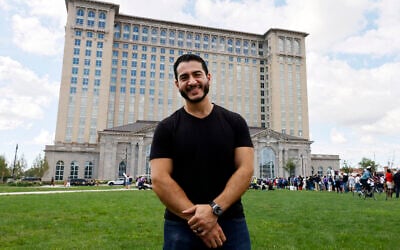
Hundreds of Michigan Jews pledge to vote for Abdul El-Sayed
‘A vote is not a valentine; it’s a strategic chess move’: Open letter from ‘Michigan Jews for Democracy’ joins other open letters backed by Jews critical of the anti-Israel Democratic candidate
By
Andrew Lapin
September 17, 2026, 5:06 pm
‘Appetizing’ stores, a Jewish American food tradition, are making a comeback
The less famous sibling of the Jewish deli faded away as fewer customers cared about kosher laws, but a new wave has popped up, and ahead of Yom Kippur, they’re busier than ever
By
Katie Workman
September 17, 2026, 4:44 pm
Robert Kraft says singer Sheeran asked him to match $2 million aid pledge amid Macklemore beef
Patriots owner who pushed musician to drop rapper from tour over anti-Israel performance says Macklemore later asked him to match $1 million pledge to Palestinian groups, promises to ‘build bridges’
By
ToI Staff
September 17, 2026, 3:44 pm
Elliott Gould talks faith, family, Barbra Streisand and his new movie
Actor lends his voice to new animated film ‘Legend of Destruction’ about the end of the Second Temple, directed by Israeli filmmaker Gadi Dar, now streaming worldwide
By
Brigit Grant
September 17, 2026, 12:47 pm
Jewish Democratic elder statesman Sander Levin backs Abdul El-Sayed in Michigan Senate race
Candidate’s refusal to endorse two-state solution has many local Jews balking; 95-year-old former congressman of over three decades says while he differs on Israel, they agree on other policy
By
Andrew Lapin
September 17, 2026, 9:48 am
Peter Max, whose psychedelic pop art came to symbolize the 60s, dies at 88
American-Jewish artist was born Peter Max Finkelstein in Berlin in 1937; family fled Nazi Germany to China, then lived in Haifa before settling in NYC when he was a teen
By
Beth J. Harpaz
September 17, 2026, 9:43 am
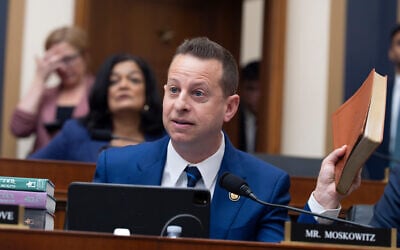
US Rep. Moskowitz uses Holocaust footage in campaign ad, citing family history
‘Never again is now,’ says Florida congressman, touting record of fighting antisemitism; his Republican opponent in competitive race, Scott Singer, is also Jewish
By
Sharon Udasin
September 17, 2026, 9:43 am
LA Federation sues museum for custody of looted paintings once hoarded by Hermann Göring
Pasadena museum taken to court over Adam and Eve diptych; separately, Holocaust survivor’s daughters sue Auschwitz Museum for watercolors she was forced to paint for Josef Mengele
By
Jackie Hajdenberg
September 16, 2026, 7:11 pm
Israeli travelers returning to Morocco as direct flights resume after three years
Travel industry sources report renewed interest in Morocco’s synagogues, cemeteries and historic Jewish quarters, as well as kosher travel and heritage tours
By
Zev Stub
September 15, 2026, 2:53 pm
British healthcare system rife with ‘malignant’ antisemitism, watchdog alleges
Film by Campaign Against Antisemitism shares several anecdotes, including surgeon telling patient during a procedure that Jews kill Palestinian kids ‘for fun,’ nurse doing Nazi salute for colleague
By
Michael Horovitz
Load More
Advertisement
close popup
Sign in or Join The Times of Israel Community
Sign in or Register
Paying ToI Community members are invited to comment on articles
Email address
*
Please use the following structure: example@domain.com
Continue
Or Continue with
By joining you agree to the
terms and conditions
Send me The Times of Israel Daily Edition
back
close popup
Register to continue
Email address
*
Change
REGISTER
Or Continue with
back
close popup
Log in to continue
Email address
*
Something went wrong.
Please try again in a few minutes..
Continue
back
close popup
Sign in or Join The Times of Israel Community
Sign in or Register
You are currently registered. Please join The Times of Israel Community to comment and enjoy other Community benefits
Only ToI Community members can comment below articles
Email address
*
Password
*
Incorrect password. Please try again or choose an option below.
Forgot your password?
/
Send me a login link
Continue
Sign in without joining
Or Continue with
close popup
Check your email
We sent an email to you at
.
It has a link that will sign you in.
Click the link in that email to complete registration so you can comment.
back
close popup
Join The Times of Israel Community
Commenting is available for paying members of The Times of Israel Community only. Please join our Community to comment and enjoy other Community benefits.
Email address
*
Please use the following structure: example@domain.com
JOIN NOW!
close popup
Thank you! Now check your email
You are now a member of The Times of Israel Community! We sent you an email with a login link to
. Once you're set up, you can start enjoying Community benefits and commenting.
Back to top
Never miss breaking news on Israel
Get notifications to stay updated
Stay updated
No thanks
You're subscribed
close popup
Register for free
and continue reading
Registering allows you to manage your newsletters and alerts and helps us improve your experience. It takes just a few seconds.
Already registered? Enter your email to sign in.
Email address
Please use the following structure: example@domain.com
REGISTER OR SIGN IN
Or Continue with
By registering you agree to the
terms and conditions
. Once registered, you’ll receive our Daily Edition email for free.
Send me The Times of Israel Daily Edition
back
close popup
Register to continue
Email address
Change
REGISTER
Or Continue with
back
close popup
Log in to continue
Email address
Something went wrong.
Please try again in a few minutes..
Continue
back
close popup
Sign in or Register
Email address
*
Password
*
Incorrect password. Please try again or choose an option below.
Continue
I forgot my password
/
Send me a sign in link
Or Continue with
back
close popup
Check your email
We sent an email to you at
.
It has a link that will sign you in.
Click the link in that email to complete your registration.