

So long, Trump’s positions
The president-elect is seemingly walking back his stances — including now saying he will solve the Israeli-Palestinian conflict — and his comments are dutifully reported, though it’s not clear if they truly represent a new dawn
Joshua Davidovich is The Times of Israel's Deputy Editor
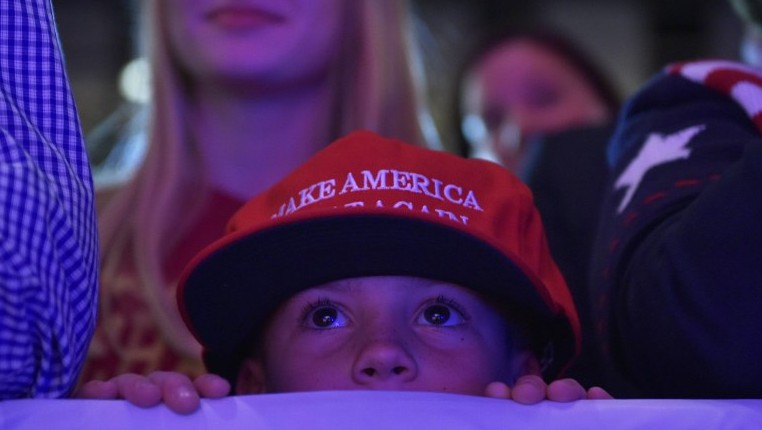
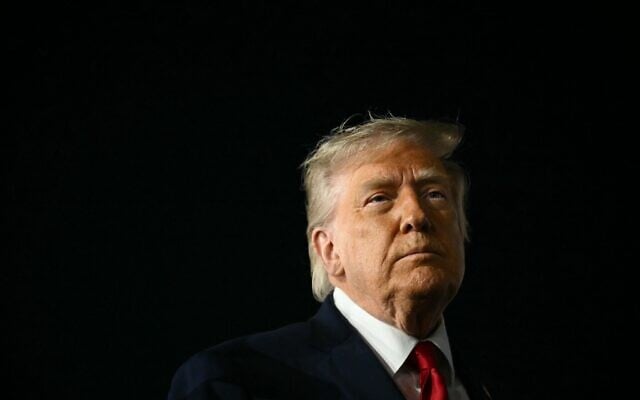
After several days – actually months, really – of trying to figure out how Donald Trump might approach Israel’s itty bitty little conflict with the Palestinians, pundits and president watchers in the press got their clearest indication over the weekend, or what would be their clearest indication if Trump weren’t such a wildcard.
While Trump and his aides have offered a (sometimes contradictory) picture of a president taking a relatively hands-off approach to the conflict, the latest words from the horse’s mouth, as transcribed by The Wall Street Journal, give a picture of a future president who is ready to get hands dirty in the night soil of Israeli-Palestinian fighting on Day 1.
And despite Trump’s famous inability to stick to some positions for any significant amount of time (his two contradictory tweets on protesters against him within a day of each showcase that tendency), papers still run those comments to WSJ nice and high.
Thankfully, though, readers of anything but Israel’s most widely read newspaper – the free tabloid Israel Hayom – know via past reporting that you can’t necessarily trust his words to be thought-through policy positions that will last even until the next interview.
While the papers don’t say that outright, they put his about-face on the Israeli-Palestinian conflict in the context of a number of campaign promises he was quick to disavow over the weekend.
“Over the weekend, President-elect Donald Trump sounded like someone who was looking to climb down from the limb he had gone out on during his campaign by negating his aggressive, decisive, and sometimes imaginary, campaign promises regarding what he promises to do if he wins – including regarding Israel,” Yedioth Ahronoth’s Orly Azulay reports.
In Haaretz, Barak Ravid notes that Trump’s been heard on this subject before, and hasn’t exactly stuck to his guns.
“Throughout the campaign, Trump delivered contradictory messages on the subject. In one instance, he said he will be ‘neutral’ in his attempt to promote the peace process, a remark that brought criticism from Israel’s supporters in the U.S. On another occasion, he said that he will not exert any pressure on Israel and will even allow as much settlement building as it wishes,” he reports.
While Muslims, immigrants, women, Hillary Clinton and many others in the US may see the turnaround as a possible bright spot in what has been a cloudy few days, Haaretz’s Chemi Shalev notes that many Americans are split (as always) on whether to believe the new Trump, or whether to see his recent statements (which also include walking back throwing Clinton in jail, gutting Obamacare, building a wall and more) as just another facile flip with no actual bearing on what his presidency will look like.
“Some have taken heart and seem willing to give Trump a new look and fresh start. Others maintain it’s just a wolf in sheep’s clothing maneuver and that President Trump will be no different from candidate Trump: racist, misogynist, ignorant and inciting,” he writes. “They point to Trump’s decision to include his own family in the transition team now headed by running mate Mike Pence: It shows his imperial attitude and his disdain for proper codes of conduct and potential conflicts of interest. Others have focused on Trump’s campaign pledge to ‘drain the swamp’ in Washington and his seemingly contradictory inclusion of DC insiders, Wall Street brokers and K Street lobbyists in his transition team.”
Israel Hayom, looking more and more like a Trump mouthpiece every day (the “Trump’s revolution” banner running atop much of its election coverage is one example) is the one paper not to lead with his 180-degree turn, but rather blasts the headline “Trump gets to work” on its front page, with its top story dealing with that transition.
None of the possible controversies regarding Trump’s transition team show up in the paper’s plain-jane coverage, though its claim that changes in the transition team reflect those who will be “senior officials in the Trump government,” followed by news that Trump’s kids and son-in-law are on the team, may have some readers who connect the dots scratching their heads.
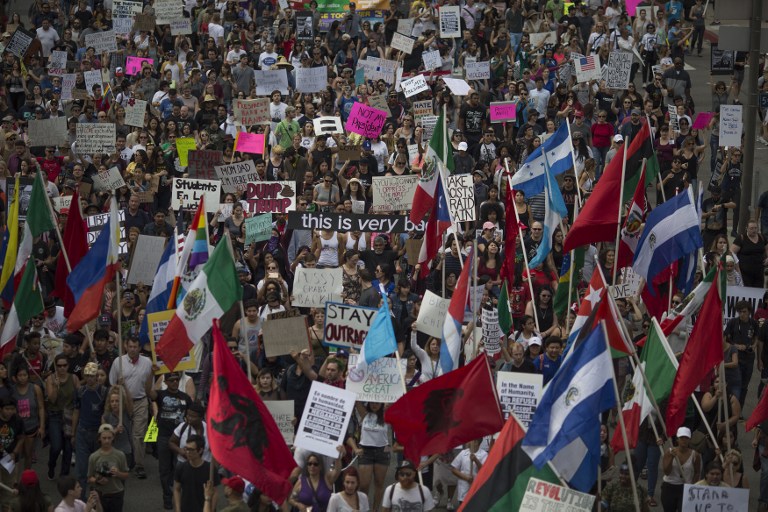
For even more proof that the paper will do little more than act as an Israeli soapbox for Trump, one need only flip to Page 5, where a story about anti-Trump protests is headlined with the president-elect’s unfounded and nonsensical claim that “professional protesters, incited by the media, are protesting.” (Are they being paid or incited?) The story, which follows the tweet with his second one praising the protesters, offers no proof or context for the claim that the protesters are professionals.
Just had a very open and successful presidential election. Now professional protesters, incited by the media, are protesting. Very unfair!
— Donald J. Trump (@realDonaldTrump) November 11, 2016
Love the fact that the small groups of protesters last night have passion for our great country. We will all come together and be proud!
— Donald J. Trump (@realDonaldTrump) November 11, 2016
Incitement is on the minds of other corners of the media as well, after Prime Minister Benjamin Netanyahu went on Facebook to call claims that his incitement led to the assassination of prime minister Yitzhak Rabin 21 years ago a “distortion of history.”
Haaretz plays up the left-wing backlash to the statement, including a response by Ehud Barak, another former prime minister (who also served as Netanyahu’s defense minister) calling the prime minister the “head inciter.”
In Yedioth Ahronoth, columnist Eitan Haber contributes to the so-called “distortion” by pointing out that since the incitement that led to Rabin’s murder was never fully investigated, it’s impossible for anyone to fully respond to the claims of Netanyahu and others that they had nothing to do with Yigal Amir pulling the trigger on that fateful November night. But the truth is out there.
“Many of us know exactly who incited to murder, who ran the [right-wing] march that happened earlier that terrible Saturday night, and who prepared in advance the signs put up in every city for every terror attack that was or would be,” he writes, referring to anti-Rabin posters.
“A large portion of these people continue to spread hatred and incitement openly today, and there’s no justice in Israel which will stop this decline before we slide into chaos.”
So long, Leonard
It’s somewhat fitting that after a week of Trump and other political hubbub dominating the news agenda, the thing to finally allow something non-political onto the front page is death of a gentle musical giant, a Jewish man so unpolitical he became a Buddhist monk and could unite left and right with his spiritual and soul-searching songs: Leonard Cohen.
Tributes to Cohen, who died Thursday, pour forth from all three major papers, praising him and his music and some offering personal tales connected to the Canadian singer.
Yet despite the seemingly unpolitical nature of Cohen and his death, in Yedioth Shlomo Artzi, a somewhat shmaltzier Israeli counterpart to Cohen, ties it all into the larger zeitgeist of 2016.
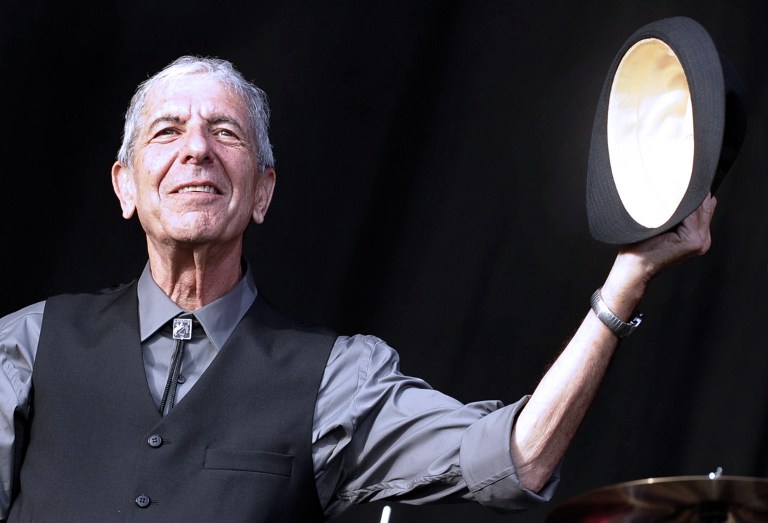
“Cohen ascended heavenward when the Trumps and the grumps are celebrating the victory of evil. The good versus bad. The sexy Jewish Canadian against the sexist American president,” he writes. “Leonard Cohen was for us a man of God, women and love. The deepest man with the deepest voice, whom everyone felt was singing just for them.”
One of the people who felt that way was radio DJ Yoav Kutner, who writes in an appreciation in Israel Hayom that Cohen was one of the people that most influenced him, whose music “stirred strong emotions of joy, sadness, longing and love.”
“It’s so easy to just connect to his sweet romantic side, especially because of the pleasant melodies that envelope his songs, but Leonard Cohen was always more than a sweet singer of love songs,” he writes. “And always, even when he was young and at the start of his path, when a revolution of sex, drugs and rock and roll roiled around him, his unique outlook on life was always complicated and mature; in his works he was never really young, and that’s also true of his voice, rough and low and at the end, truly broken.”








The Times of Israel Community.