

There won’t be blood
After a highly touted Obama-Netanyahu meeting goes better than expected, some focus on putting down the haters, some refuse to buy in, and some see a glimmer of optimism
 Add ToI as a Preferred Source on Google
Joshua Davidovich is The Times of Israel's Deputy Editor
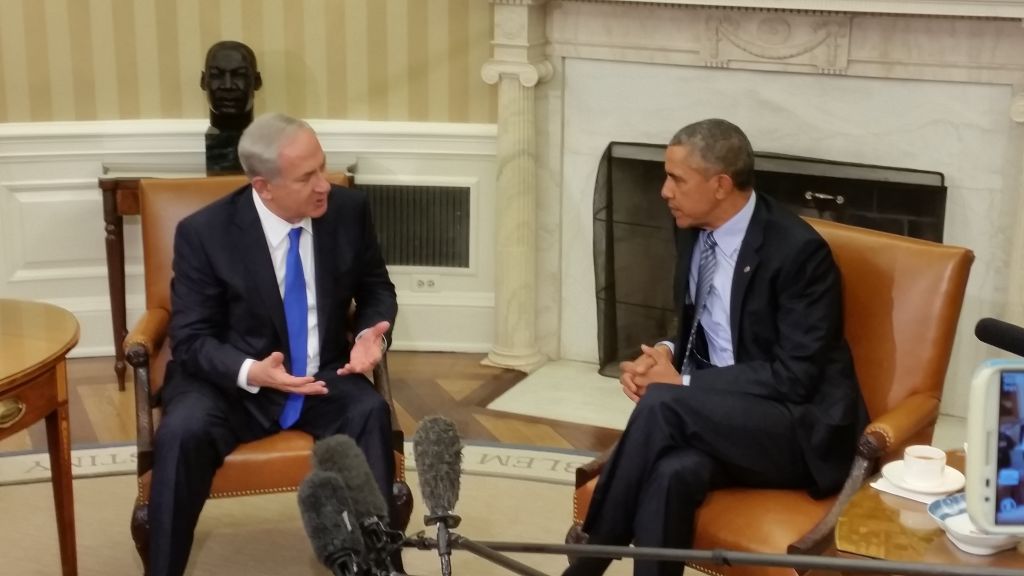
There were enough prognostications and analyses about the rotten ties between Prime Minister Benjamin Netanyahu and US President Barack Obama in the lead-up to Monday’s Oval Office meeting that one would be forgiven for thinking there was a decent probability it would end with Netanyahu unceremoniously booted to the White House curb by security guards while shaking his fist and yelling about Obama being an anti-Semite.
So when the meeting kicked off with pleasantries between the two instead of a verbal sparring match, and ended with Netanyahu calling it one of the best meetings he’s had with Obama, the press had no choice but to take note, and even rethink its coverage.
A day after running a commentary headlined “There won’t be a new start,” Yedioth Ahronoth shamelessly runs the headline “A new start” on its front page. It’s okay, Yedioth, even the Oracle of Delphi probably got some stuff wrong.
In Netanyahu-loving Israel Hayom, commentators have a field day sticking it to the haters (read: Yedioth).
“We were promised violence. They told us that Netanyahu was going to Washington – mostly to take it. Many commentators, objective of course, explained to us that Netanyahu’s battle over the Iran nuclear talks dealt a serious blow to US-Israel ties,” commentator Boaz Bismuth writes. “They also predicted that repairing them would take years. It seems that, as in the Bible, ‘years’ is a relative term. So what really happened in the Oval Office? The meeting between the US president and Israeli prime minister lasted 45 minutes longer than expected. There are two possibilities to explain this: Either they are both masochists who love to suffer from each other’s company, or the more reasonable explanation — both leaders are responsible and understand the seriousness of the hour and the major problems on the Middle East agenda today (Islamic State, Syria, Iraq and much much terror) and have a joint will and joint interest to stabilize the region.”
The tabloid’s Haim Shine also gets in on the fun, penning a piece headlined “The commentators came away disappointed, very.”
“Commentators had an expectation, even a hope, that the meeting would let them report on a severe tear in ties between the US and Israel, and as usual blame Netanyahu for the crisis,” he charges. “In order to boost the drama, they were ready with articles and analyses that described the nadir in personal ties between Obama and Netanyahu as a central factor in the American unwillingness to grant the prime minister diplomatic and defense aid.”
Yet the papers report that Netanyahu did come away with an upgraded defense aid package in exchange for concessions to Palestinians.
Still, Yedioth reporter Orly Azulay doesn’t buy the smiles at the cordial press appearance before the meeting, where both leaders made sure to look like two great pals who just couldn’t wait to hang out with each other, and not the most storied rivalry since Jesus and Starbucks.
“Obama abstained from joking around with his counterpart, to laugh loudly and to pay compliments, as he has done many times in the past while in the same position, and there were those in the White House who claimed he look cold and impatient,” she reports.
In a commentary accompanying her reporting, Azulay goes against her own paper’s headline, and continues to downplay the friendly display between the two.
“Voices of opening a new page were not present in the meeting, nor were glimmers of a reboot in relations. Obama was sure to make clear that he had not forgotten the terrible year between him and Netanyahu,” she writes, quoting a White House official saying “the meeting was productive and polite, but I wouldn’t say that everything is forgotten.”
Haaretz takes the unusual step of not focusing on the body language of the two leaders but rather on what was discussed between them, leading off its front page with the news that Israel is demanding it be factored in to any deal reached with regards to Syria.
“We cannot accept an accord in Syria that [allows it to remain] a site from which Iran and its proxies launch attacks on Israel. We will not accept that. If we’re is talking about an agreement in Syria, it must include stopping the use of Syrian territory … to carry out direct or indirect attacks on Israel,” the paper quotes Netanyahu saying.
Reporter Barak Ravid notes Netanyahu’s good cheer after the meeting, writing that it “bordered on euphoria.” Ravid takes the position that the change in the relationship is due to an attitude adjustment by Netanyahu, who suddenly seemed willing to work with the Americans after seven years of being at loggerheads.
“One must welcome Netanyahu’s attitude, and hope it’s not a one-time thing. But those who listened to him on Monday could not help but ask where he’s been until today. Why did he need to wage a relentless war over the past seven years against the leader of Israel’s biggest ally? One possible conclusion is that the arrival of a nuclear deal with Iran – the biggest point of contention between the two leaders – did a great service to Israel-US relations. From the moment the differences were no longer relevant, the emotions could be put aside and logical conduct could be resumed,” he writes.
Military correspondent Amos Harel, parsing the reported upgraded defense deal that was reportedly agreed to, notes that it’s Obama who took the high road in separating out his feelings for Netanyahu from his commitment to the security of Israel.
“From Obama’s remarks during the short photo-op with Netanyahu before their meeting, it seems the president is willing to restrain himself despite the maneuvers the prime minister carried out in the American leader’s own backyard over the past two years, when, on the pretext of fighting Iran’s nuclear program, Netanyahu inserted himself into the tense confrontations between the Democrats and the Republicans. The disputes between the parties will apparently be focused on the question of resuming diplomatic contacts with the Palestinians,” he writes. “But Obama, as he has throughout his nearly seven years in office, is continuing to separate between diplomatic disputes and the generous defense assistance he grants to Israel.”





The Times of Israel Community.