Archaeologists in Egypt unearth Sphinx-like Roman-era statue from 2,000 years ago
Researchers also find Roman-era stone slab with demotic and hieroglyphic inscriptions; shrine includes a two-layer platform and mud-brick basin from Byzantine era
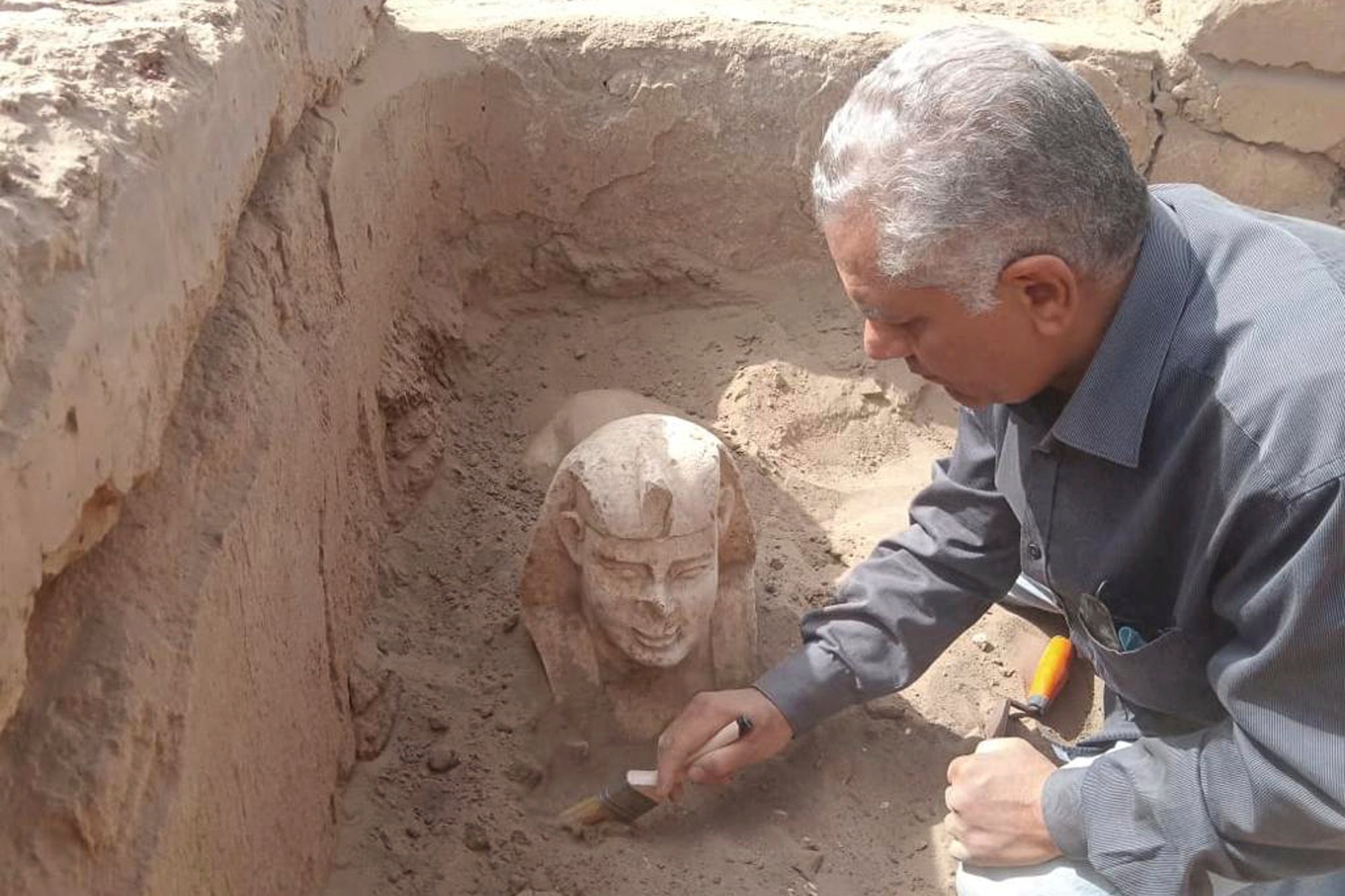
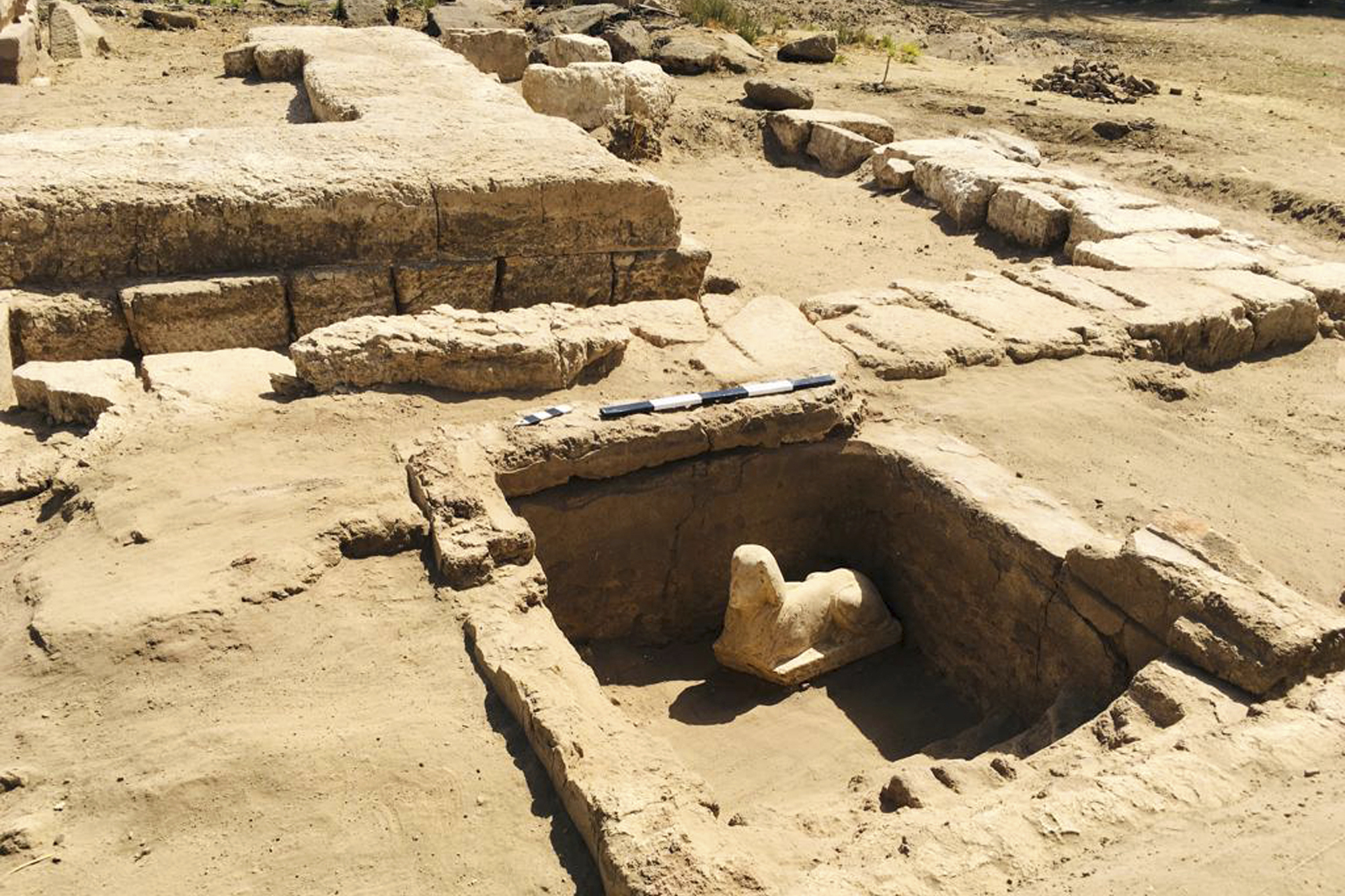
In this undated photo distributed March 6, 2023, by the Egyptian Ministry of Tourism and Antiquities, a sphinx statue believed to be made in the likeness of a Roman emperor is uncovered from an archaeological site in Qena, Egypt. (Egyptian Ministry of Tourism and Antiquities via AP)
CAIRO, Egypt — Archaeologists unearthed a Sphinx-like statue and the remains of a shrine in an ancient temple in southern Egypt, antiquities authorities said Monday.
The artifacts were found in the temple of Dendera in Qena Province, 280 miles (450 kilometers) south of the capital of Cairo, the Antiquities Ministry said in a statement.
Archaeologists believe the statue’s smiling features may belong to the Roman emperor Claudius, who extended Rome’s rule into North Africa between 41 and 54 CE, the ministry said.
It said archaeologists would conduct additional studies on the markings on the stone slab, which could reveal more information about the statue’s identity and the area. The statue is much smaller than the towering, well-known Sphinx in the Pyramids of Giza complex, which is 66 feet (20 meters) high.
The archaeologists also found a Roman-era stone slab with demotic and hieroglyphic inscriptions.
Get The Times of Israel's Daily Editionby email and never miss our top stories
The limestone shrine includes a two-layer platform and a mud-brick basin from the Byzantine era, the ministry said.
Such discoveries are usually touted by the Egyptian government in hopes of attracting more tourists, a significant source of foreign currency for the cash-strapped North African country.
In this undated photo distributed on March 6, 2023, by the Egyptian Ministry of Tourism and Antiquities, a sphinx statue believed to be made in the likeness of a Roman emperor is uncovered from an archaeological site in Qena, Egypt. (Egyptian Ministry of Tourism and Antiquities via AP)
Advertisement
Help us report truthfully on social media
As a multimedia journalist, my job is to take the quality, fact-based journalism produced by The Times of Israel newsroom and make it accessible across every platform — from Instagram posts to podcasts to short-form videos.
This is how many, especially young people, consume news these days. But misinformation is rampant on social media. Our team at ToI produces accurate, responsible short-form reporting on Israel and the Jewish world.
If you believe in the importance of factual social media journalism, please consider joining our reader support group, The Times of Israel Community. Your financial support is essential to sustain responsible multimedia reporting.
We’re really pleased that you’ve read X Times of Israel articles in the past month.
That’s why we started the Times of Israel - to provide discerning readers like you with must-read coverage of Israel and the Jewish world.
So now we have a request. Unlike other news outlets, we haven’t put up a paywall. But as the journalism we do is costly, we invite readers for whom The Times of Israel has become important to help support our work by joining The Times of Israel Community.
For as little as $6 a month you can help support our quality journalism while enjoying The Times of Israel AD-FREE, as well as accessing exclusive content available only to Times of Israel Community members.
Thank you, David Horovitz, Founding Editor of The Times of Israel


 Add ToI as a Preferred Source on Google