

Bennett poised to gain as Jewish Home votes in leadership primary
30,734 party members choose between the incumbent leader and two candidates seeking to take the party further to the right
 Add ToI as a Preferred Source on Google
Raoul Wootliff is a former Times of Israel political correspondent and Daily Briefing podcast producer.
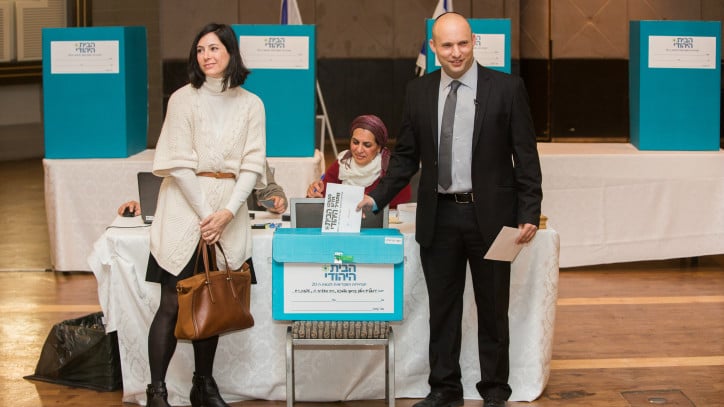
Hoping to consolidate his position as party leader and quash internal rifts within the stalwart religious Zionist party, Naftali Bennett faced off Thursday against two hard-right candidates in the Jewish Home leadership primary.
At 2 p.m. local time, 69 polling stations across the country opened for 30,734 Jewish Home members eligible to vote in the primary for the party leader.
In a move seen by some as an attempt to shore up his position within the party before a potential general election, Bennett in March called early primaries, giving challengers less that two months to mount a campaign against him.
Though new general elections are officially only expected in 2019, a number of parties have indicated they are preparing for the possibility they will take place within the next year as a result of two investigations into Prime Minister Benjamin Netanyahu’s dealings that could see him forced out of power.
While a number of figures within the religious Zionist community had signaled a possible run against Bennett, only two other candidates will be on the ballot Tuesday.
The more high-profile contender, Yonatan Branski, is a former IDF colonel with an illustrious military career spanning over 25 years. During that time, he headed the army’s ultra-Orthodox Nahal Haredi unit and served as deputy head of the IDF’s Gaza Brigade.
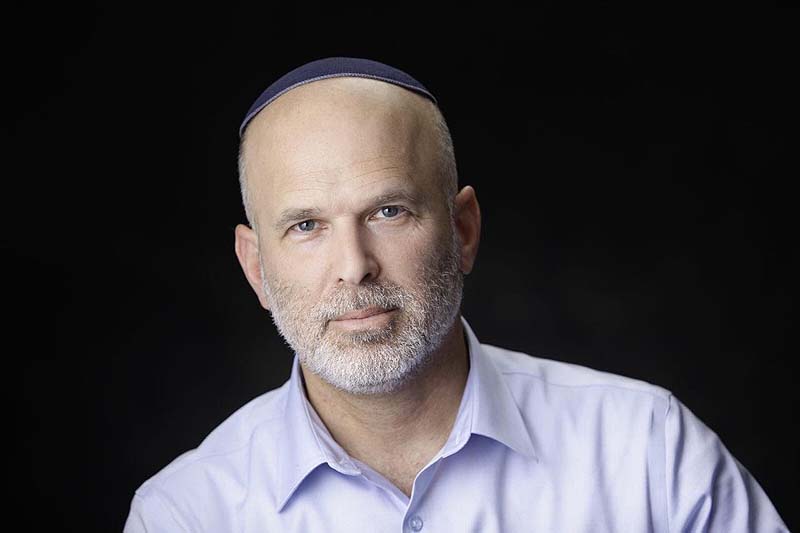
Positioning himself to the right of Bennett, Branski has argued that the Jewish Home party has drifted away from the community’s true values. Under Bennett, Branksi argued, the party has become a clone of the secular Likud party, espousing right-wing positions when politically expedient, but ignoring its identity as a party representing religious Zionist Jews.
The third candidate, Rabbi Yizhak Zagha, who heads the Spirit of Jerusalem educational organization, was seeking to instill the party with his religious Zionist vision, which includes educating Palestinians to support Israel by censoring part of the Koran.
While Bennett first won the leadership of the party in 2012 as an upstart with no legislative experience, challenging some of the long-established figures within the religious-Zionist community, he now has four years of cabinet experience under his belt and is seen by many as the new establishment.
Bennett was seen by many as the great white hope of the pro-settlement, religious right when he led the party in the 2013 general election to 12 Knesset seats, the most it had ever won.

But in 2015, as right-wing voters flocked to the Likud, the party dropped to just eight seats. Recent polls give the Jewish Home around 10 seats, an improvement over the last general elections but still far from the original promise many saw in Bennett.
A renewed mandate would give him both clout in his efforts to push his plan to annex large parts of the West Bank, and give him power in the internal elections for the Jewish Home central committee and local party branches.
Party officials close to Bennett said a big turnout would benefit the incumbent and counter enthusiastic protest voters. But they were remaining quiet on their expectations for a big win, hoping not to sow complacency among their voters.
Results were expected around 11 p.m.






The Times of Israel Community.