

Blaming each other, India and China seek calm after deadly border clash
Indian Prime Minister Modi vows death of 20 of his country’s soldiers in brawl ‘will not be in vain’ but wants peace; Beijing urges neighbor to restrain troops, calls for talks
 Add ToI as a Preferred Source on Google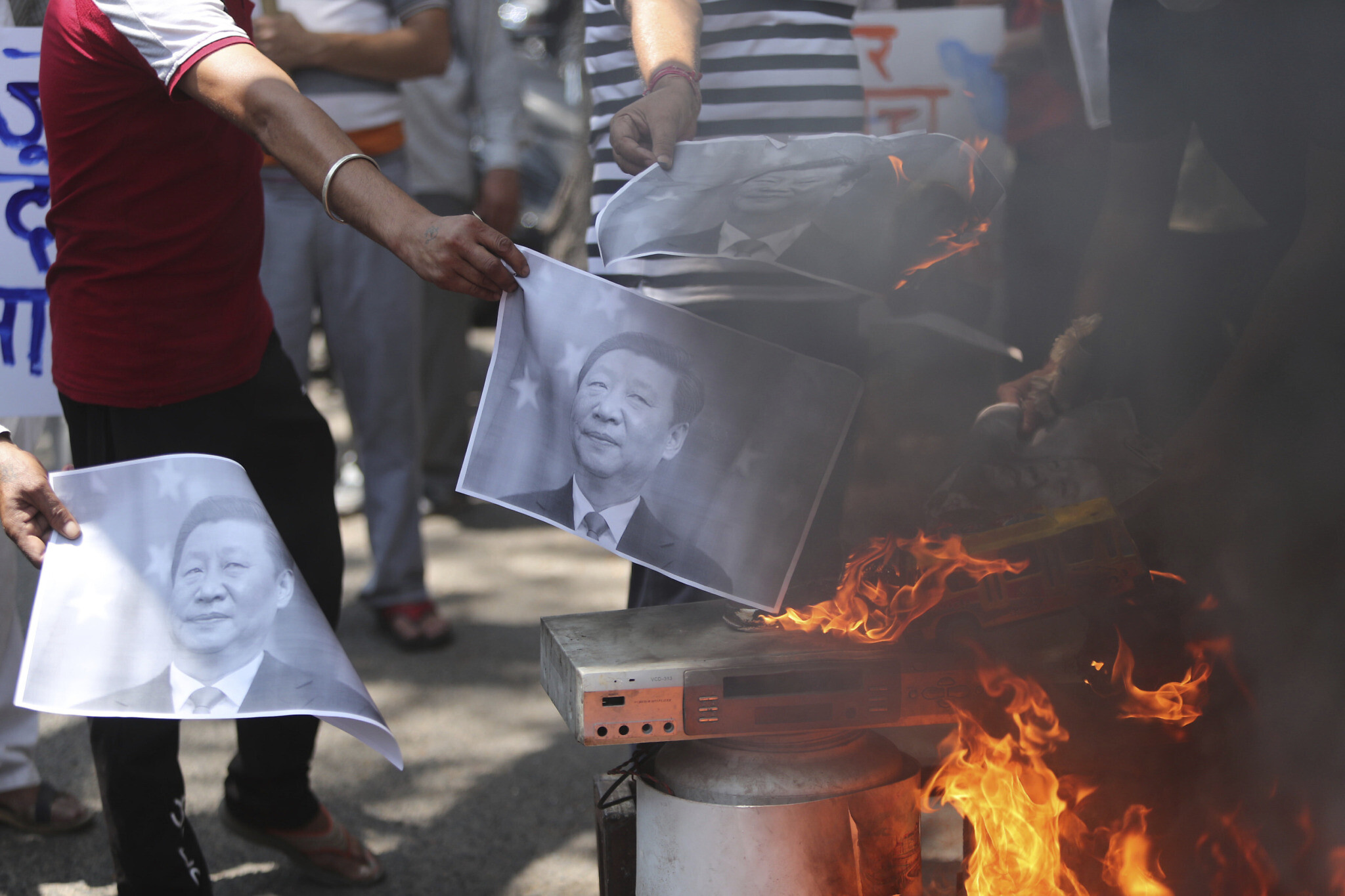
BEIJING, China — China said Wednesday it wanted to avoid further clashes with India along their Himalayan border after the first deadly confrontation between the two nuclear powers in decades.
The two countries have traded blame for Monday’s high-altitude brawl that left at least 20 Indian soldiers dead, with China refusing to confirm so far whether there were any casualties on its side.
Chinese foreign ministry spokesman Zhao Lijian insisted again Wednesday that it was Indian troops who illegally crossed the border and attacked the Chinese side.
This led to “a serious physical confrontation between both sides that caused deaths and injuries,” Zhao said at a regular briefing, without providing more details about the casualties.
He said China urges India to “strictly restrain frontline troops, do not illegally cross the border, do not make provocative gestures, do not take any unilateral actions that will complicate the border situation.”
But he added that the two sides “will continue to resolve this issue through dialogue and negotiations.”
“We of course don’t wish to see more clashes,” Zhao said.
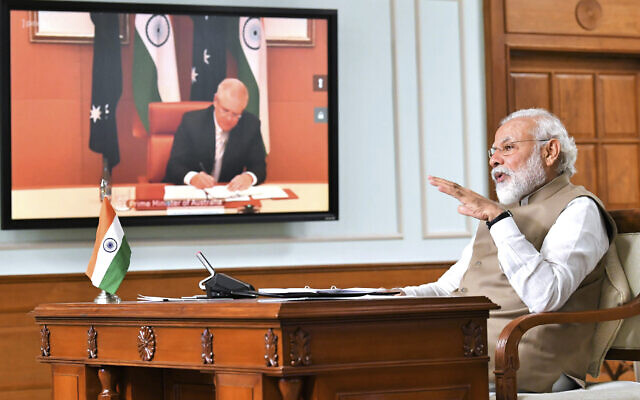
Indian Prime Minister Narendra Modi said the soldiers’ deaths “will not be in vain.”
“I would like to assure the country that the sacrifice of our soldiers will not be in vain. For us, the unity and integrity of the country is the most important… India wants peace but is capable of giving a reply if provoked,” Modi said in a televised address.
India’s Defense Minister Rajnath Singh tweeted that the loss of soldiers in the Galwan Valley is “deeply disturbing and painful.”
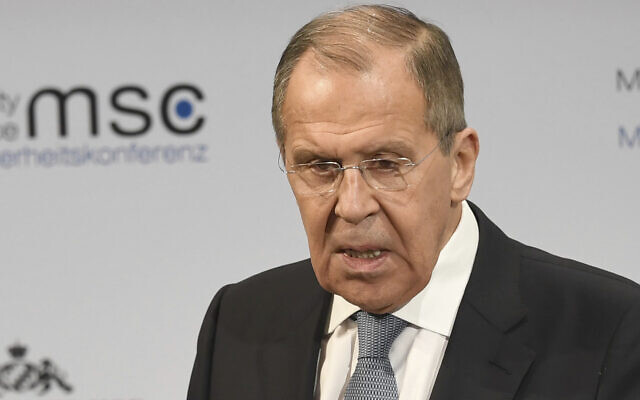
Russian Foreign Minister Sergey Lavrov said Moscow welcomed contacts between India and China.
“It’s already been announced that military representatives of India and China have been in contact, they are discussing the situation, discussing measures for its de-escalation. We welcome that,” Lavrov told a press conference.
A group of protesters gathered near the Chinese Embassy in the Indian capital condemning the killing of the soldiers and demanding a ban on Chinese goods. They carried placards with crossed photographs of Chinese President Xi Jinping and the Chinese army.
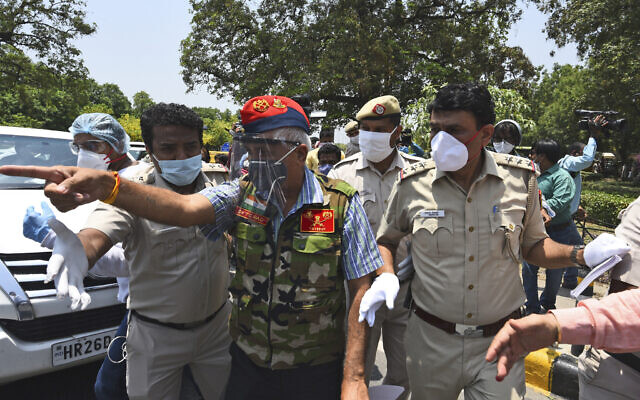
A small group of retired Indian army personnel also marched close to the embassy with placards reading “Chinese army down down,″ but they were detained by police.
China claims about 90,000 square kilometers (35,000 square miles) of territory in India’s northeast, while India says China occupies 38,000 square kilometers (15,000 square miles) of its territory in the Aksai Chin Plateau in the Himalayas, a contiguous part of the Ladakh region.
India unilaterally declared Ladakh a federal territory while separating it from disputed Kashmir in August 2019. China was among the handful of countries to strongly condemn the move, raising it at international forums including the U.N. Security Council.
Thousands of soldiers on both sides have faced off over a month along a remote stretch of the 3,380-kilometer (2,100-mile) Line of Actual Control, the border established following a war between India and China in 1962 that resulted in an uneasy truce.
The Indian army said three soldiers died initially. The 17 others died after being “critically injured in the line of duty and exposed to sub-zero temperatures in the high-altitude terrain,” it said in a statement Tuesday that did not disclose the nature of the soldiers’ injuries.
The troops fought each other with fists and rocks, Indian security officials said on condition of anonymity because they were not authorized to disclose the information.
After the clash, the two sides “disengaged” from the area where the fighting happened, the Indian army statement said.
The United Nations urged both sides “to exercise maximum restraint.”
“We are concerned about reports of violence and deaths at the Line of Actual Control between India and China,” UN associate spokesperson Eri Kaneko said. “We take positive note of reports that the two countries have engaged to de escalate the situation.”
The tense standoff started in early May, when Indian officials said that Chinese soldiers crossed the boundary in Ladakh at three different points, erecting tents and guard posts and ignoring verbal warnings to leave. That triggered shouting matches, stone-throwing and fistfights, much of it replayed on television news channels and social media.






The Times of Israel Community.