

Cementing a space for coexistence at the Israel Festival
A cross-cultural project in Jerusalem brings together Jews and Arabs for watermelon and more at the Meeting Place
 Add ToI as a Preferred Source on Google
Jessica Steinberg, The Times of Israel's culture and lifestyles editor, covers the Sabra scene from south to north and back to the center
When the Israel Festival begins in Jerusalem Thursday, this year’s wide range of events will also include eating watermelon at the Meeting Point, while listening to an oud or an ode performed in the city’s new outdoor space.
This latest version of the watermelon shack, or basta, is officially called Meeting Point: Under the Bridge, a joint architectural effort created by the city’s Muslala art group and a team of architectural students from Berlin’s Technical University Institute of Architecture.
The Meeting Point is in homage to days of yore, when watermelon shacks would emerge each summer along the city’s Seam Line that separated Arab East Jerusalem from Jewish West Jerusalem, creating a temporary safe space of coexistence.
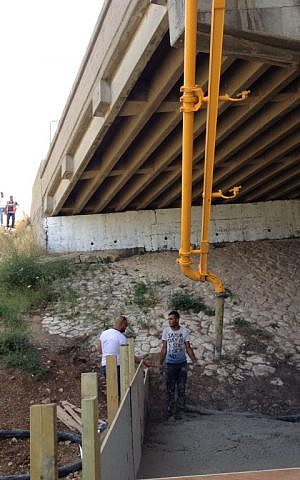
The space is being built in the shady area under the overpass that connects the Pat, Beit Safafa and Katamonim neighborhoods to Gilo and Malcha, along the Train Track Park and next to the Max Rayne Hand in Hand Bilingual School, at a spot that provides another kind of link between the different people who live in Jerusalem.
“We want to watch people meet here, take part in the Israel Festival and eat watermelon,” said Christoph Barlieb, an architect who helped plan the project.
It was Barlieb, a professor at Berlin’s TU Institute of Architecture, who worked on the Meeting Point with Muslala artist Matan Israeli, and then brought his students to Jerusalem to build the space.
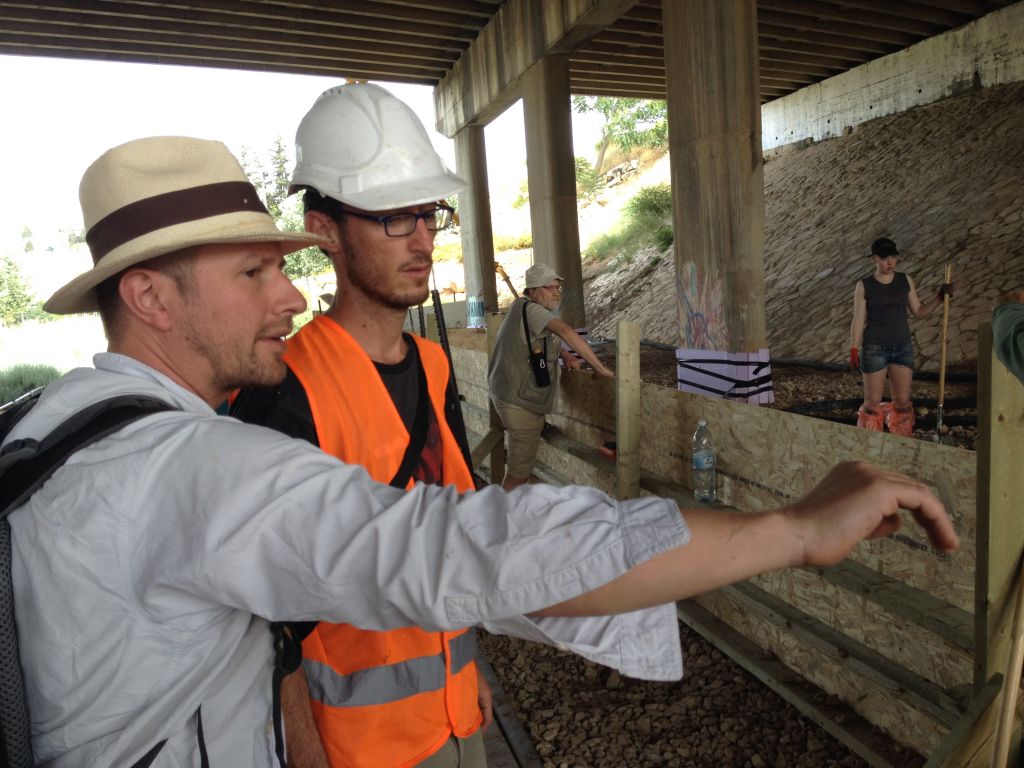
“It’s a bit of guerilla urban architecture for Jerusalem,” said Barlieb of the project.
It’s also an effort in Jewish-Arab coexistence and German-Israeli cooperation.
It was several days into the construction effort, and Barlieb, Israeli and the architecture students were standing under the overpass watching workers pour CLSM (controlled low-strength material), a kind of temporary cement that mimics packed earth, into the angled area under the bridge.
The cement mixer workers were Arab, and alternated between speaking Hebrew to Israeli and English to Barlieb.
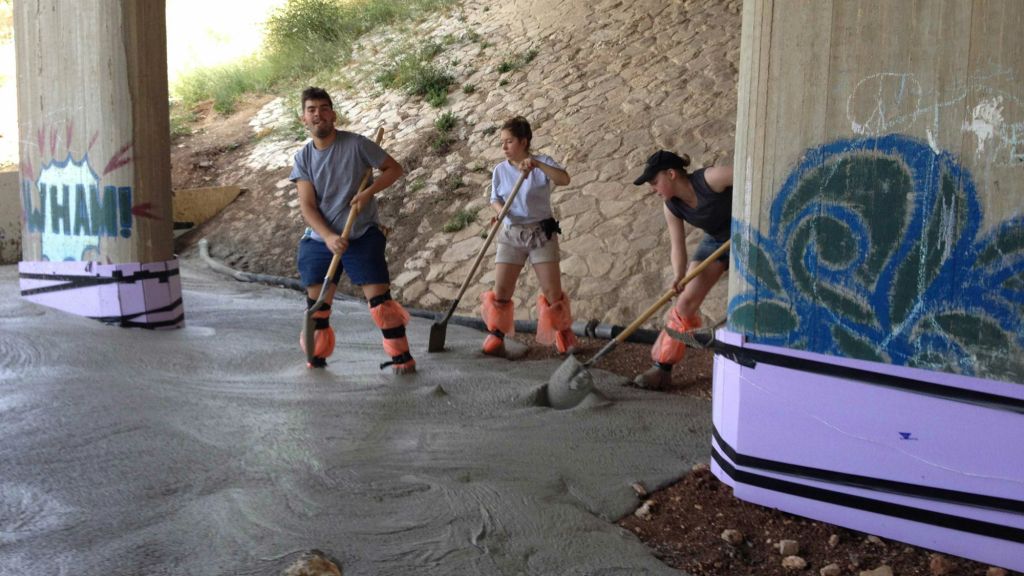
The students, some of them with their calves wrapped in orange garbage bags sealed with duct tape, were sweeping the CLSM, forming the foundation for the wheelchair-accessible, wood frame platform they designed for the space.
There was also a German-Israeli surveyor who lives nearby, and was volunteering in the effort, using a mix of German and Hebrew when offering his own opinions on the process.
“I’m used to the balagan,” said Barlieb, using the Hebrew term for chaos to refer to the less-than-exact method in which the cement was being poured. “It’s like the political situation here. That’s the message we’re trying to get out with this.”
Eleven trucks of CLSM — donated by building materials company Cemex — as well as tools, screws and wood — were given by German companies, while all the meals — breakfast, lunch and dinner — are being donated by local Jerusalem restaurants, said Barlieb.
Barlieb, who is French-American and lives in Berlin, said he sees the project as a healing process for his German students, and, when completed, for the Jews and Arabs who live in Jerusalem.
“There’s a lot that’s difficult about our realities,” he said. “But this idea is that it’s the perfect time of year to get together and live in a peaceful environment.”
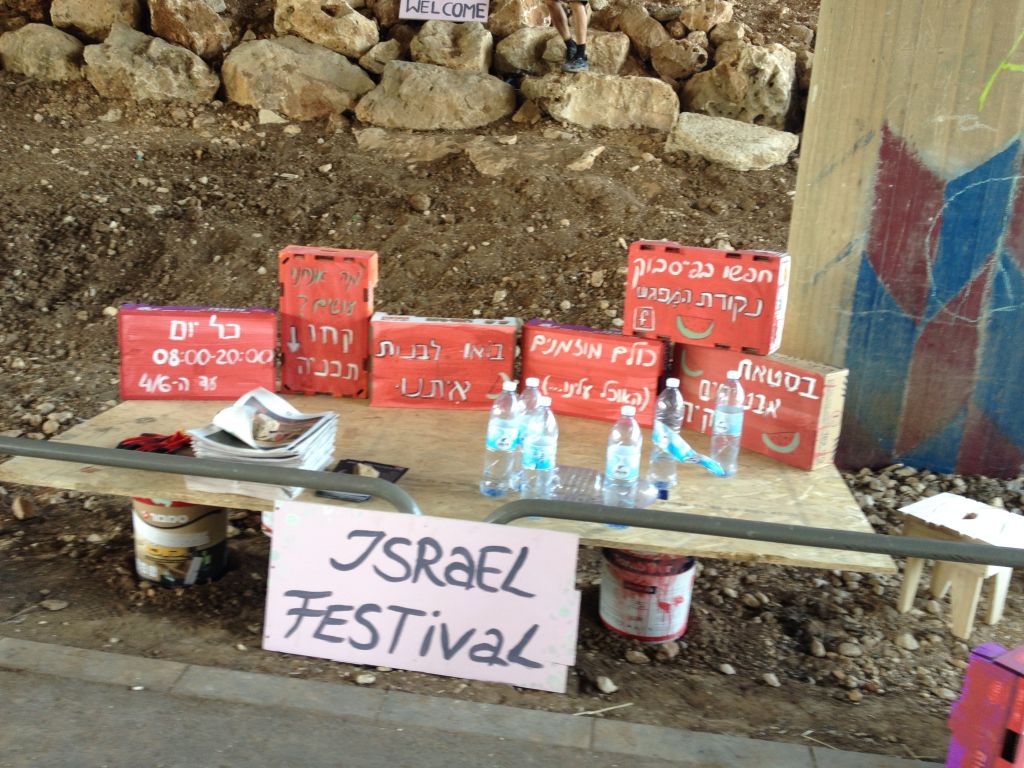
Construction on the Meeting Point will continue through the early part of next week, and the team welcomes volunteers to paint, clean up litter and help build the stage throughout the next few days, in the shady, and surprisingly breezy space under the bridge.
Once the Israel Festival begins, there will be ten days of events, performances and watermelon at the Meeting Point, which is located on the Railroad Park (Park HaMesila) under Dov Yosef Road, where the wheelchair accessible path behind the Hand in Hand School leads to the path. Information about all the events can be found on the Muslala site and the Israel Festival site.





The Times of Israel Community.