

At Israel Festival, all of Jerusalem’s a stage
From music to dance, premier cultural event offers a mix of the mainstream and alternative throughout the city
 Add ToI as a Preferred Source on Google
Jessica Steinberg, The Times of Israel's culture and lifestyles editor, covers the Sabra scene from south to north and back to the center
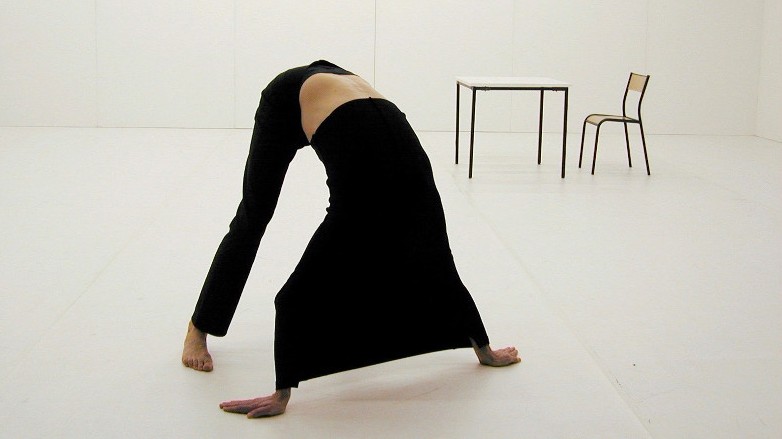
For more than 50 years, the annual Israel Festival has been Jerusalem’s premier culture event, featuring the best in music, dance and theatre. And this year proves to be no different with a packed lineup of local and international artists performing at some of the city’s more unique venues.
Besides legendary performers like Israel’s Shalom Hanoch, Berry Sakharoff, Danny Sanderson and Yehuda Poliker, who will open the festival at Sultan’s Pool and local dance company Vertigo performing with Anna Halprin, there will also be veteran New York dance company Trisha Brown, the alternative approach of German theater company She She Pop and the famous eccentricities of Italian actor Roman Castellucci in Julius Caesar.
Need more movement? Try the acrobatic machinations in Snakeskins by Par B.L.eux, Germany’s Ensemble Modern and the Khan Theater’s premiere of “Kinneret Kinneret,” based on Natan Alterman’s famed poem. Jazz bassist Avishai Cohen will perform jazz at the Israel Museum and the festival organized a multi-faceted evening in memory of singer Zohar Argov at the Tower of David Museum.
“We look at this as an international festival, bringing acts here from the corners of the earth, things that don’t get here otherwise,” said new festival director Eyal Sher. “Bringing the Israeli acts that otherwise don’t get performed. It’s a big toybox.”
The events will be performed at the usual spaces, such as the Jerusalem Theater, Khan Theatre and YMCA, as well as in the city’s more unusual places, like the Tower of David Museum, Israel Museum, Hansen House and Beit Mazia.
And those are just the ticketed peformances. Two other worthwhile new efforts in the festival are the Rendezvous Project, a watermelon kiosk run by Muslala, a Jerusalem public art community, which will be situated on the bridge at Baram Street, the thoroughfare running between the Katamonim, Pat and Beit Safafa neighborhoods.
Part of the Muslala project includes free musical performance for the general public, located under the bridge and at the First Station complex. The bridge performers will include Neta Elkayam, A-Wa, Tawfik Ayman and the Katamon Group (June 4-13, under the bridge, on Park Hamesila).
Over at the First Station, performers will include Michael and Shimrit Greilsammer, Riff Cohen, Roni Peterson and Efraim Shamir (June 4-13, First Station and on Park Hamesila).
In fact, said Sher, the idea of this year’s festival, his first as director, was to look for what is out of the ordinary, for anything that combines different categories of performance.
“We looked for things that were a combination,” he said. “We see that all performance areas interface now with music, theater, video. There really are no categories any longer, and those are trends that we’re seeing and bringing here.”
With 35 different troupes, a total of 70 performances and expectations of 30,000 tickets sold, there are high expectations for this new era of the festival. Sher and his team were honest about their own hopes.
“The festival had reached a crossroads and needed change,” said Sher. “We brought new tools, and our ideas, from our own experiences.”
After being run by Yossi Tal-Gan for 22 years, Sher, 57 a filmmaker and with broad experience in the cultural non-profit world, was hired by the Israel Festival board last August, which was later in the process than he had anticipated. Besides having to hire a team and learn the ropes, he and his staff immediately started planning the 2015 festival.
https://youtu.be/BKa1sOu9VzY
“What’s hard about that is that troupes are booked for the next two or three years,” said Sher. “But you can’t skip the festival in order to learn the job. And my intention wasn’t to make changes for the sake of making change. We did have an approach of looking forward and thinking about what is the Israel Festival, and what is it supposed to be?”
Now, nearly nine months later, Sher has some answers. He believes the festival should represent Jerusalem culture, Israeli culture and world culture. He views it as a meeting of the mainstream and alternative, of links made between Jerusalem and other Israeli cities.
After 22 years of being led by one person, “it’s a strong brand,” said Sher. “People choose to come to the Israel Festival, they choose it over other venues in Israel.”
https://youtu.be/XiZEPRPVJmA
And yet, the festival has competition. There are other venues and other festivals, as well as audiences who travel the world and know what’s out there.
That was a sticking point for Sher, who said he wanted to be able to offer art in Jerusalem that couldn’t be seen elsewhere, forcing a kind of cultural pilgrimage to the capital city.
“We want to be exclusive, to offer the feeling that you haven’t seen this before, and you won’t be able to see it anywhere else in Israel,” said Sher.
At the same time, it’s gotten tougher to draw audiences, said Sher. He called it a “crisis of belief.”
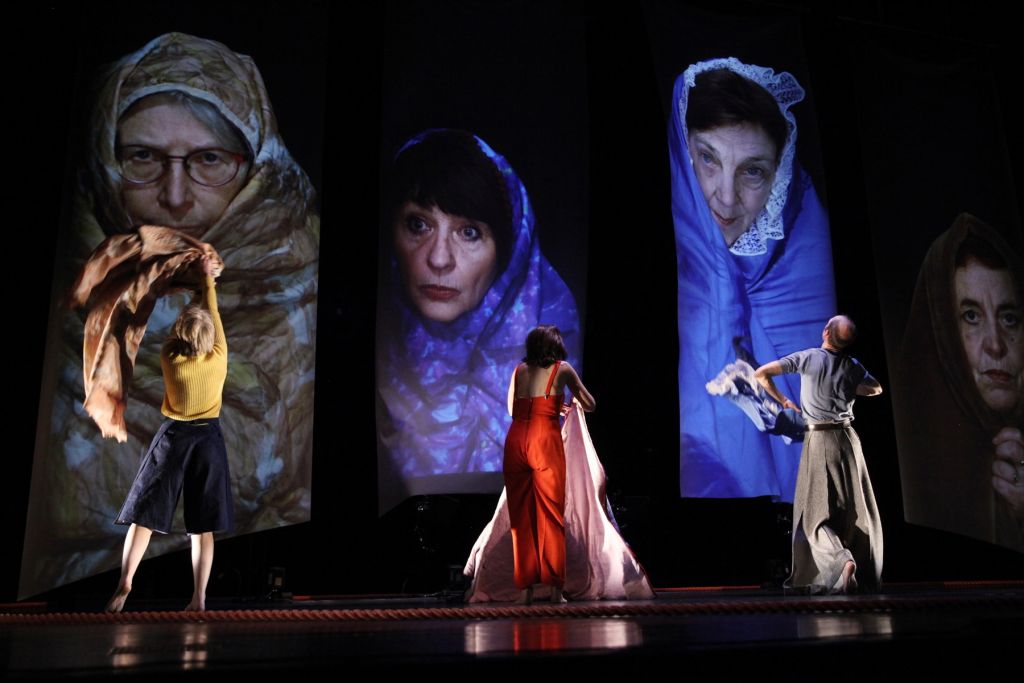
The festival, said Sher, has been threatened because of its location in Jerusalem, its focal point in Rechavia, seen as the city’s elitist center, as well as its original focus on high culture.
He’s not worried about any of that.
“The festival needs to serve the population, it’s about answering people’s need for culture,” he said. “And the prices need to be as low as possible.”
The Israel Festival will take place from May 28 to June 24. Tickets are available online.
The festival, which is subsidized by the government and Jerusalem municipality, has lowered its ticket prices. No ticket will cost more than NIS 195, and most will range between NIS 80 and NIS 155. There will also be ticket packages, including 1+1 tickets until Thursday, April 30, 20% discounts on four-ticket packages and 50% discounts for students.


The Times of Israel Community.