

Eating very pricey sushi in Ramallah
A new Japanese restaurant in the West Bank makes a writer’s mouth water, and his wallet lighter

 Add ToI as a Preferred Source on Google
Avi Issacharoff, The Times of Israel's Middle East analyst, fills the same role for Walla, the leading portal in Israel. He is also a guest commentator on many different radio shows and current affairs programs on television. Until 2012, he was a reporter and commentator on Arab affairs for the Haaretz newspaper. He also lectures on modern Palestinian history at Tel Aviv University, and is currently writing a script for an action-drama series for the Israeli satellite Television "YES." Born in Jerusalem, he graduated cum laude from Ben Gurion University with a B.A. in Middle Eastern studies and then earned his M.A. from Tel Aviv University on the same subject, also cum laude. A fluent Arabic speaker, Avi was the Middle East Affairs correspondent for Israeli Public Radio covering the Israeli-Palestinian conflict, the war in Iraq and the Arab countries between the years 2003-2006. Avi directed and edited short documentary films on Israeli television programs dealing with the Middle East. In 2002 he won the "best reporter" award for the "Israel Radio” for his coverage of the second intifada. In 2004, together with Amos Harel, he wrote "The Seventh War - How we won and why we lost the war with the Palestinians." A year later the book won an award from the Institute for Strategic Studies for containing the best research on security affairs in Israel. In 2008, Issacharoff and Harel published their second book, entitled "34 Days - The Story of the Second Lebanon War," which won the same prize.
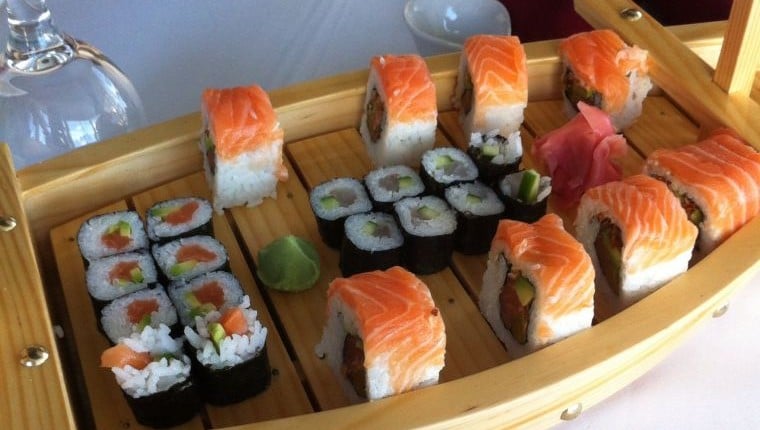
RAMALLAH — This isn’t going to be a real restaurant review. Well, maybe just a bit of one. A raw one, of a raw restaurant, from a raw restaurant reviewer.
I’ve always wanted to be a restaurant critic, to cover the hottest meal deals in town, the innovative winter menu straight from some famed chef’s kitchen. I’ve always wanted to devour the most delicious foods like there’s no tomorrow.
But The Times of Israel needed an Arab affairs correspondent, and I had some experience in that. What can you do? Still, when I heard about the classy sushi restaurant that recently opened in Ramallah, I decided an appropriate Zionist response was needed. After all, sushi in Ramallah?! What ever happened to shwarma, baklava and maqluba… intifada?
So, for a change, I escaped the world of disputed territories, terror, occupation, Hamas, Fatah et al. After a meeting on the perils of Fatah’s leadership, and before a talk on the future of the political process, I popped in to the new sushi restaurant at the Caesar Hotel in the Masyoun neighborhood.
If Ramallah is the closest Palestinian equivalent to Tel Aviv, Masyoun is the West Bank’s ritzy Herzliya Pituah. The homes in this neighborhood would turn even wealthy Israelis green with envy. There’s a cafe here selling 13-shekel cappuccino. (I didn’t ask if they had soy milk, but they did have skim. And giant TV screens broadcasting US reality shows. And customers who looked like they just stepped out of a gym in Beverly Hills.)
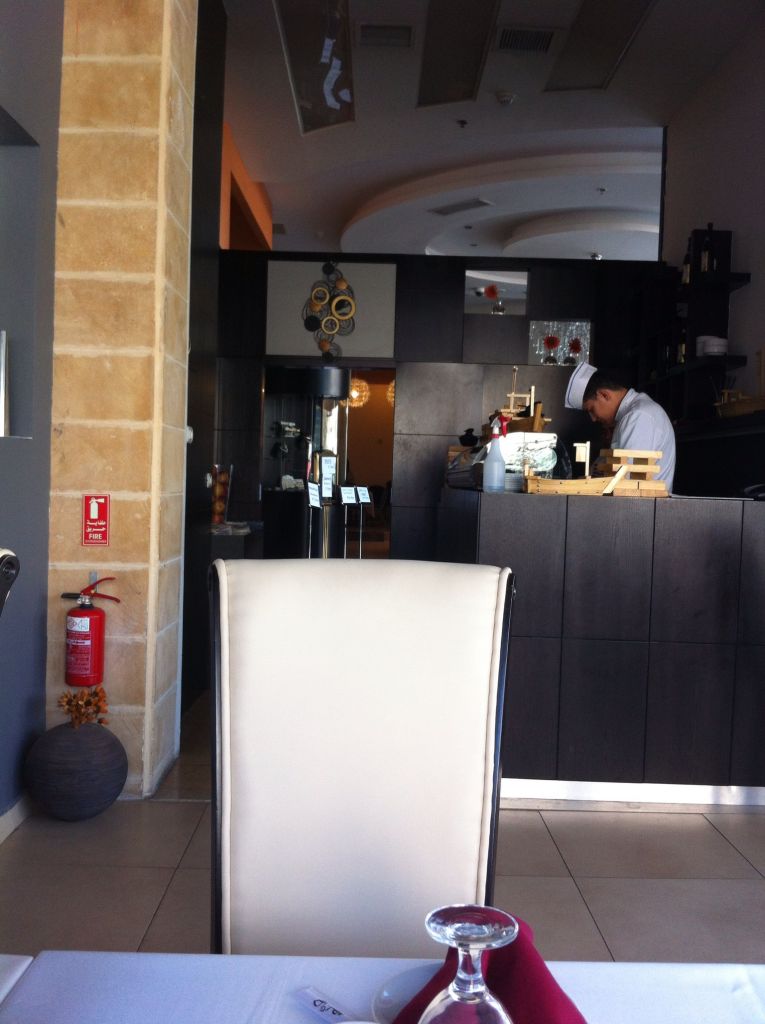
A few hundred meters away, at the Caeser, management has decided that the residents of Ramallah also have the right to quality sushi. The restaurant, which opened a few weeks ago, didn’t appear to be especially popular, at least not at noon-ish. The chef, a local, nonchalantly prepared the dishes I ordered, slicing the rolls in an unhurried, relaxed manner.
The menu was not that varied. There were lots of vegetarian rolls, but the fish options were limited — salmon, a white fish I had trouble identifying, shrimp, and maybe a couple of other items. I ordered two regular maki, a special roll (salmon on the outside, salmon skin and avocado on the inside with Japanese pickles), and a Coke Zero.
The waiter, and later the hostess, were both very friendly, each in turn asking if I would like to spice up my meal with a shot of sake. Since my boss will likely read this, I chose to pass.
The sushi rolls were delicious. The special roll was huge, and I finished my meal feeling full. The quality of the fish, in my opinion, was excellent — maybe not as good as sushi restaurants in Manhattan or in Tel Aviv, but way better than most of the places I’ve been to in central Israel.
The problem was the price: 131 shekels ($37)! Have they taken leave of their senses? Hard to square with the economic crises in the Palestinian Authority.
On the way back to Tel Aviv I drove through the Qalandiya checkpoint. No sushi there yet.




The Times of Israel Community.