

Eilat mayor says potential nightly curfew would ‘destroy’ resort city
Local leader slams ‘bizarre decision’ to reportedly place tourism-based town under new restrictions despite it being classified as a ‘green’ area with low infection rate on Sunday
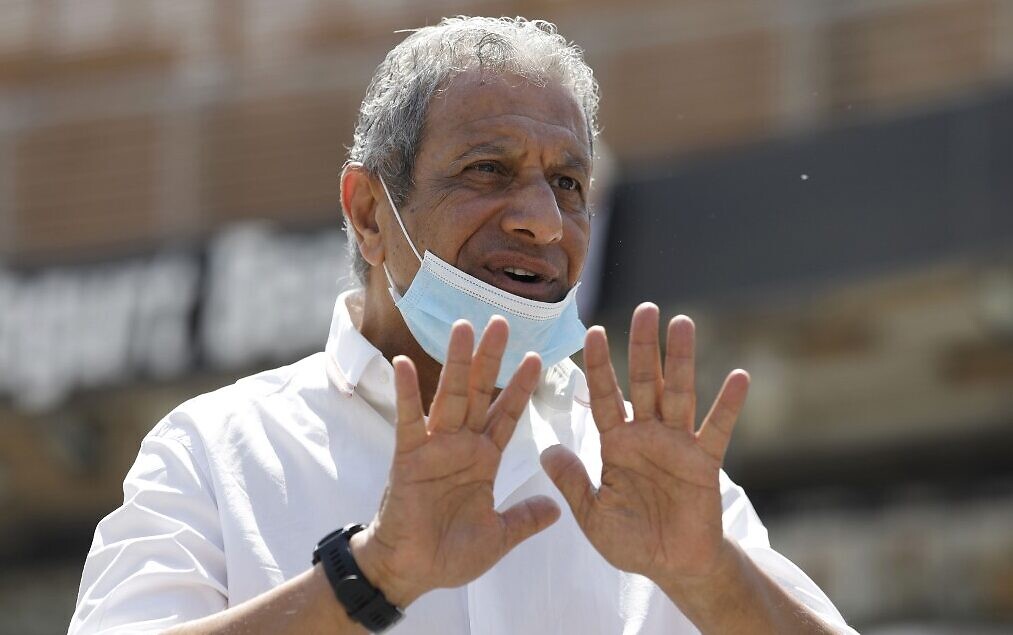
The mayor of the city of Eilat on Monday said that a nightly curfew would “destroy” the southern resort city, as reports indicated it was slated to join a list of localities with high infection rates to be placed under nighttime restrictions — despite being classified as a “green” city with low infections as of Sunday.
“A nightly closure on Eilat will lead to the destruction of the tourism industry and inevitably destroy the city, with irreversible damage to its economy and its social fabric,” Meir Yitzhak Halevi wrote in a letter to coronavirus czar Ronni Gamzu.
The mayor said that the city had hosted over half a million tourists over the summer and provided a space for Israelis to relax amid the pandemic. The city was recently in headlines over the alleged gang rape of a 16-year-old last month while she was vacationing in the town.
Eilat’s economy is heavily based on its tourism industry.
“We are still licking the wounds from the first closure [earlier this year], and even today we have around 35 percent unemployment. A nightly closure will return the city to 80% unemployment,” Halevi wrote.

“It’s not clear to me how we changed into a ‘red’ city — it’s a bizarre decision,” Halevi told the Ynet news site.
Ministers on Sunday evening approved nightly curfews in some 40 cities with high infection numbers, instead of the previously planned full lockdown on a smaller number of towns — a plan that had sparked a threat of rebellion from some ultra-Orthodox mayors and a major political crisis with the ultra-Orthodox parties.
The final list of cities was expected to be formalized later Monday, but was widely reported to likely include Eilat. Eilat remained listed as a “green” city on a government website Monday morning.
The curfews will be in effect every day between 7 p.m. and 5 a.m. Non-essential businesses will be closed during the curfew hours. Schools will be closed at all times.
The cabinet had been due to vote on a plan formulated by Gamzu, to impose new lockdowns on 10 municipalities, including the Arab towns of Umm al-Fahm, Tira and Kfar Qassem, and the Haredi towns of Elad, Bnei Brak, Beitar Illit and Emmanuel.
But facing a withering backlash by Haredi leaders, Prime Minister Benjamin Netanyahu called off the special cabinet meeting on the lockdowns and held a meeting with the heads of the two major ultra-Orthodox political parties, Housing Minister Yaakov Litzman of United Torah Judaism and Interior Minister Aryeh Deri of Shas, to hammer out a new policy toward so-called “red” municipalities — those with the highest infection rates — as he sought to assuage rising anger in the Haredi street.
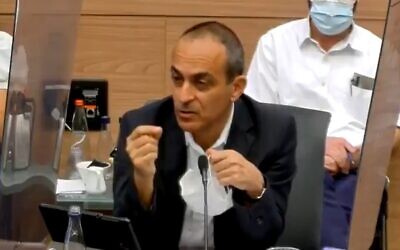
Netanyahu’s about-face came after four Haredi mayors published an unprecedented open letter earlier Sunday accusing him of “trampling” their communities and “turning us into disease vectors and enemies of the people.”
Netanyahu released a statement Sunday evening saying that the virus “doesn’t differentiate between nations and populations.” He said the classification of “red” cities “isn’t done to harass and isn’t random — these are scientific results according to the number and rate of infections.”
Netanyahu was criticized, including by coalition members, for putting off the cabinet vote and changing the government plan in response to Haredi pressure.
Most of the localities where the new restrictions are to take effect are majority-Arab and ultra-Orthodox areas.
Israel on Saturday passed the grim landmark of 1,000 deaths due to the novel coronavirus, according to the Health Ministry, becoming the 49th country in the world to do so.







The Times of Israel Community.