

Eschewing Poland, a high school takes its annual Holocaust trip — inside Israel
Jerusalem’s elite Israel Arts and Science Academy has a ‘legitimate alternative’ to the traditional 12th-grade visit to the death camps
 Add ToI as a Preferred Source on Google
Jessica Steinberg, The Times of Israel's culture and lifestyles editor, covers the Sabra scene from south to north and back to the center
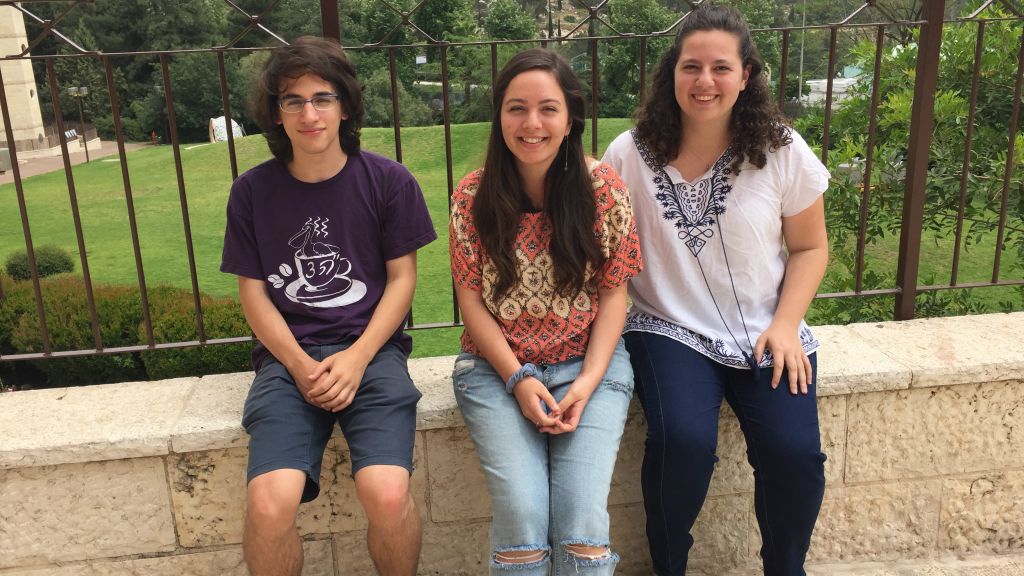
Roy Jacobson, 18, thought he’d learned enough about the Holocaust.
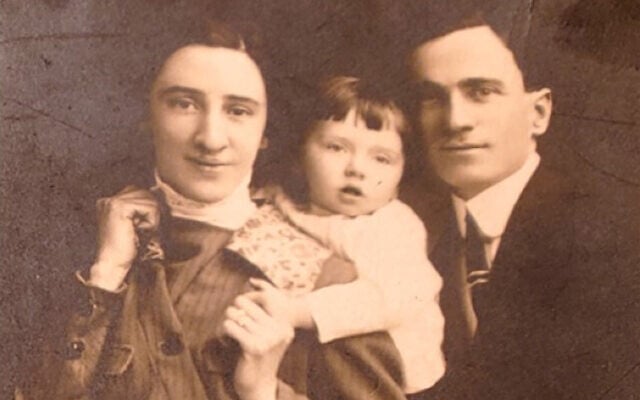
He could easily list pertinent details about his great-grandparents, who were born in a Transylvanian village and met again after the war in Sweden, his great-grandmother having survived the Bergen-Belsen concentration camp.
After nearly 12 years in the Israeli school system, he didn’t think he could feel or learn anything new about the tragic period in Jewish history.
But his high school’s unusual approach to teaching its students about the Holocaust, and, more pertinently, Israeli society’s reaction to the tragedy that altered the future of the yet-to-be-established Jewish state, has had a marked effect on Jacobson and the rest of his 12th grade class.
At the Israel Arts and Science Academy, the Jerusalem boarding school that Jacobson attends and which caters to an elite group of Israeli students, 12th-graders don’t travel to Poland for a heavily subsidized week of concentration camp visits and Jewish cemetery cleanups like most of their fellow 18-year-olds.
Instead, they embark on a week-long trek through Israel prior to Holocaust Remembrance Day, visiting Holocaust museums and institutions, hearing testimony from survivors and speaking to Holocaust scholars, in order to gain a better understanding of how the Holocaust has affected generations of Israelis.
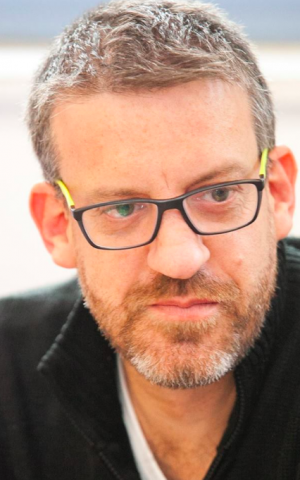
The Poland trip, said principal Etay Benovich, has been off the table for some time. It was too expensive and too frightening and didn’t answer everyone’s needs.
“It had become too automatic, too routine,” said Benovich. “When something is too automatic, we don’t like it. And for some kids, it just wasn’t appropriate. It’s a very difficult trip and the kids come back here, to their dorms, and sleep here, and wake up in the middle of the night with nightmares, and there are three other roommates. So we had to look at it a little differently.”
Education is often handled differently at IASA, where there are some 300 students in tenth through twelfth grades, and the student population is a mix of secular and religious Jewish, Muslim, Druze and Christian students from all over Israel.
Founded in 1990 by the Society of Excellence through Education nonprofit organization, and funded heavily by North Americans Bob and Mary Jane Asher, IASA aimed to be a unique Israeli high school, one that could cater to gifted students who hadn’t found their niches at regular Israeli high schools. The concept of an elite school, said Benovich, was seen as an almost snobbish idea that the Education Ministry didn’t cotton to during the school’s early years.
Now, however, the results of the school speak for themselves. More than 40% of the students attend preparatory army programs, another large percentage serve in intelligence units, while 31% of the male graduates and 15% of the female graduates become officers, figures that are double the national average, said Benovich. Nearly all of the students attend university, with about 25% going on to earn PhDs.
(There was a group of former students from IASA who wrote a highly publicized letter in 2015, encouraging the school’s students to refuse to serve in mandatory military service because of Israel’s continued occupation of the West Bank.)
It’s a school that appeals to students who are looking to learn, said Benovich, and whose style of learning didn’t work in more traditional Israeli schools.
“We’re a place with a lot of students who don’t find themselves in other schools, and we offer them a group of equals, of kids who are interested in the same things, and we allow students to feel comfortable with who they are,” he said. “Here they can be part of the crowd, be comfortable with who they are, and that’s very powerful.”

The school’s approach to learning, demonstrated by the option of majoring in one of the four tracks — natural sciences, music, visual arts or humanities — is also an educational shift, said Benovich, emphasizing that students need to be motivated to learn, devoting themselves to the major they choose.
Their Holocaust educational program stems from a similar perspective.
Several years ago, the school came up with the idea of exploring the aftermath of the Holocaust experience in Israel, including hearing testimonies from survivors and gaining a better grasp of the effect of the Holocaust on generations of Israelis.
“We got reactions,” said Benovich. “People asked, ‘How you can you not allow the kids this amazing opportunity to go to Poland?’ Every year, some students try to convince me to change the trip.”
In fact, there was a vote taken by the school’s parent committee two years ago to try and convince the faculty to rethink the Poland trip. Only two out of 20 parents voted to try and change Benovich’s mind.
“That made me very emotional,” he said. “Because it said that the parents understand this, that we’re creating a legitimate alternative.”
The week-long trip is planned by the 12th-grade faculty with input and assistance from the students. There are sites and organizations that are repeated each year, such as the Ghetto Fighters Museum at Kibbutz Lohamei Hagetaot, but there are changes as well, depending on the class and its interests. The most important element of each trip is hearing testimonies from survivors, a part of the journey that the students found to be vital to their own experience.
“The testimonies are something that can’t be taught or read,” said Halel Regev, 18. “You have to hear them, and we’re the last generation to hear from the survivors; the next generation won’t hear them at all.”
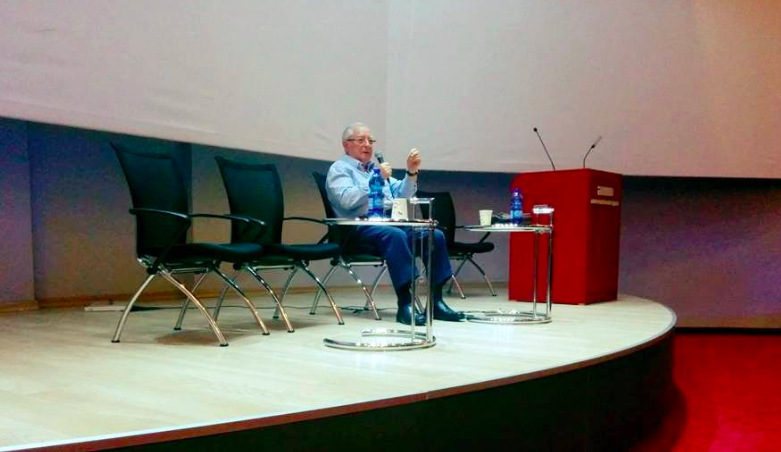
This year, the 12th-graders met 90-year-old Mickey Goldman, an Auschwitz survivor and police investigator at the 1961 Eichmann trials, who ended up being the one to scatter Eichmann’s ashes over the Mediterranean.
“It was crazy to see him in the movie and then meet him in person,” said Emmi Cohen, 17. “He was riveting to listen to.”
What surprised them was how much they learned, even after nearly 12 years of Holocaust education.
“Every testimony just destroyed me, and that surprised me,” said Cohen.
For Jacobson, the testimonies changed the way he thought about survivors and their supposed happy endings.
“When you hear their testimony and keep hearing the story and how it all kept getting worse, you think there’d be a happy ending but it didn’t,” he said. “It just kept getting worse and worse.”
Friends from home had different reactions to the fact that they wouldn’t be traveling to Poland. Regev’s youth group tried to convince her to join their trip, but she didn’t want to see Poland the way they would.
“I think Poland trips are about terrifying you,” said Regev. “There’s something good in that, but there’s a message in there that I’m not ready for yet. I’d rather do it in the army or during university.”
Cohen’s friends assumed her school didn’t teach anything about the Holocaust, she said.
“I told them it’s not that we don’t learn about it at all, it’s just taught in a different way,” she said.
Now, years after the school made the momentous decision to alter its Holocaust education program, other Israeli schools are considering similar programs, said Benovich.
“They ask me ‘how’ are you doing this?” said Benovich. “I tell them that it’s their decision about what kind of trip to do, and with what kind of agenda. For us, it’s about hearing from as many survivors as possible, even if it’s hard, because that’s the crux of this whole thing.”









The Times of Israel Community.