EU authorizes use of remdesivir to treat coronavirus
Bloc’s health chief calls approval of drug, which studies have shown can reduce hospital stays for COVID-19 patients, ‘an important step forward in the fight against this virus’
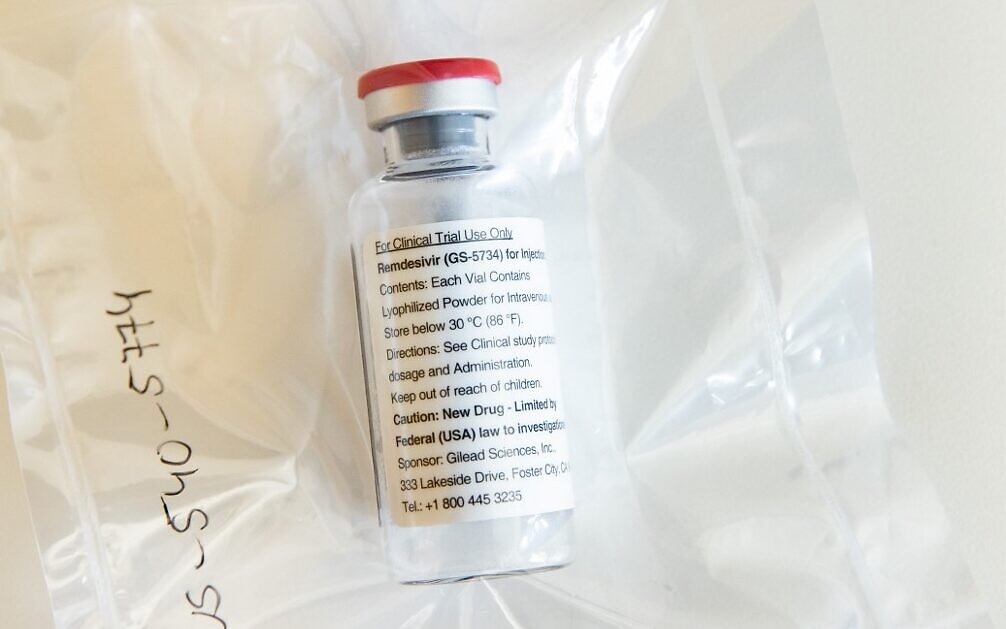
A vial of remdesivir is pictured during a press conference about the start of a study with the anti-viral drug at the University Hospital Eppendorf (UKE) in Hamburg, Germany, April 8, 2020. (Ulrich Perrey / POOL / AFP)
BRUSSELS — The European Commission, the EU’s executive arm, on Friday authorized the use of anti-viral drug remdesivir to treat the new coronavirus.
“Today’s authorization of a first medicine to treat COVID-19 is an important step forward in the fight against this virus,” EU Health Commissioner Stella Kyriakides said in a statement.
“We are granting this authorization less than a month after the application was submitted, showing clearly the EU’s determination to respond quickly whenever new treatments become available,” she said.
At least two major US studies have shown that remdesivir can reduce the duration of hospital stays for COVID-19 patients.

European Commissioners for Health Stella Kyriakides speaks during a joint video press conference at the EU headquarters in Brussels, May 28, 2020. (Aris Oikonomou / Pool Photo via AP)
Washington authorized the emergency use of the medicine — which was originally intended as a treatment for Ebola — on May 1, followed by several Asian nations including Japan and South Korea.
Get The Times of Israel's Daily Editionby email and never miss our top stories
The green light comes on the recommendation of the European Medicines Agency which gave its conditional authorization last week for the treatment of patients above 12 years of age who are suffering pneumonia and require extra oxygen.
It said its assessment was based mainly based on data from a study sponsored by the US National Institute of Allergy and Infectious Diseases (NIAID).
The research, published in the leading journal the New England Journal of Medicine in May, showed that injections of remdesivir speeded patient recovery compared with a placebo.
Advertisement
On average it reduced patients’ hospital stays from 15 days to 11.

We can't do this work alone.
The war with Iran has been draining for all of us in Israel. But when I heard about a high casualty incident – ballistic missile impacts in Arad and Dimona that left nearly 200 people wounded – I drank a cup of coffee, packed a bag, and headed south.
There, I spoke with Shilgit, the head of an after-school program for underprivileged youth. Standing outside her destroyed center, Shilgit said it was a miracle that no children were hurt and spoke about the community coming together in the hours since.
As a Times of Israel reporter, I’m committed to telling stories of resilience like Shilgit’s. But my colleagues and I can't do this alone. If you value work like this,please consider joining our reader support group, The Times of Israel Community. Your financial support is essential to keep real human reporting like this going.
We’re really pleased that you’ve read X Times of Israel articles in the past month.
That’s why we started the Times of Israel - to provide discerning readers like you with must-read coverage of Israel and the Jewish world.
So now we have a request. Unlike other news outlets, we haven’t put up a paywall. But as the journalism we do is costly, we invite readers for whom The Times of Israel has become important to help support our work by joining The Times of Israel Community.
For as little as $6 a month you can help support our quality journalism while enjoying The Times of Israel AD-FREE, as well as accessing exclusive content available only to Times of Israel Community members.
Thank you, David Horovitz, Founding Editor of The Times of Israel