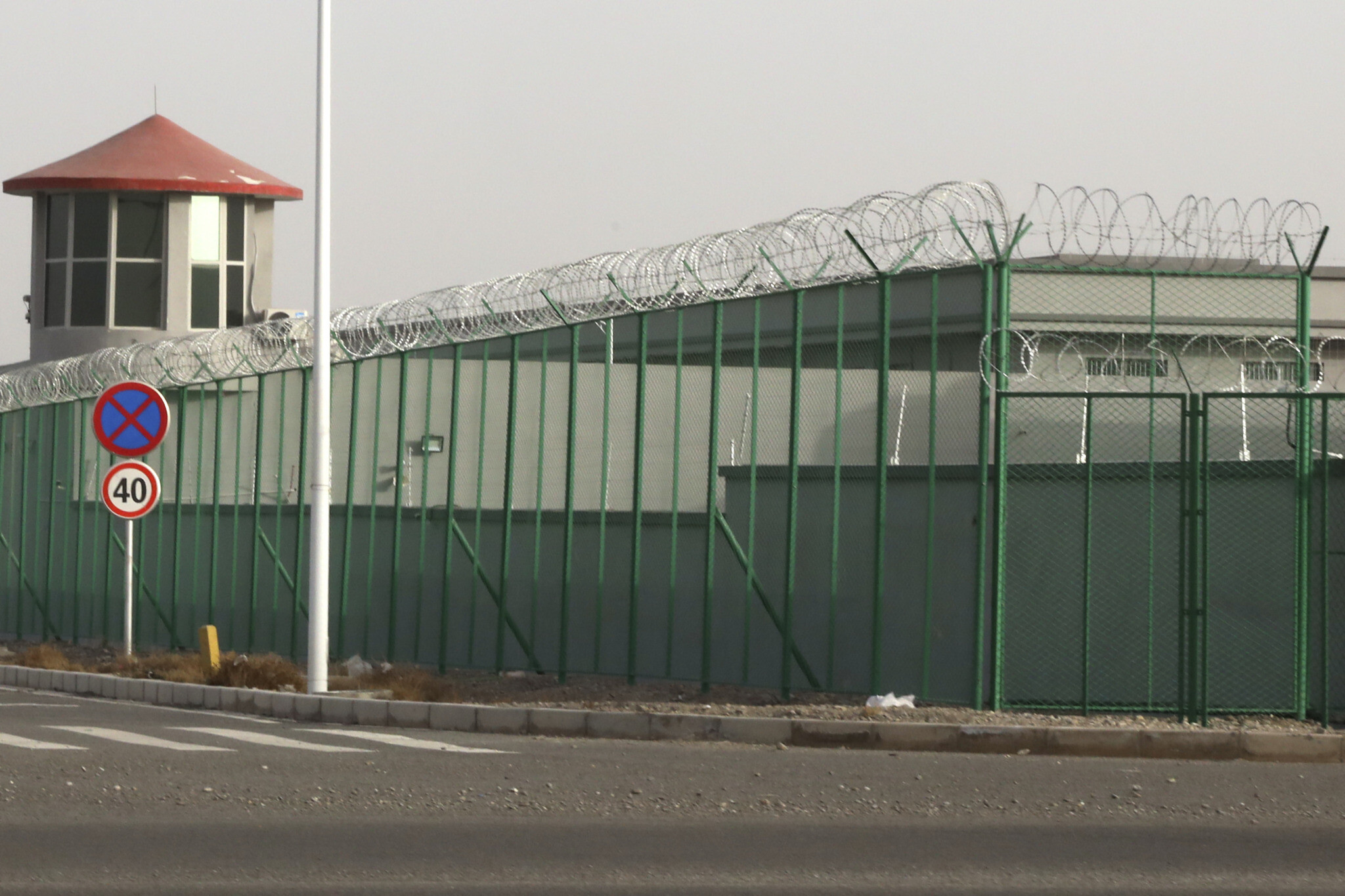
In this Dec. 3, 2018, photo, a guard tower and barbed wire fence surround a detention facility in the Kunshan Industrial Park in Artux in western China's Xinjiang region. (AP Photo/Ng Han Guan)
BRUSSELS — The European Union on Monday imposed sanctions on four Chinese officials accused of responsibility for abuses against Uighur Muslims in a raft of measures targeting alleged human rights offenders around the world, despite warnings that Beijing could retaliate.
The four are senior officials in the northwest region of Xinjiang.
The sanctions involve a freeze on their assets in the EU and a ban on them traveling in the bloc. European citizens and companies are not permitted to provide them with financial assistance.
China at first denied the existence of camps for detaining Uighurs in the northwest region of Xinjiang but has since described them as centers to provide job training and reeducate those exposed to radical jihadi thinking. Officials deny all charges of human rights abuses in the northwestern region.
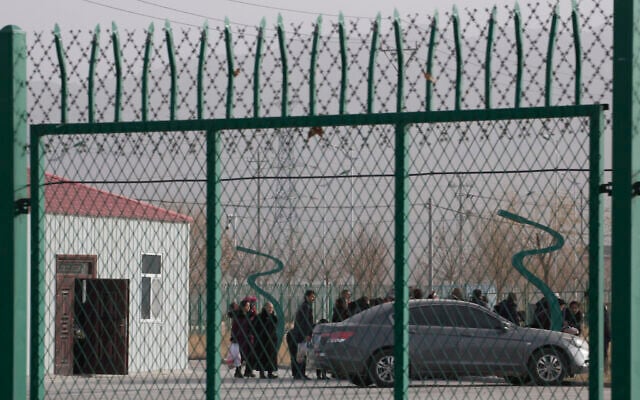
In this December 3, 2018, photo, residents line up inside the Artux City Vocational Skills Education Training Service Center which has previously been revealed by leaked documents to be a forced indoctrination camp at the Kunshan Industrial Park in Artux in western China’s Xinjiang region. (AP/Ng Han Guan)
Xinjiang had been a hotbed of anti-government violence, but Beijing claims its massive security crackdown brought peace in recent years.
Get The Times of Israel's Daily Editionby email and never miss our top stories
Last week, the United States accused China on Friday of committing “genocide and crimes against humanity” against Uyghur Muslims and other minorities, and China accused the US of discrimination, hatred “and even savage murder of people of African and Asian descent.”
The clash came at the UN General Assembly’s commemoration of the International Day for the Elimination of Racial Discrimination and was sparked by one line in the speech by US Ambassador Linda Thomas Greenfield, who talked about being a descendent of slaves, growing up in the segregated South, and surviving racism including being called “an N-word.”
Advertisement
Help us report truthfully on social media
As a multimedia journalist, my job is to take the quality, fact-based journalism produced by The Times of Israel newsroom and make it accessible across every platform — from Instagram posts to podcasts to short-form videos.
This is how many, especially young people, consume news these days. But misinformation is rampant on social media. Our team at ToI produces accurate, responsible short-form reporting on Israel and the Jewish world.
If you believe in the importance of factual social media journalism, please consider joining our reader support group, The Times of Israel Community. Your financial support is essential to sustain responsible multimedia reporting.
We’re really pleased that you’ve read X Times of Israel articles in the past month.
That’s why we started the Times of Israel - to provide discerning readers like you with must-read coverage of Israel and the Jewish world.
So now we have a request. Unlike other news outlets, we haven’t put up a paywall. But as the journalism we do is costly, we invite readers for whom The Times of Israel has become important to help support our work by joining The Times of Israel Community.
For as little as $6 a month you can help support our quality journalism while enjoying The Times of Israel AD-FREE, as well as accessing exclusive content available only to Times of Israel Community members.
Thank you, David Horovitz, Founding Editor of The Times of Israel


 Add ToI as a Preferred Source on Google