

Gaza report set to emerge, tunnel vision takes hold
Embargoed from actually reporting on the findings of the damning document, the press makes do with quoting those attempting to preemptively make hay or patch up their good names
 Add ToI as a Preferred Source on Google
Joshua Davidovich is The Times of Israel's Deputy Editor
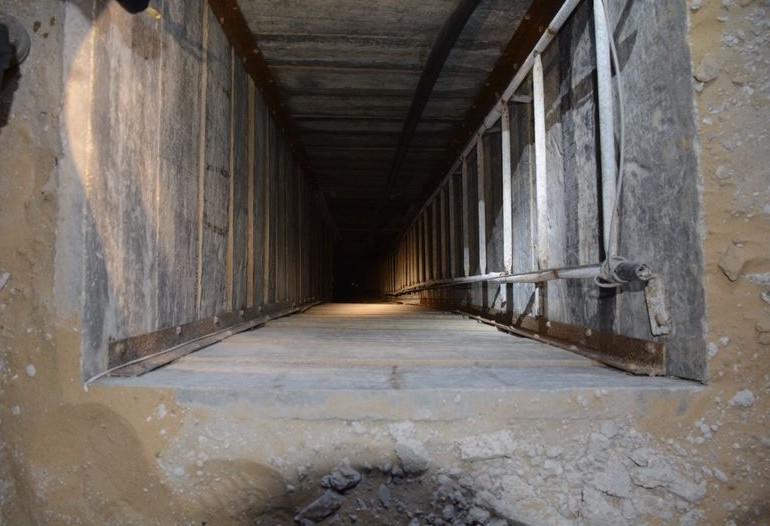
With days to go before a damning report on military and intelligence failures in the lead up to and during the 2014 war with gaza, the press can’t wait until the post-mortem is actually released to begin tunneling into its findings.
While media outlets (The Times of Israel included) already have the report in hand, they are restricted by an official embargo in place until Tuesday to begin reporting on what’s inside. What they can report on, though, is the reactions over those who have seen it and the political fallout already radiating out of the explosive state comptroller’s report.
Yedioth Ahronoth and Israel Hayom both lead off their papers with the upcoming report, the latter unable to resist headlining its story with the already overused “The battle over the report.”
The military terminology doesn’t end there, with the paper writing that both politicians and army brass are “girding” for the report’s release, and have been doing so since the summer, when the findings — including that politicians did not properly prepare for the Hamas tunnel threat — first started to leak out.
While the paper makes sure to devote space to Prime Minister Benjamin Netanyahu’s claims that he did prioritize thwarting the tunnels and that the report is political in nature, it also gives real estate to Yesh Atid head Yair Lapid, who was party to the security cabinet discussions at the heart of the dispute.
“The IDF wasn’t ready, the politicians didn’t prepare them. We are entering the longest war since the War of Independence — and there is no methodology for what to do with the tunnels. It’s become clear that there are strategic threats that we are not ready for, and at the end of the war everything passed by and there were no results.”
Yedioth goes full bore on the response of one the main players — then IDF chief Benny Gantz — and his defense of the army’s preparedness ahead of the war, telling a group that during Protective Edge “there was respectable, great, accessible, not always perfect intelligence. I would be prepared to go into the next battle with the same kind of intel we had in the last battle.”
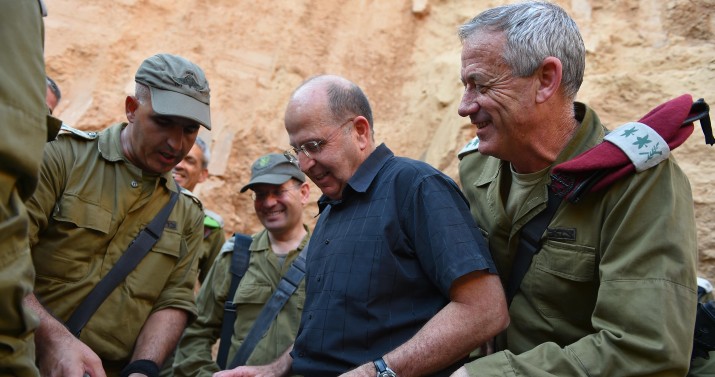
The paper juxtaposes Gantz’s comments with accounts from inside the war room — revealed by the paper several weeks ago — and his own public comments during the war (including an infamous speech in which he told Gaza area residents to return home during a short-lived ceasefire) that appear to show Gantz and others not taking the threat seriously enough.
Yedioth columnist Yossi Yehoshua accuses Gantz of using “alternative facts” to try and take a preemptive strike at the report.
“Given all that’s been revealed about him during the operation, and of course in military investigations afterward, [we see that] the IDF did not have an organized battle plan and what they did do was the fruit of improvisation the week before the ground invasion of Gaza,” he writes.
“The former IDF chief of staff was not just responsible for intelligence gaps but also for incomplete preparations of forces for the operation, a most serious failure. And that’s even before we go into the cabinet discussions themselves, some of which were revealed by Yedioth Ahronoth, which made clear how much Gantz [Military Intelligence head Aviv] Kochavi and [then defense minister Moshe] Ya’alon misread the situation on the ground and the intelligence on Hamas. The assessments they gave were the opposite of the reality, and one does not get the impression that the former IDF chief pushed for an operation, even a limited one, against the tunnel threat. Even after the air war started, and with a specific warning on an infiltrating tunnel near Kibbutz Sufa, he pushed together with Ya’alon to go for a ceasefire and leave the threat in place.”
It’s not often the army is criticized for not taking a militant enough approach. More often it’s cited as being too proactive and repressive, especially toward Arabs.
Haaretz’s lead story, for instance, reports on a 600 percent increase year over year of Arabs — mostly with Israeli citizenship, but some West Bank Palestinians as well — arrested over suspicions of ties to the Islamic State.
The report does not deign to comment on whether the uptick is proof of increased Salafi activity in Israel or the army seeing jihadists where there might not be any, but it still notes that “defense officials say that very few of those detained in Israel are genuine Islamic State operatives. Most simply identify with Islam’s Salafi jihadist movement, which advocates violence and draws inspiration from Islamic State, but have no real connection with ISIS’ leadership in Iraq and Syria and do not receive direct orders from it.”
One place the paper does take a stand on the state leaning too hard toward repression is regarding Human Rights Watch, after a Friday report saying that Israel would stop allowing the NGO to work in the country. In a lead editorial, the paper calls the move a reflection of “the paranoid, isolationist disposition of the Netanyahu administration” and advises that it won’t help the country hide its dirty secrets.
“Does anyone in the Foreign Ministry serious believe that the violation of human rights in Israel and the territories would remain secret if the researcher were to be kept out? That no one would know, or be able to provide proof, and that Israel would be acquitted due to a lack of evidence? Just the opposite, in fact: When Israel fails to cooperate, only its accusers’ side is heard. Even when the United States uses its veto power to defeat an anti-Israel resolution, it does not erase the accusations and only causes more damage to Israel’s image,” the editorial reads.
That argument isn’t helped by the fact that in world bodies where Israel does try to defend itself, it is usually dismissed, though on the other hand, Israel’s response is often to dismiss criticism against it as unfair or unfounded.
That’s the case in another story near the top of the news agenda, Israel’s fuming anger at the UN Human Rights Council for criticizing the 18-month prison sentence handed down to soldier Elor Azaria, convicted of killing a disarmed and wounded Palestinian stabber.

Burnishing its populist bona fides, Yedioth runs the story under the headline “the UN’s hypocrisy” with a kicker reading “Slaughter in Syria? Genocide in Sudan? The world is again against Israel.”
While much of the story is a roundup of copycat angry responses from Israeli politicians and officials, the lede makes sure readers know where the paper’s reporters stand as well, reading, “The UN never misses an opportunity to attack Israel.”
Israel Hayom also covers the story, and also includes the same responses (and even manages to avoid inserting its own opinions in), throwing into the mix Azaria’s lawyer as well, who sets himself apart not by saying the UN has more important things to deal with but rather by continuing to insist that his client did nothing wrong.
“This shows the objectivity of this group. Not to accept the allegation that this was a terrorist who came with his friend armed with knives who had already stabbed a soldier,” attorney Eyal Besserglick is quoted saying sarcastically, adding that the defense will file its appeal on March 5.







The Times of Israel Community.