

Goldins walk back claim IDF chief said son’s body could be returned in a week
Praising Gadi Eisenkot as key to efforts to return remains of soldiers held in Gaza, Simcha Goldin says he accepts army’s insistence the chief of staff’s words were misunderstood
 Add ToI as a Preferred Source on Google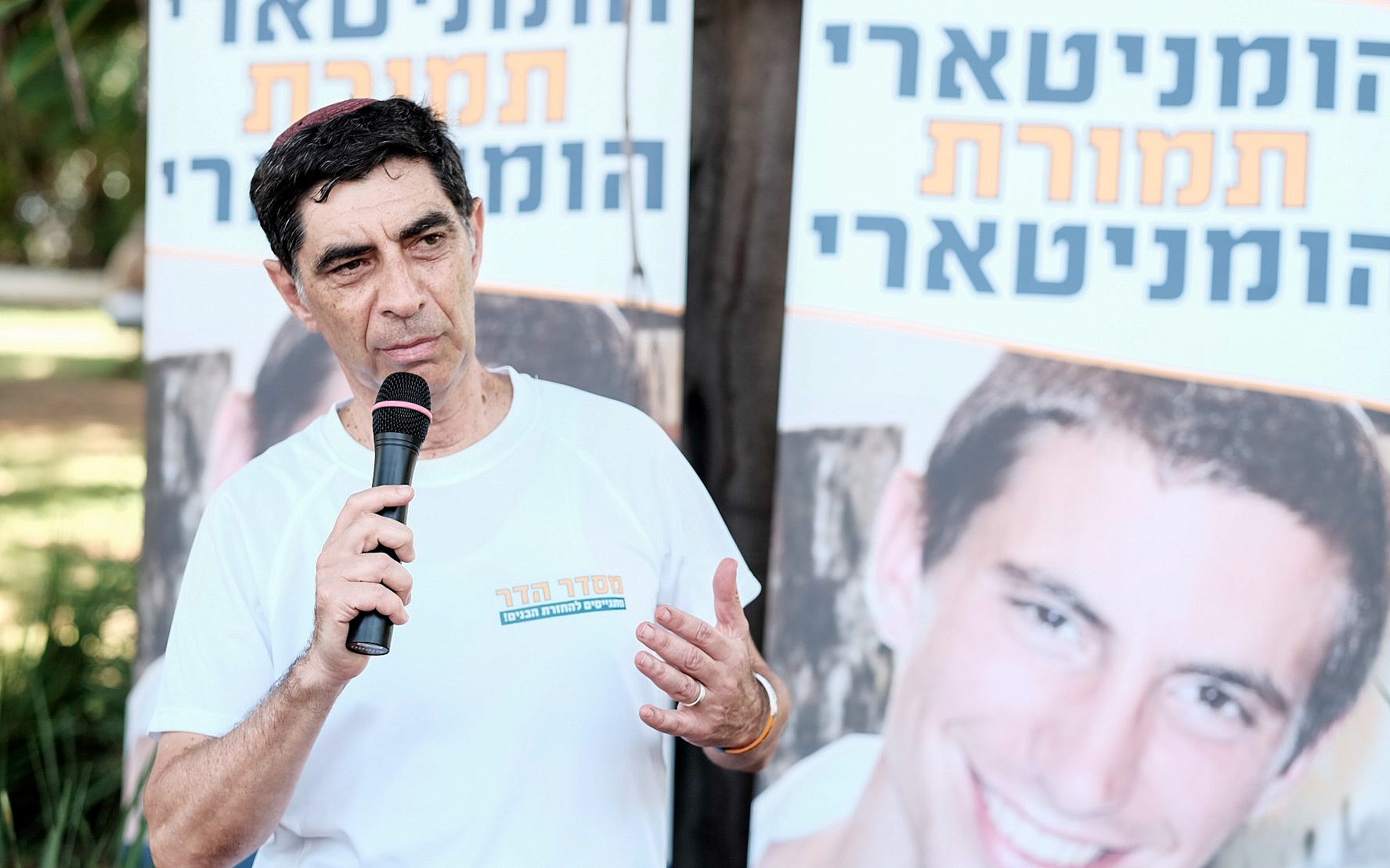
The parents of an Israeli soldier whose remains are being held in the Gaza Strip backpedaled Sunday on their claim that the IDF chief of staff had told them their son’s body could be returned within a week if the Israeli government wished it.
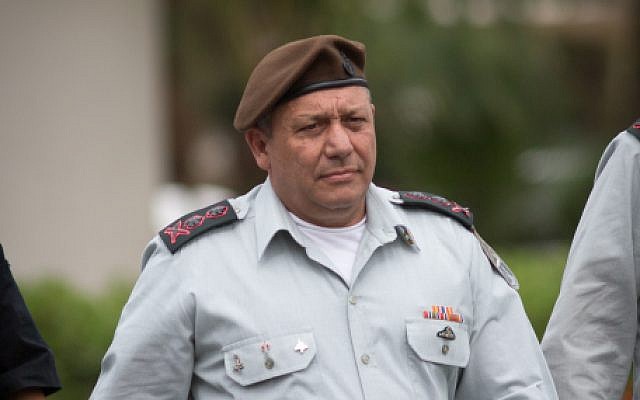
IDF Chief of Staff Gadi Eisenkot on Saturday night swiftly denied the comments attributed to him over the weekend by the Goldin family, saying the quotes were “highly selective.”
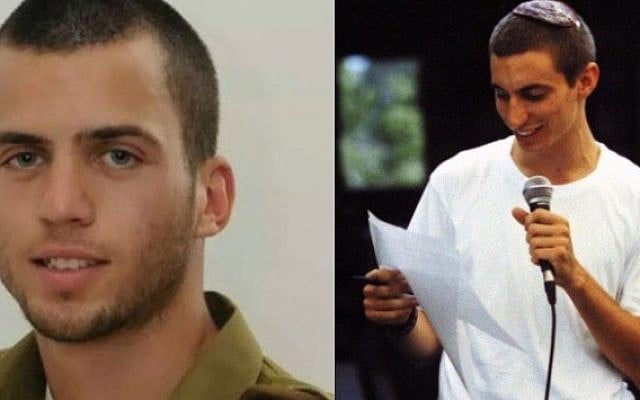
Since 2014, the Goldin family has been lobbying the government to bring about the return of the remains of their son, Lt. Hadar Goldin, who was killed during that summer’s war against Hamas in Gaza, and whose body is believed held by the terrorist group. The group is also believed to be holding the body of IDF soldier Oron Shaul, who was also killed during the conflict four years ago.
Two living Israeli civilians — Avera Mengistu and Hisham al-Sayed, both of whom are reported to be mentally ill — are also said to be in Hamas custody after crossing into the Strip of their own accord several years ago.
“During the meeting [on Friday], the IDF chief said, ‘We must stop all projects with Israel until the soldiers and civilians are returned. All [shipments] must be halted, apart from water, food, sewage, and medications,'” a statement from the Goldin family quoted Eisenkot as saying on Saturday. “Eisenkot also emphasized that if the political echelon willed it — the boys could be brought home in a week. From this difficult meeting, we concluded that the prime minister does not want to bring back the soldiers to Israel,” the Goldins said.
In a statement from the Israel Defense Forces, the military confirmed Eisenkot had met with the Goldins on Friday, “as he is accustomed to doing from time to time,” but said, “The comments that were released from the meeting are highly selective and do not represent the statements that were said during the meeting.
“During the meeting, the IDF chief presented the IDF’s position, as it has consistently been brought before political leaders in closed talks.” That position, the army said, “has not changed in the past few years.”
“The IDF is working tirelessly to return the captives and missing persons to Israel and will continue to do so,” it said.
In an interview with Army Radio Sunday morning, Simcha Goldin, Hadar’s father, seemed to walk back the family’s earlier claims, saying, “We said what we understood. I’m willing to say these things were taken out of context. We didn’t embarrass the chief of staff. He’s on the front line of the effort to return our boys.”
Goldin added: “The chief of staff is my son’s commander. We have great respect for this man. We appreciate what he is doing in the situation he finds himself in, facing the politicians on one side and the families [of the missing soldiers] on the other. We have a very good and positive rapport with him.”
He said Friday’s conversation with Eisenkot concerned the developing ceasefire agreement in Gaza “and where the [missing] soldiers are in this agreement, and what the politicians are doing for the soldiers.”
He accused Prime Minister Benjamin Netanyahu of “putting my son and Sgt. Oron Shaul at the very end of the agreement he is signing with Hamas. It says there, ‘Egypt will act to implement the prisoner [exchange] deal.’ Is my son an Egyptian soldier?”
According to an unconfirmed report by Lebanon’s Al-Akbar newspaper Saturday, the ceasefire deal is slated to last three years and see a significant easing of the blockade on the Hamas-controlled territory. According to the report, the deal being brokered by Egypt stipulates a gradual stop to the ongoing, Hamas-orchestrated violent border protests and maritime flotillas over the next two months. In addition, Hamas will be obligated to punish Gazans caught engaging in violent demonstrations along the border with Israel.
In return, Egypt will permanently open its Rafah border crossing and lift 70 percent of its blockade on the Hamas-controlled territory, the report said, citing officials familiar with the emerging agreement. Al-Akbar said the deal would require Israel to grant 5,000 work permits for Gazans, and expand the Strip’s fishing zone from nine to 14 nautical miles.
The emerging truce deal, as reported, appears to exclude an Israeli demand that the soldiers’ remains and live Israeli captives be immediately freed.
Since the 2014 death of their son in combat, the Goldins have clashed frequently with the government, accusing Netanyahu of failing to do enough to return their son’s remains to Israel for a full burial.
Goldin was part of a team of Israeli soldiers in the southern Gaza Strip on August 1, 2014, trying to find and destroy attack tunnels that crossed into Israel. A 72-hour humanitarian ceasefire had been declared that morning, and as a result, Israel says Goldin’s team was prohibited from using weapons during their search except in the case of immediate danger to their lives. According to the IDF, the soldiers came under fire from Gaza gunmen who killed Goldin and dragged his body into a tunnel. Two other soldiers were also killed.
Shaul was killed on July 20, 2014, when Hamas operatives fired an anti-tank missile at a 1970s-model armored personnel carrier stalled in a narrow street in Gaza. Six troops were killed and Hamas claimed to have kidnapped Shaul.






The Times of Israel Community.