

Half a million years ago, prehistoric man may have been just as sentimental as us
Tel Aviv University study on popular settlement spot Revadim looks at personal motivations behind reuse of flint tools
 Add ToI as a Preferred Source on Google
Deputy Editor Amanda Borschel-Dan is the host of The Times of Israel's Daily Briefing, What Matters Now and The Reel Schmooze podcasts, and heads up The Times of Israel's features.

A new interdisciplinary study based off of patina comparison on flint tools discovered during excavations at the rich prehistoric site Revadim looks beyond facts and figures into the realm of early man’s feelings.
By comparing patina layers with the blades’ sign of wear, the scientists find that in many instances, flint tools showing a “double patina” pattern were used, abandoned, slightly modified, and then reused in a different way altogether.
The study, “Function, life histories, and biographies of Lower Paleolithic patinated flint tools from Late Acheulian Revadim, Israel” appears in the prestigious scientific journal Scientific Reports, published by Nature.
Beyond the fact of the double usage, the researchers’ conclusions delve into the motivations behind why prehistoric man would choose to recycle old flint tools when fresh raw materials were readily available.
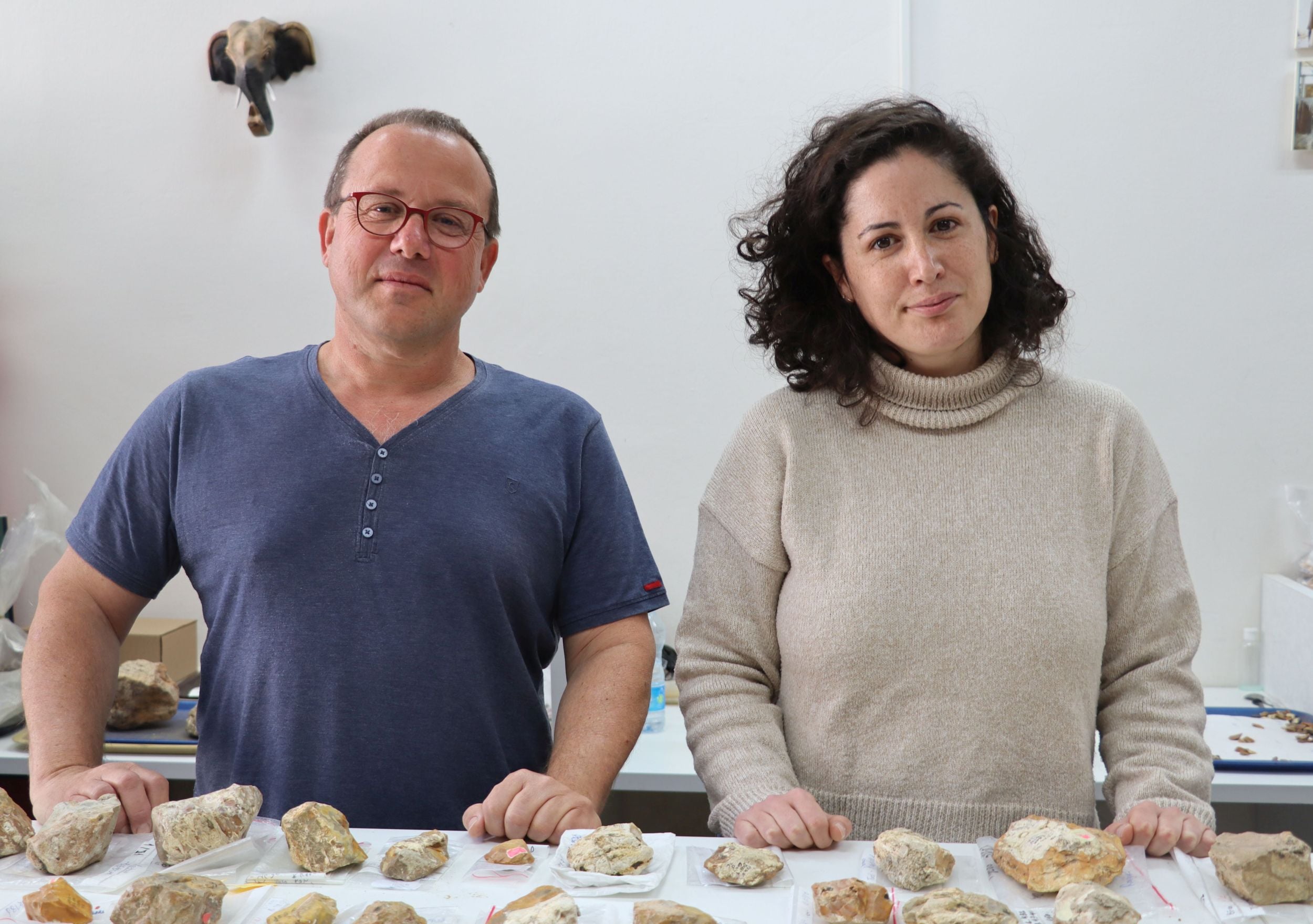
“We are basically saying that prehistoric man was ‘smarter’ than commonly perceived. That he had his own needs and that not everything came from economic constraints,” said PhD student Bar Efrati, who co-led the study with Tel Aviv University Prof. Ran Barkai of the Jacob M. Alkow Department of Archaeology and Ancient Near Eastern Cultures at TAU’s Entin Faculty of Humanities.
“Regardless of exactly who collected them and under what circumstances, we contend that their selection, collection, and recycling were intentional, conscious, and carried out regularly by early humans during Lower Paleolithic times,” wrote the authors.
In other words, as opposed to popular perception, prehistoric man was “not only hunting and finding a place to sleep,” Efrati told The Times of Israel on Monday.
The study was conducted in collaboration with Dr. Flavia Venditti from the University of Tubingen in Germany and Prof. Stella Nunziante Cesaro from the Sapienza University of Rome, Italy, and is part of ongoing collaborative research.
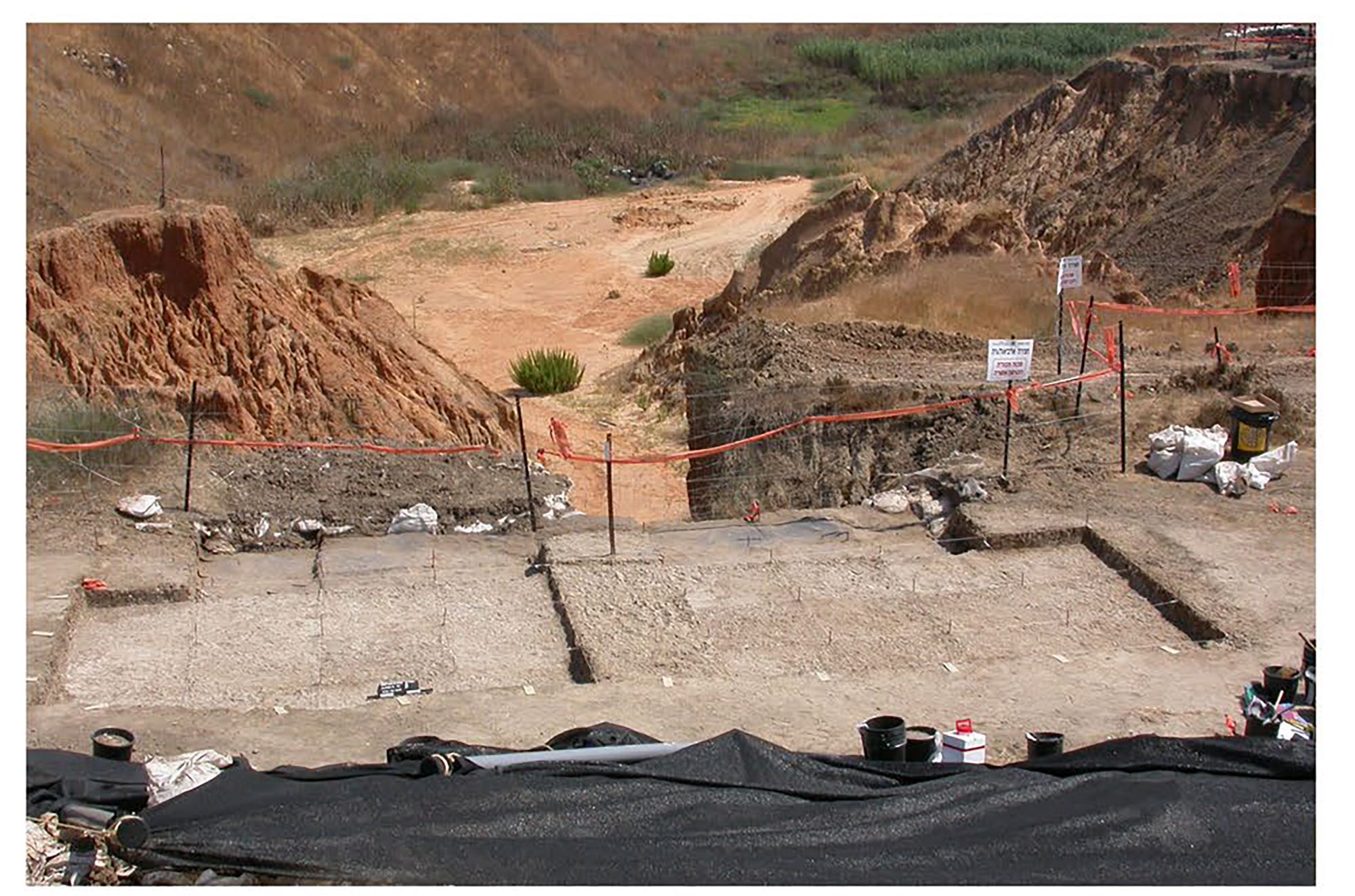
Revadim, 40 kilometers south of Tel Aviv near Kibbutz Revadim on the southern coastal plain, is an open-air site dated to circa 500,000–300,000 years ago whose remains are comparable to those of the Levant’s Late Acheulian culture, according to the article. The site was rich in wildlife and widely settled for vast periods of time.
For the basis of their laboratory investigation into their hypothesis of “double patina” items, the team of researchers took a sample of 49 tools with “two life cycles.” Patina is a chemical alteration that occurs over time, and under certain environmental and chemical conditions, on the surfaces of numerous types of materials, according to the article. The double patina items show two periods of preservation, as shown by differing patina growth.
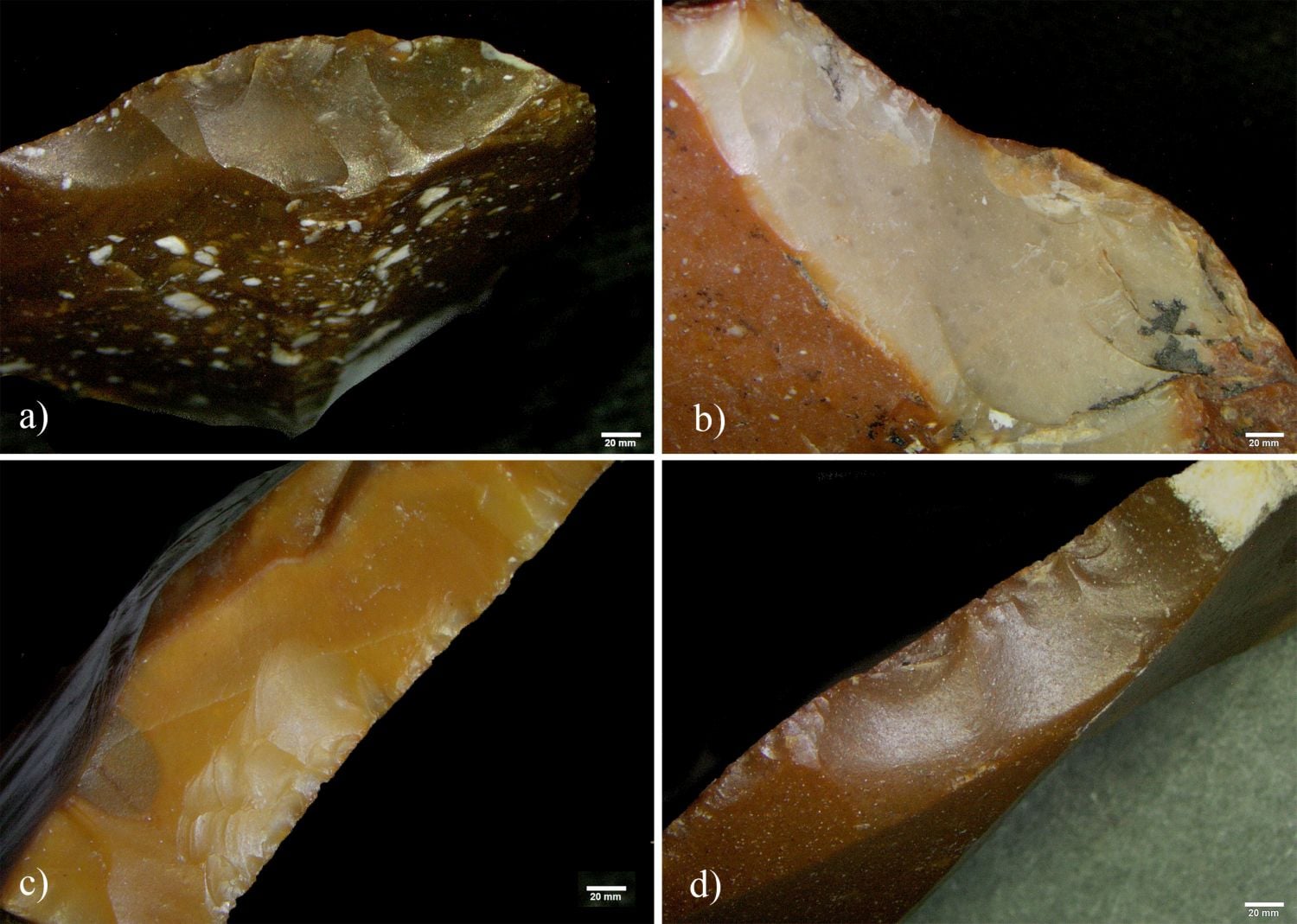
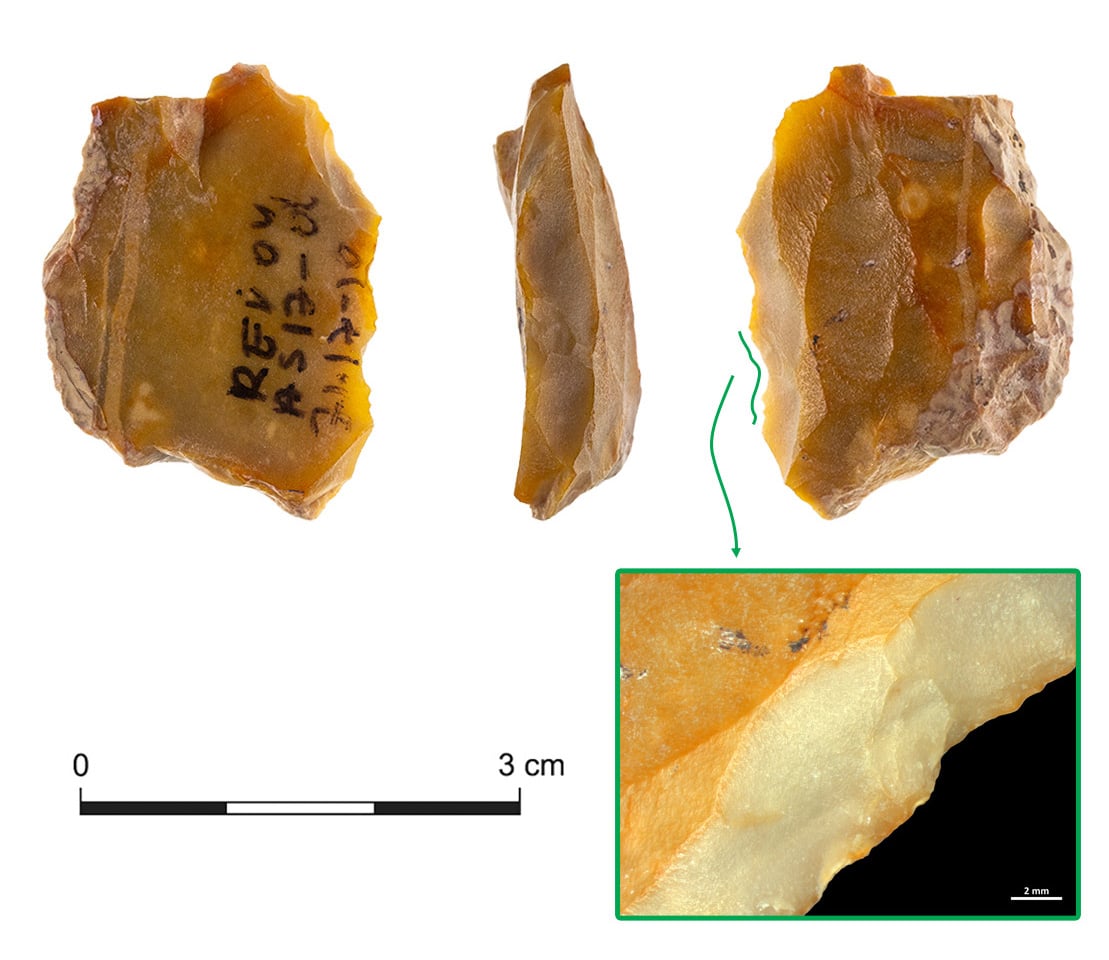
“The current study discusses a sample of 49 ‘old’ fully patinated items that have served as blanks for the making of ‘new’ tools, thus exhibiting flaked patinated ‘old’ surfaces with minimal and specific new retouch that exposes the surfaces of the fresh flint underneath,” write the authors.
According to Efrati, since tool-making was such a cornerstone to their lives and livelihoods, prehistoric man would have been well aware when a piece of flint he stumbled upon had already been used based on the shape and “scars” the flint working left. Flint tools are created by chipping away at a stone nodule. These reused tools were only slightly retouched and preserve the original makers’ scars.
“Looking at the scars in combination with the patina — it tells us a whole story. If we scholars learned how to see it, the prehistoric men and women knew how to recognize this too, because they’re living it,” said Efrati. “You are aware that someone was making this item, was here before you, and you want to preserve it visually while still using it for function,” she said.
So the question remains, why collect and then slightly reshape these old tools in order to reuse them?
According to Barkai in a TAU press release, “The more we study early humans, we learn to appreciate them, their intelligence, and their capabilities. Moreover, we discover that they were not so different from us. This study suggests that collectors and the urge to collect may be as old as humankind. Just like us, our early ancestors attached great importance to old artifacts, preserving them as significant memory objects — a bond with older worlds and important places in the landscape.”
Or, as Efrati says more simply, “There’s something sentimental about it.”










The Times of Israel Community.