Sue Surkes is The Times of Israel's environment reporter
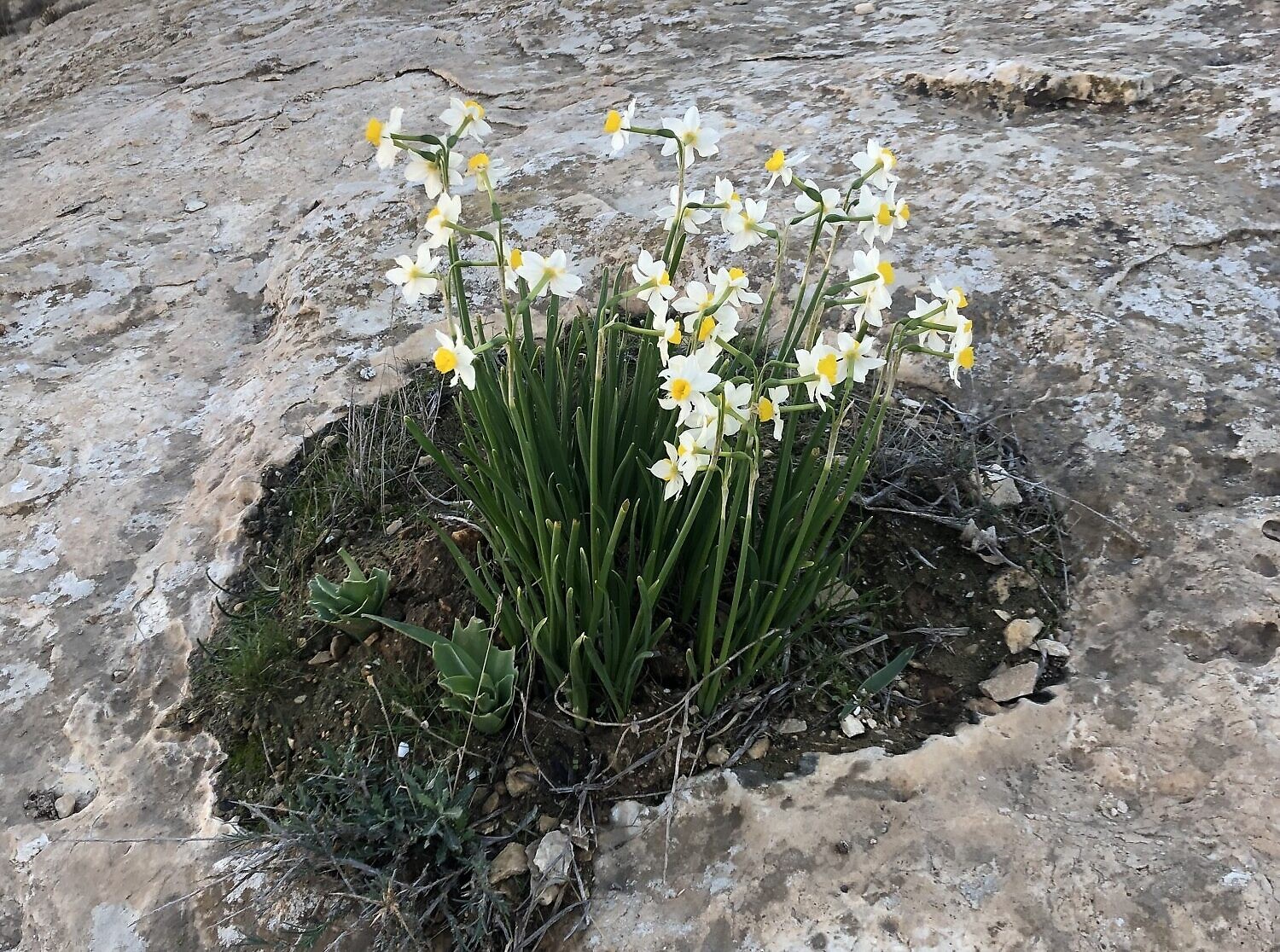
Intensely fragrant wild narcissi flowering out of the rock just outside of the city of Dimona, in southern Israel, December 21, 2020. (Sue Surkes/Times of Israel)
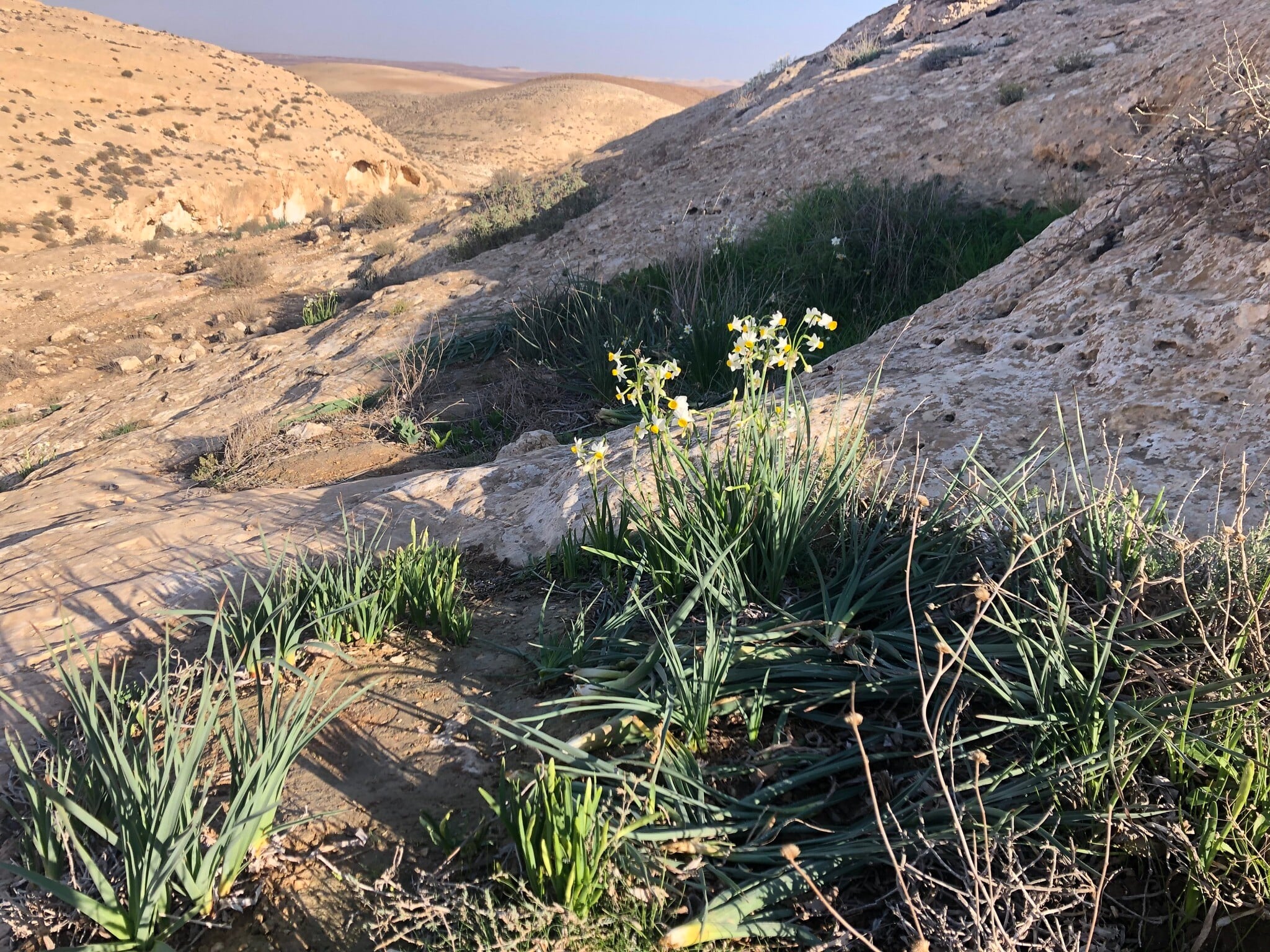
While Israelis wait for the well-known first signs of spring — the blossoming of the almond trees and carpets of red anemones — the less familiar but no less stunning vistas of white narcissi with yellow centers rising gracefully out of bare rock in a corner of the Negev Desert in southern Israel await those willing to make the trip.
The delicate flowers grow on a rocky hillside above the Dimona streambed, close to the city of Dimona’s Ayalim Student Village.
To find them, drive to the easternmost point of Rabbi Elnakaveh Street, where it makes a 90-degree turn south, but instead of turning, continue straight onto a building site at the edge of the open desert.
Climb up the stony hill and walk down into the riverbed, following the blue and white trail markers, and when you reach what look like caves on your left, start climbing the escarpment on your right until you spot the little daffodils waving in the breeze.
Clumps of narcissi growing out of the rock near Dimona in the Negev Desert in southern Israel., December 21, 2020. (Sue Surkes/Times of Israel)
That these divine-smelling flowers can bloom out of rock is thanks to the way in which rainwater runoff has carved hollows into the limestone, which have been filled with soil made from eroded rock shavings and organic matter.
Get The Times of Israel's Daily Editionby email and never miss our top stories
Israel is home to two subspecies of Narcissus tazetta — one blooms in November and December on the limestone hills, while the other opens in the valleys and the edges of swampland from January to March.
Help us report truthfully on social media
As a multimedia journalist, my job is to take the quality, fact-based journalism produced by The Times of Israel newsroom and make it accessible across every platform — from Instagram posts to podcasts to short-form videos.
This is how many, especially young people, consume news these days. But misinformation is rampant on social media. Our team at ToI produces accurate, responsible short-form reporting on Israel and the Jewish world.
If you believe in the importance of factual social media journalism, please consider joining our reader support group, The Times of Israel Community. Your financial support is essential to sustain responsible multimedia reporting.
We’re really pleased that you’ve read X Times of Israel articles in the past month.
That’s why we started the Times of Israel - to provide discerning readers like you with must-read coverage of Israel and the Jewish world.
So now we have a request. Unlike other news outlets, we haven’t put up a paywall. But as the journalism we do is costly, we invite readers for whom The Times of Israel has become important to help support our work by joining The Times of Israel Community.
For as little as $6 a month you can help support our quality journalism while enjoying The Times of Israel AD-FREE, as well as accessing exclusive content available only to Times of Israel Community members.
Thank you, David Horovitz, Founding Editor of The Times of Israel


 Add ToI as a Preferred Source on Google