

Is Elena Ferrante the child of a Holocaust survivor?
An alleged unmasking of the best-selling author leaves many fans asking about motive and an ethically questionable violation
 Add ToI as a Preferred Source on Google
The mysterious best-selling Italian author who writes under the pen name Elena Ferrante has been identified as the daughter of a German-born Holocaust survivor who lost dozens of family members in the Shoah.
Italian investigative journalist Claudio Gatti, in an article published simultaneously on Sunday in the New York Review of Books, the Italian newspaper Il Sole 24 Ore, and in German and French publications, claimed that Ferrante is really Rome-based Anita Raja, a translator who specializes in translating from German into Italian.
He based his claim on, among other things, financial and real estate records he examined during a months-long investigation. These records, Gatti wrote, showed that Raja received large payments from Edizione e/o, the Italian publisher of Ferrante’s books, including her quartet of wildly popular Neapolitan novels, which trace the friendship of two women.
The payments, according to Gatti, paralleled the commercial success of Ferrante’s books. Raja and her husband, he wrote, had used the funds to purchase expensive apartments and a country house.
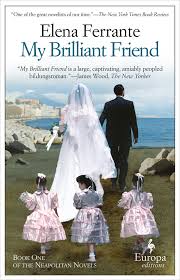
Ferrante’s real name has been a closely guarded secret since her first novel was published in 1992, and her recent success sparked intense speculation as to her identity that has been called “Ferrante fever.”
To many loyal readers, her unmasking is a “violation” — and sexist.
“Think of those great nineteenth-century Georges, Eliot and Sand, who opted to give their books a better chance at a future by claiming to have fathered rather than mothered them,” wrote Alexandra Schwartz in The New Yorker.
“But the right to publish anonymously as a choice — an internal, artistic prerogative rather than an externally imposed condition — is one that women have only recently earned.”
The ‘real’ backstory
Raja, born in 1953, is the daughter of a Holocaust survivor, Golda Frieda Petzenbaum, who was born in 1927 in Worms, Germany into a family of Polish Jews who had moved there from Wadowice, the hometown of Pope John Paul II. She and her family fled Germany to Milan 10 years later, but they suffered after Italy’s fascist government imposed anti-Semitic laws in 1938.
‘She lied about her personal life. I don’t like lies, and I decided to expose them’
Petzenbaum, Gatti wrote in a separate article detailing Raja’s family history, “survived discrimination, internment, a dangerous escape to Switzerland, and almost two years alone in different refugee camps.” Most of her extended family was killed in the Holocaust. After the war, the Petzenbaums settled in Naples, where Golda married a Neapolitan magistrate, Renato Raja. She died in 1986.
As to the journalist’s motive, Gatti told the BBC’s Today program, “She lied about her personal life. I don’t like lies, and I decided to expose them.”
Raja, her husband, and Edizione e/o declined to comment on Gatti’s claims.
A Twitter account in Raja’s name was opened on Wednesday, and a series of tweets appeared to confirm Gatti’s allegations. Ferrante’s publisher, however, called it a fake, and said the author is currently traveling and has not been in contact.
Surge in sales
The alleged revelation of Ferrante has led to a wave of criticism and to a surge in sales for her acclaimed quartet of “Neapolitan” novels.
As of midday Monday, two of the books placed high on Amazon.com’s “Movers and Shakers,” works that have jumped furthest on the overall best-seller list over the past 24 hours. Book One, “My Brilliant Friend,” ranked highest at No. 46 on best-seller list. The four novels, originally published in Italian, have sold more than 1 million copies worldwide and set off intense speculation over Ferrante’s identity.
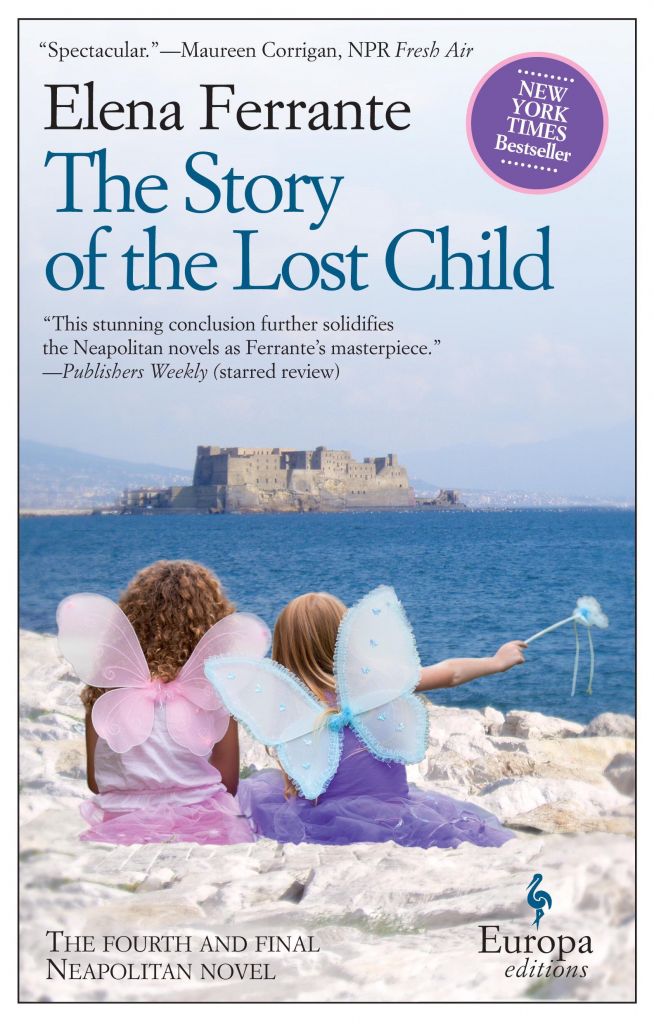
The author wrote under a pen name well before her recent success, telling the Paris Review in 2015 that she disliked self-promotion and found that public anonymity opened a “creative space” for her work.
The apparent revelation of Ferrante’s identity prompted a widespread backlash that questioned whether the age-old practice of using a nom de plume ought to be subjected to such scrutiny.
The editor of the Times Literary Supplement, “one of very few titles that is analogous to the New York Review of Books,” even stepped into the fray this week, and reflected whether his publication would have printed the Gatti unveiling.
In a passionate rejection, Stig Abell wrote, “there are artistic reasons for her anonymity. As a paper whose chief purpose is to defend the importance of the humanities, it would be abhorrent as well as self-defeating to ignore this writer’s clearly delineated withdrawal of consent.”
Countless authors have found literary freedom by writing under a pseudonym to preserve their anonymity. To embark on a series of detective novels, J.K. Rowling famously wrote under the name Robert Galbraith.
But whereas Rowling was attempting to cloak her fame, Ferrante remained anonymous in the hope of protecting her privacy. She has previously, in written interviews, suggested she would stop writing if her identity was revealed.
“I’ve never wondered about Elena Ferrante’s true identity,” author Roxanne Gay said on Twitter. “Who cares? That info doesn’t change my life. Or make her books better. Ban men.”
“Maybe Elena Ferrante has very good reasons to write under a pseudonym. It’s not our ‘right’ to know her,” tweeted British novelist Jojo Moyes.
Ferrante has a loyal following. Her publishers’ website notes that U.S. Democratic presidential candidate Hillary Clinton says she enjoys reading Ferrante’s novels, describing them as “hypnotic.”









The Times of Israel Community.