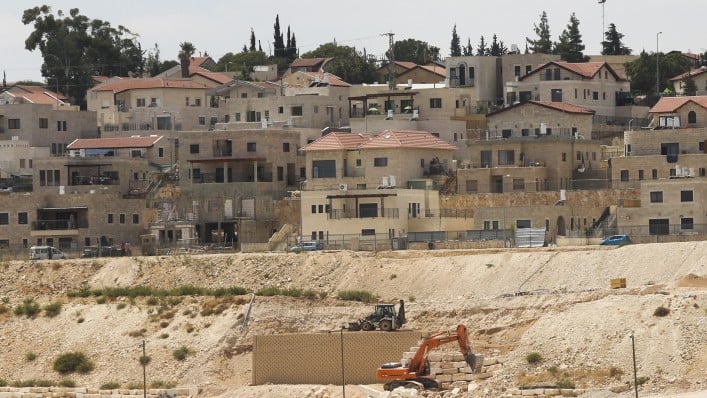
Illustrative photo of a construction site in Tekoa, a Jewish settlement in the West Bank, on September 7, 2014 (Flash90)
Prime Minister Benjamin Netanyahu and Defense Minister Moshe Ya’alon on Thursday denied a report saying that Israel has approved plans for more than 200 new settler homes in the West Bank
Hagit Ofran, a spokeswoman for settlement watchdog group Peace Now, earlier said the government had given the green light for at least 229 homes, which are at various stages in the process of approval.
Peace Now said the new plans call for additional homes in a range of settlements, including Har Bracha (54 homes) near Nablus in the northern West Bank; Revava (17), also in the northern West Bank; Ganei Modiin (48), northwest of Jerusalem; Tekoa (34), south of Jerusalem; and Givat Ze’ev (76), north of Jerusalem.
The bulk of the report was refuted in a government statement. “The prime minister and defense minister did not approve new building as was publicized,” the Prime Minister’s Office said in response.
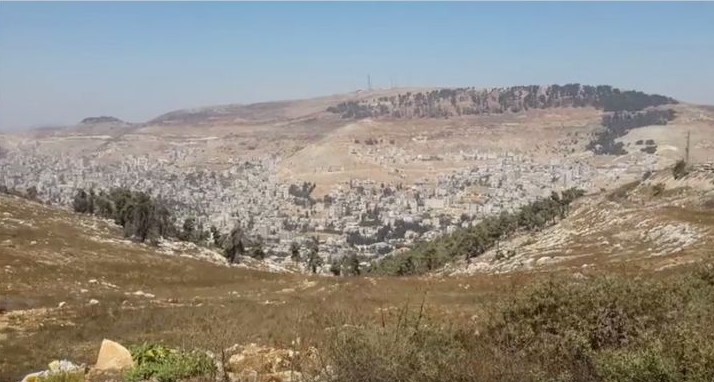
The settlement of Har Bracha in the northern West Bank in September 2014.
“Nearly all the approvals are for upgrading of existing buildings,” it said in a statement.
Get The Times of Israel's Daily Editionby email and never miss our top stories
“The few that relate to new building are in the Ganei Modiin community, which is right next to the fence and will be part of Israel in any future settlement,” it said.
Peace Now says that the number of West Bank settlement homes Israel plans to build more than tripled in the first quarter of 2016 compared to the same period last year.
Between January and March, projects for 674 housing units passed at least one of the steps in the planning approval process, up from 194 in the first quarter of 2015, it said. The new plans bring the total to at least 903.
Advertisement
We can't do this work alone.
The war with Iran has been draining for all of us in Israel. But when I heard about a high casualty incident – ballistic missile impacts in Arad and Dimona that left nearly 200 people wounded – I drank a cup of coffee, packed a bag, and headed south.
There, I spoke with Shilgit, the head of an after-school program for underprivileged youth. Standing outside her destroyed center, Shilgit said it was a miracle that no children were hurt and spoke about the community coming together in the hours since.
As a Times of Israel reporter, I’m committed to telling stories of resilience like Shilgit’s. But my colleagues and I can't do this alone. If you value work like this,please consider joining our reader support group, The Times of Israel Community. Your financial support is essential to keep real human reporting like this going.
We’re really pleased that you’ve read X Times of Israel articles in the past month.
That’s why we started the Times of Israel - to provide discerning readers like you with must-read coverage of Israel and the Jewish world.
So now we have a request. Unlike other news outlets, we haven’t put up a paywall. But as the journalism we do is costly, we invite readers for whom The Times of Israel has become important to help support our work by joining The Times of Israel Community.
For as little as $6 a month you can help support our quality journalism while enjoying The Times of Israel AD-FREE, as well as accessing exclusive content available only to Times of Israel Community members.
Thank you, David Horovitz, Founding Editor of The Times of Israel