

Jordan’s new prime minister forms government
Hani Mulki, who was deeply involved in negotiations with Israel that led to 1994 peace treaty, to push for business-friendly policies
 Add ToI as a Preferred Source on Google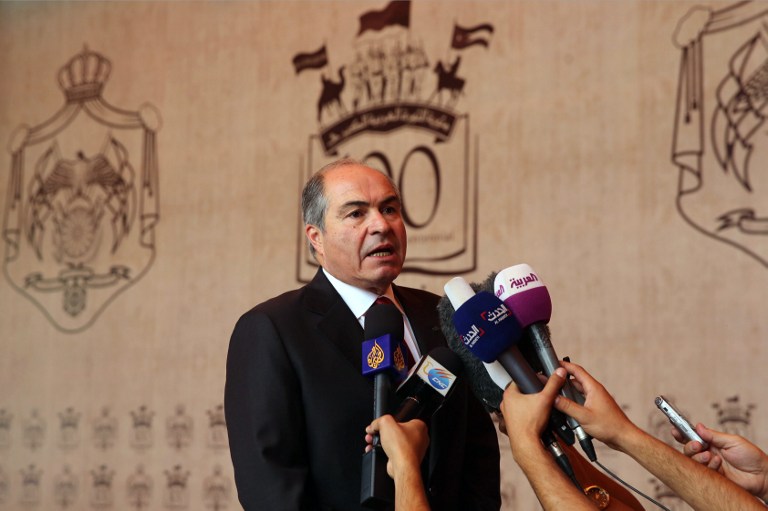
Jordan’s new Prime Minister Hani Mulki formed his government on Wednesday to prepare for legislative elections following the dissolution of parliament, the royal palace announced.
The 65-year-old, who has held several ministerial posts, is expected to push for business-friendly policies to revive Jordan’s lagging economy.
He was appointed by King Abdullah II following the resignation of his predecessor Abdullah Nsur in line with the constitution after the end of parliament’s four-year term on Sunday.
Mulki will also hold the defense portfolio.
The king swore in the new cabinet of 28 ministers, among them 17 newcomers including four women.
Several key posts were unchanged, including Foreign Minister Nasser Judeh, Interior Minister Salamah Hammad and Finance Minister Omar Malhas, a former investment banker.
Salama Hammad was named interior minister, a post he held in a previous administration, while Mohammed Momani remains information minister and government spokesman.
Among the four women brought into the government was Lina Annab who replaced Nayef al-Fayez as tourism minister.
Trained in engineering, Mulki has served as advisor to King Abdullah and ambassador to Cairo, as well as minister for water, energy, foreign affairs and industry.
He was also deeply involved in negotiations with Israel that led to a peace treaty between the two countries in 1994.
The last parliamentary elections in Jordan, held in 2013, were boycotted by the Muslim Brotherhood, the main opposition party, which demands greater transparency and electoral reforms.
New elections are scheduled for this year but a date has yet to be set.








The Times of Israel Community.