

Keep it calm and get ready to rumble: 7 things to know for October 19
Friday is seen as a massive test of whether Israel and Hamas can keep a lid on tensions and keep talking; if they don’t, Israel seems ready for war
 Add ToI as a Preferred Source on Google
Joshua Davidovich is The Times of Israel's Deputy Editor
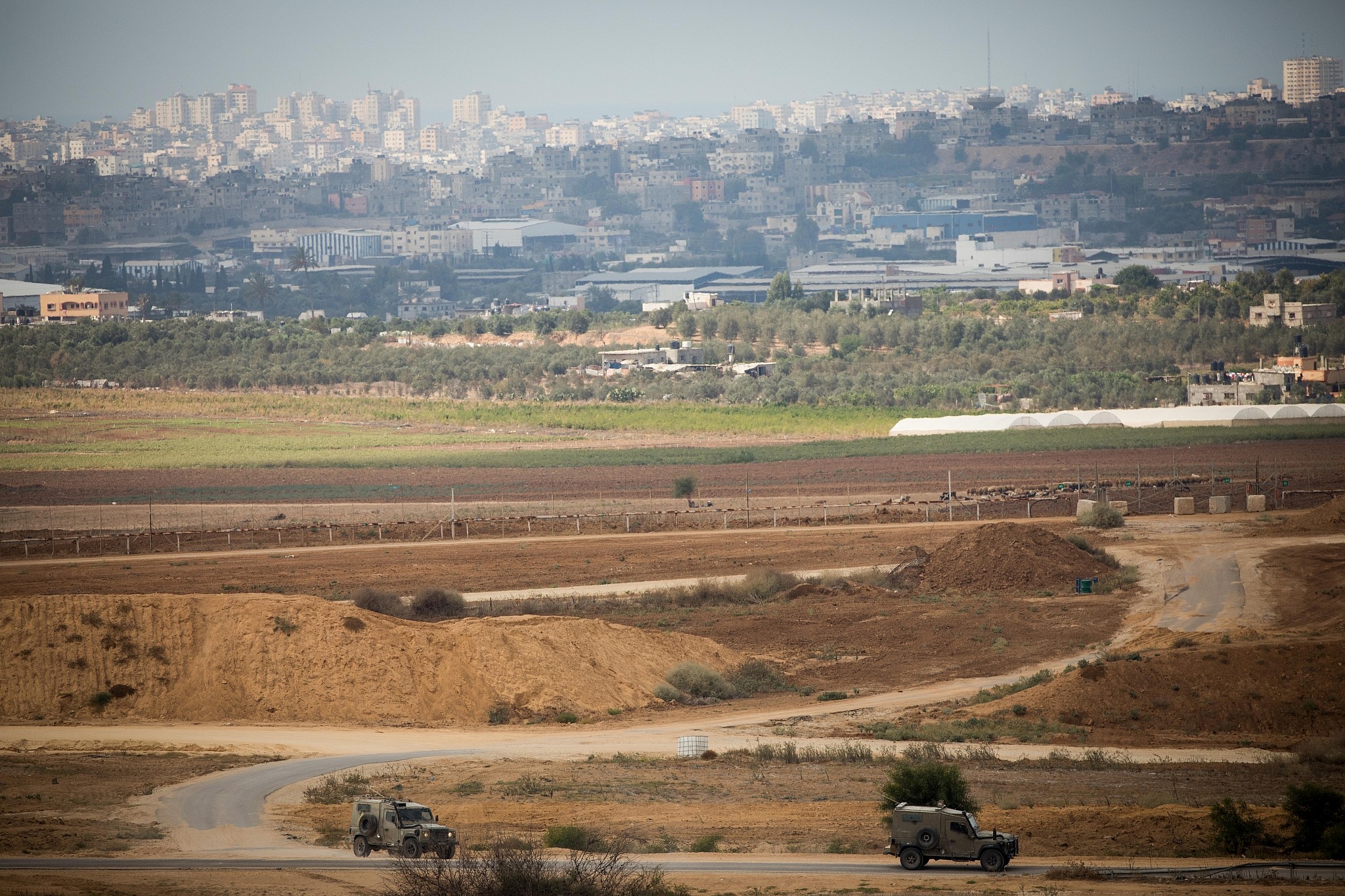
1. Hopes for avoiding war: Friday is being seen as a major test for Israel and Gaza and whether the sides can stop what seems to be an inexorable march toward war.
- Both sides are talking a big game, threatening punishing responses to attacks from the other, but they are both also signalling that they prefer things to stay calm rather than fighting.
- “Defense officials actually believe that the rocket fire Wednesday increased the chances of reaching an agreement,” Israel’s Channel 10 reports.
- Israel Hayom reports that if Friday manages to pass without any major violence, on Sunday Israel will start allowing fuel shipments and other goods back into the Strip, and will expand the fishing zone.
2. Hamas vs. the ‘public mood’: In Gaza, protest leader Daoud Shehab tells the AP that officials are encouraging protesters to stay away from the border fence. But he casts some doubt on whether they can “restrain the public mood.”
- “There will be attempts to prevent them from approaching the fence. There might be a reduction of balloons,” he says. “We hope there will be no human losses tomorrow. We are giving a chance to the Egyptian efforts.”
- Israel’s Kan broadcaster reports that Egypt is leaning on Hamas to tone down the protests, with Hamas answering that it can do so gradually, if it sees some easing of the blockade on Gaza in kind.
3. Border beef-up: Alongside the hopes, there is a fair amount of pessimism as to whether war can be avoided.
- Yedioth Ahronoth reports that Israel has significantly boosted its troop presence in the border region and has deployed dozens of tanks, artillery cannons, armored personnel carriers and engineering equipment to the area, a clear signal that they will be ready to go in at a moment’s notice.
- Haaretz surmises that there may be something backhanded behind the relatively calm signals sent out by the cabinet at the end of their meeting Thursday morning, in which ministers signaled that Israel won’t launch an offensive, but will step up attacks in response to violence.
- “It’s possible that the messages that were released at the end of the cabinet meeting… are part of an effort by the military and political echelons to create an element of surprise for Hamas if a decision is made by the IDF to launch a military operation or a significant engineering initiative along the fence,” the paper writes.
4. Yahya yadda yadda: US peace envoy Jason Greenblatt writes in a column, published concurrently by Israel Hayom (in Hebrew) and the Jerusalem Post (in English), that he has reason to be hopeful following Hamas leader Yahya Sinwar’s interview with Yedioth Ahronoth last month, if only he would match his actions to his words.
- “If Mr. Sinwar’s interview was more than a marketing stunt, if Hamas genuinely wants change and peace with its neighbors, the peace plan that the Trump Administration is developing will offer a path to a change that will be the most significant gift Mr. Sinwar could ever give to his children and the children that he and Hamas claim to care for,” he writes.
5. An efficient way to downgrade the Palestinians: Some might level the same charge of not matching words to actions at Greenblatt and the Trump Administration after they backtracked on not bringing the Jerusalem consulate, which deals with Palestinians, under the embassy that was moved to Jerusalem.
- Secretary of State Mike Pompeo described the move as being driven by efficiency and not having any policy implications, but most see the decision as marking an implicit downgrading of the facility’s status, which will now force Palestinian diplomats to deal with David Friedman, a staunch right-winger and settlements supporter.
- On Twitter, former consul general David Pearce says the move is a “major change” that “ends independent U.S. representation not only in Jerusalem, but also to the Palestinians.”
As a former US Consul General in Jerusalem, I beg to disagree. This is in fact a major change in policy. It ends independent U.S. representation not only in Jerusalem, but also to the Palestinians https://t.co/qidhuUUFOn
— David D. Pearce (@daviddpearce) October 19, 2018
- Dan Shapiro, a former US ambassador, writes that there is little chance the Palestinians will want to interact with the US through the Israel embassy.
This decision downgrades diplomatic relations with the Palestinians. It's not consistent with the goal of achieving a 2state solution, & that's how it will be understood by both sides. It is very unlikely that the Palest Auth will engage the US govt through the Embassy to Israel. https://t.co/6LnLVhrWkh
— Dan Shapiro (@DanielBShapiro) October 18, 2018
- Another former envoy, Martin Indyk, tells the New York Times: “Symbolically, it was the last toehold for the Palestinians in Jerusalem.” The US does still have a very limited presence in Ramallah, where it runs a citizen services section in the Canadian mission for Palestinians who cannot enter Jerusalem.
6. Free at last: Haaretz seems to have been the only Israeli press at the airport to greet Lara Alqasem after she was ordered released by the Supreme Court Thursday.
- Reporter Noa Landau tweets a picture of Alqasem, who looks more like somebody just getting off a plane than somebody who got off a plane and spent 15 days in detention fighting to be let into the country.
לייב מנתב״ג pic.twitter.com/ShHC92BWph
— Noa Landau נעה לנדאו (@noa_landau) October 18, 2018
- Alqasem offers only a short statement, promising more later.
- While Haaretz championed her case, and even many on the right saw the damage done to Israel’s image from the case outweighing any damage Alqasem could possibly ever do to Israel, some pundits still express disapproval with the Supreme Court decision to let her in.
- Yedioth Ahronoth columnist Ben-Dror Yemini calls the verdict “intolerable.”
- Israel Hayom’s Haim Shine slams not only the court for “improper meddling,” but also Hebrew University, which he alleges is a hotpot of anti-Israel sentiment more worried about its international standing than anything else.
- “A university whose law school holds a conference titled Life Under Occupation, that gives an academic platform to the international effort to describe Israel as an apartheid state, is suspect in my eyes when we are talking about its warm recommendation to allow into its ranks a former or future Israel boycott activist,” he writes.
7. The (Israeli) spy who texted me: Stories about Israel’s burgeoning cyber-espionage industry had come out in dribs and drabs, mostly in terms of accusations against companies NSO Group and Blackcube, but there has never really been a comprehensive effort to expose how much they are involved in around the world. That is until Friday, when Haaretz publishes just that.
- The paper’s expose reports that Israel has become the world’s leading exporter of spying technology used by dictators and other undemocratic regimes to keep tabs and act against dissidents, gays and others, from Bahrain to Vietnam.
- The paper reports that its investigation found that “Israeli industry has not hesitated to sell offensive capabilities to many countries that lack a strong democratic tradition, even when they have no way to ascertain whether the items sold were being used to violate the rights of civilians. The testimonies show that the Israeli equipment has been used to locate and detain human rights activists, persecute members of the LGBT community, silence citizens who were critical of their government and even to fabricate cases of heresy against Islam in Muslim countries that don’t maintain formal relations with Israel. The Haaretz investigation also found that Israeli firms continued to sell espionage products even when it was revealed publicly that the equipment was used for malicious purposes.”
- “ Today, every self-respecting governmental agency that has no respect for the privacy of its citizens, is equipped with spy capabilities created in Herzliya Pituah,” the paper quips, referring specifically to NSO Group.
- “Everyone in this field knows that we are manufacturing systems that invade people’s lives and violate their most basic rights,” the paper quotes someone from the industry saying. “It’s a weapon – like selling a pistol. The thing is that in this industry people think about the technological challenges, not about the implications.”






The Times of Israel Community.