

New testimony shows Eritreans pleaded with Israel to not be forced back into Egypt
Maariv reports that accounts of migrants stuck at the border, given by 3 Eritreans let into Israel, contradict claims government made last week
 Add ToI as a Preferred Source on Google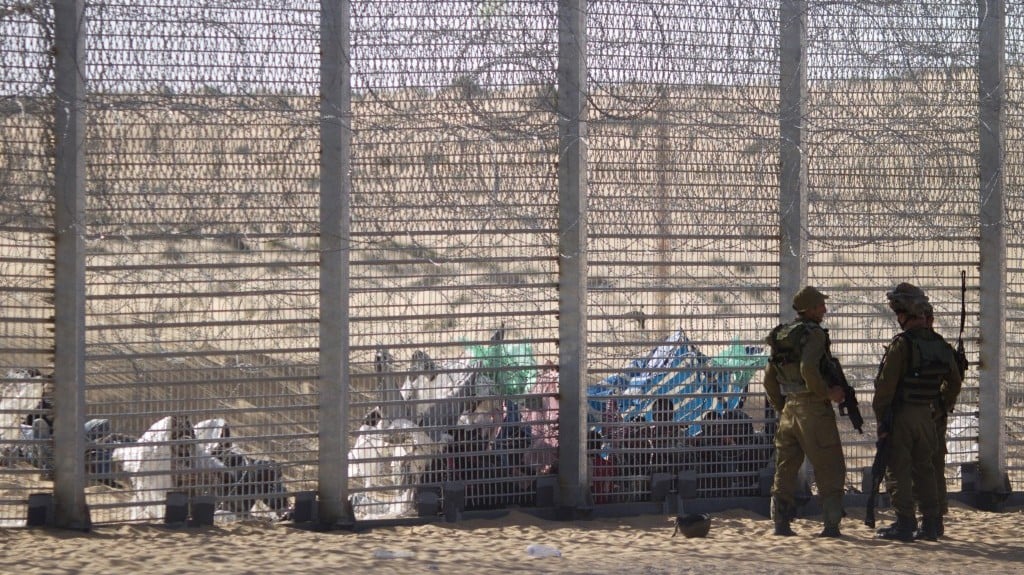
A group of Eritreans who were denied entry to Israel after spending eight days stuck by the border fence last week turned back to Egypt against their will, the three members of the group who were allowed into Israel claimed Wednesday.
The testimony directly contradicts the government claims that the 18 returned to Egypt willingly.
According to a Maariv report, the three (two Eritrean women, both 21, who were reportedly married to other men in the group; and an Eritrean boy, 15) said the IDF made the 18 men return to Egypt, against their will, by dragging them onto the sand within Egyptian territory, where they were loaded onto trucks before disappearing.
They claimed the IDF used tear gas against them twice and used metal bars to keep them away from the fence. The men pleaded with the IDF to stay: “Kill us here, just don’t make us go back to Egypt,” they said, according to the three.
The Eritreans’ version of the events that transpired between the two barriers at the Israeli-Sinai border contradicts the government’s claims — during a Supreme Court hearing — that the group had decided to leave of their own volition.
The testimony, provided through affidavits, was presented by the NGO representing the Eritreans, We Are Refugees. The group is seeking an investigation into the state’s position and the IDF’s conduct toward the migrants.
During the border incident, the 21 were stuck for eight days in-between two fences on the desert border. They were provided with food and water by the IDF, although the army refused to let activists, doctors or even Knesset members meet with them.
Prime Minister Benjamin Netanyahu decided to allow the two women and teenager in on Thursday.
Israel’s decision to deny entry to the other 18 migrants was criticized by human rights groups, who claimed the migrants were asylum-seekers amid violence in their home country.






The Times of Israel Community.