

Knesset approves key funding bill, begins debating 2022 state budget
After passing 2021 budget, MKs pass Arrangements Bill package of economic reforms earlier than expected, thanks to opposition withdrawal of many objections
 Add ToI as a Preferred Source on Google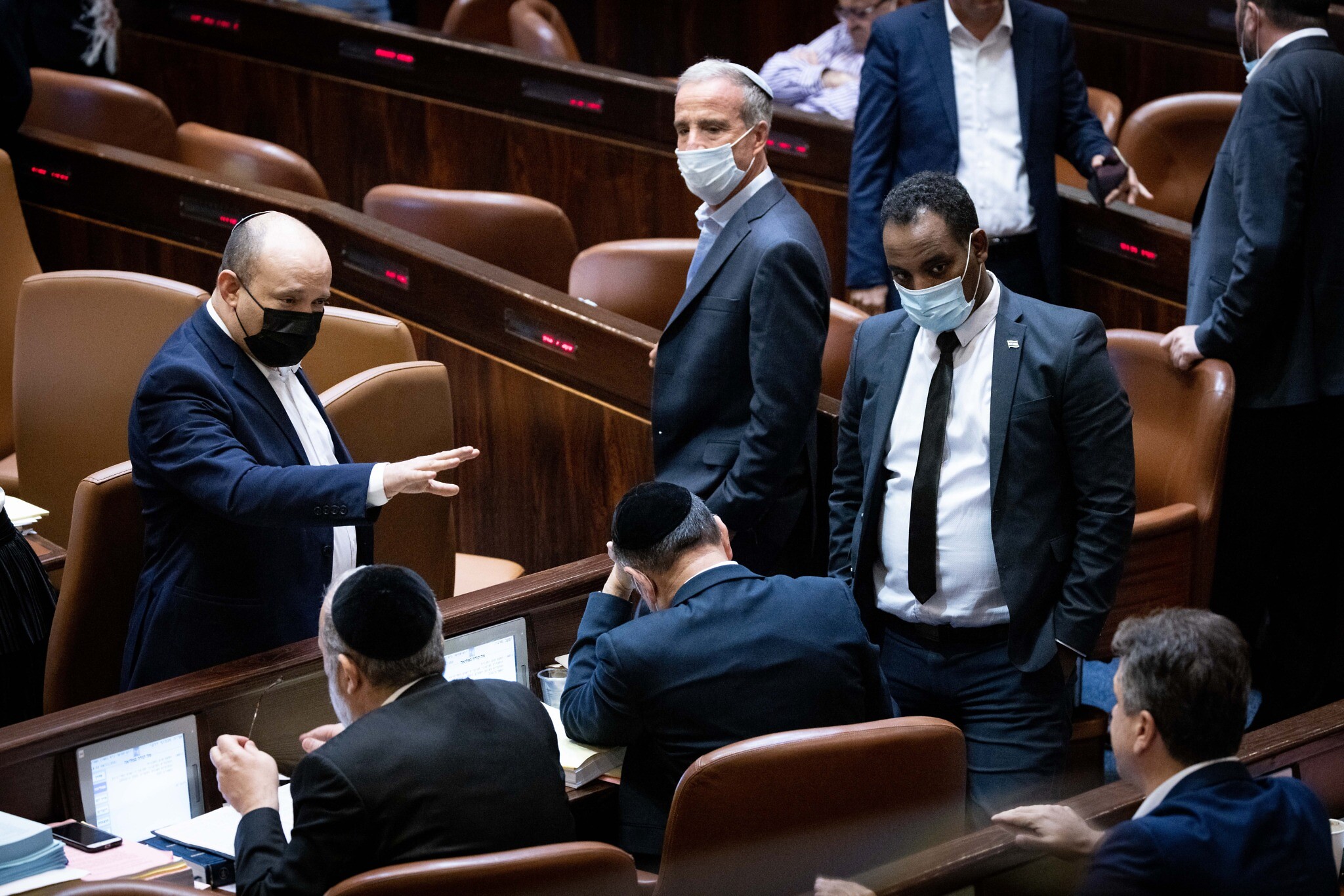
After passing the 2021 state budget earlier in the day, averting the threat of snap elections, the Knesset on Thursday afternoon approved the Economic Arrangements Bill in its final readings earlier than expected after the opposition withdrew most of its objections.
The Arrangements Law — which determines how funds will be disbursed— is usually the final precursor for passing the budget.
The plenum then began debating the NIS 573 billion ($183 billion) state budget for 2022, which could be approved as early as Thursday evening. That budget doesn’t come with an immediate risk of early elections, but still must be passed by the end of March 2022.
The Knesset voted 61-57 to pass the Arrangements Law after 3.5 hours of arguments over the legislation.
This year, it includes various reforms such as raising the retirement age for women, congestion pricing in the Tel Aviv area starting in 2025, a contentious reform in kosher certification and an import reform.
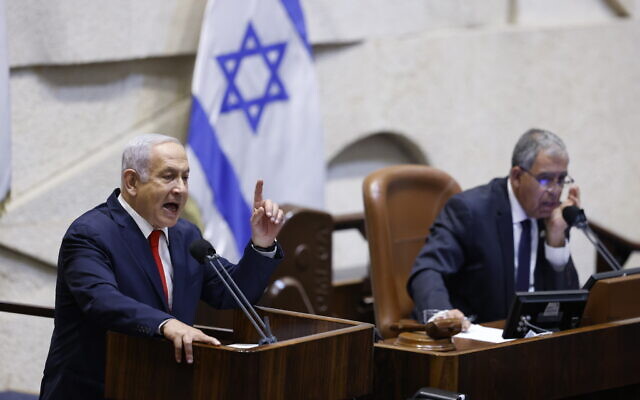
All the opposition objections to the bill were systematically rejected. Opposition leader Benjamin Netanyahu accidentally voted with the coalition four times.
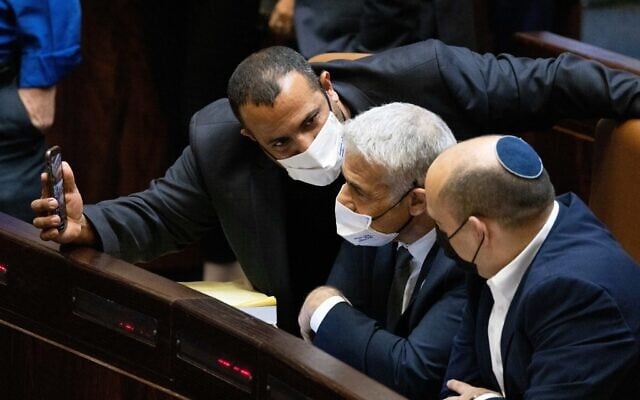
The Knesset passed Israel’s first budget in over three years early Thursday morning, as Prime Minister Naftali Bennett’s coalition overcame its internal differences and the opposition’s objections.
Lawmakers voted 61-59, along coalition-opposition lines, to approve the 2021 state budget in its final readings just after 5 a.m., following an all-night session.
The NIS 609 billion ($194 billion) spending plan for 2021 is the first budget Israel has passed since 2018, due to a prolonged political deadlock that saw successive governments fall before they could bring a proposal to the Knesset.
Passing the budget was seen as a key test for Bennett’s eight-party coalition, both to prove that the ideologically disparate alliance can come together on major issues and because failure to do so by the November 14 deadline would have triggered new elections automatically.
The overall budget plan includes nearly $10 billion in funding over five years to improve socioeconomic conditions for Israel’s Arab minority, which the Arab Ra’am party had demanded as one of the conditions for their support. It also hikes some taxes that the ultra-Orthodox argue will affect them the most.
Despite having only a single vote edge over the opposition, the coalition managed to win all of the several hundred votes held late Wednesday and on Thursday.
Bennett had earlier predicted the coalition would have a 780-0 record, referring to the number of votes it was expected to take to pass the whole package.
Opposition leader Benjamin Netanyahu is widely believed to have torpedoed the most recent budget, under his power-sharing government with Benny Gantz, in order to bring down that coalition and avoid passing the premiership on to him as had been agreed between the two as part of their deal.
That fight led directly to the collapse of the last government and the most recent election, the results of which saw Netanyahu ousted from office in June.
Raoul Wootliff contributed to this report.




The Times of Israel Community.