

 From the Liveblog of
Wednesday, October 25, 2023
From the Liveblog of
Wednesday, October 25, 2023
Group publishes dictionary to help talk to children about the war
 Add ToI as a Preferred Source on Google
Renee Ghert-Zand is the health reporter and a feature writer for The Times of Israel.
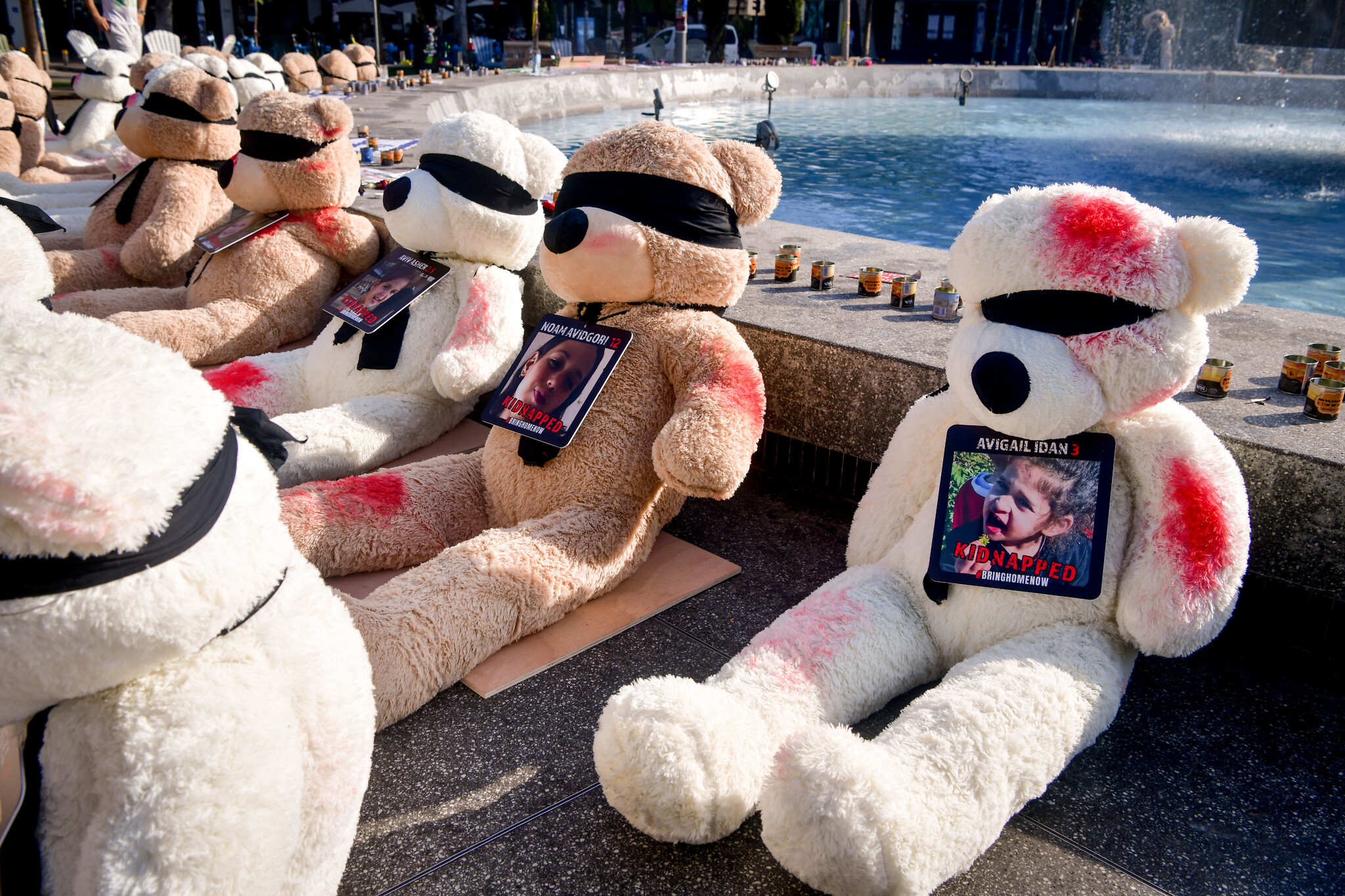
Goshen, an organization promoting community child health and well-being, announces that it has published a “dictionary” to help parents and caregivers have conversations with children about the war.
The guide, validated by University of Haifa psychology professor Tirtsa Joels, is appropriate for interactions with children from preschool age through elementary school.
It is not meant for use with children who have experienced severe, complex trauma because of the war.
In the resource’s introduction, Goshen reassures parents that there is no right age to begin speaking with children about the war. However, the language used by adults must be age-appropriate.
It is best to start off conversations by asking the child what they already know, have heard, and whether they have any questions.
Other suggestions are provided, with an emphasis on reassuring the child and on telling them the truth — but with phrasing and a level of complexity that they can handle given their age and stage of development.
The dictionary lists 14 war-related terms, each with a basic, intermediate, advanced, and expert explanation. The adult can read through these and decide which is most appropriate for use in conversation with their child.
Some of the terms, such as sirens, rockets, and safe room are familiar to most young Israeli children. However, other words are less so.
Among these are invasion, terrorists, missing persons, captives, hostages, Tzav 8 (emergency military reserve call-up), casualties, funerals, and shiva (the week of post-burial mourning).
The dictionary is available here.



The Times of Israel Community.