KYIV, Ukraine — A Ukrainian political analyst who was in Iran’s capital for an international conference planned to head home when it was done, but then chose to stay one more day and do some sightseeing. The decision saved his life.
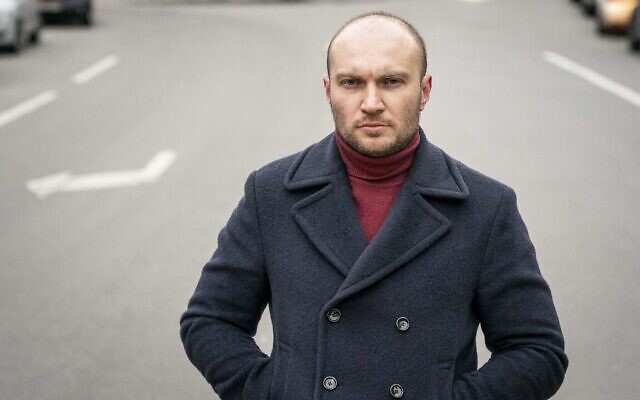
Andrey Buzarov tells The Associated Press today that his original plan would have put him on the flight that Iran shot down by mistake last week, killing all 176 people on board.
“I found out within an hour after the crash. My friend, an Iranian, came to me and showed photos from local Iranian social networks; the media hadn’t written yet, no one had information,” Buzarov says.
His top concern was to let his mother know he was alive. But she lives in a rebel-controlled part of eastern Ukraine and communication with the region is difficult. His mother uses Facebook, but that social network is banned in Iran.
Andrey Buzarov, a Ukrainian political analyst, during an interview with the Associated Press in Kyiv, Ukraine, January 12, 2020. Buzarov, who was in Iran’s capital for an international conference, planned to head home when it was done on the flight shot down Wednesday by Iranian forces — but then chose to stay one more day to see the city’s sights. The decision saved his life. (AP Photo/Evgeniy Maloletka)
Finally, he was able to make a Facebook post by using a virtual private network, or VPN, which creates encrypted links between computers, “and then she calmed down,” he says.
Buzarov, a specialist in Middle East affairs and a consultant to the Ukrainian parliament, had been invited to Iran for an international conference run by the country’s foreign ministry.
He was in Tehran when millions jammed the streets to mourn the death of Iranian general Qassem Soleimani, who was killed by a US strike in Iraq. Iran accidentally downed the flight as it braced for possible American retaliation after firing ballistic missiles at bases in Iraq housing US forces. But no retaliation came.
— AP
We can't do this work alone.
The war with Iran has been draining for all of us in Israel. But when I heard about a high casualty incident – ballistic missile impacts in Arad and Dimona that left nearly 200 people wounded – I drank a cup of coffee, packed a bag, and headed south.
There, I spoke with Shilgit, the head of an after-school program for underprivileged youth. Standing outside her destroyed center, Shilgit said it was a miracle that no children were hurt and spoke about the community coming together in the hours since.
As a Times of Israel reporter, I’m committed to telling stories of resilience like Shilgit’s. But my colleagues and I can't do this alone. If you value work like this,please consider joining our reader support group, The Times of Israel Community. Your financial support is essential to keep real human reporting like this going.
We’re really pleased that you’ve read X Times of Israel articles in the past month.
That’s why we started the Times of Israel - to provide discerning readers like you with must-read coverage of Israel and the Jewish world.
So now we have a request. Unlike other news outlets, we haven’t put up a paywall. But as the journalism we do is costly, we invite readers for whom The Times of Israel has become important to help support our work by joining The Times of Israel Community.
For as little as $6 a month you can help support our quality journalism while enjoying The Times of Israel AD-FREE, as well as accessing exclusive content available only to Times of Israel Community members.
Thank you, David Horovitz, Founding Editor of The Times of Israel


 From the Liveblog of
Sunday, January 12, 2020
From the Liveblog of
Sunday, January 12, 2020