

Mayim Bialik ‘shocked, disgusted,’ but ‘not surprised,’ by Weinstein’s behavior
Jewish actress writes NYT op-ed slamming industry that preys, objectifies women, blames ‘culture we live in’
 Add ToI as a Preferred Source on Google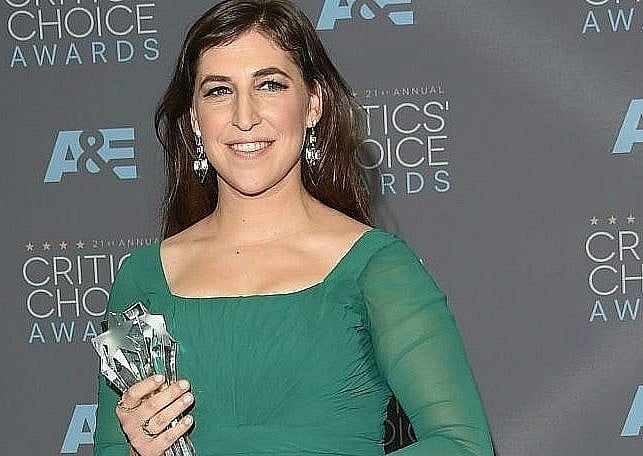
Jewish actress Mayim Bialik said she was shocked and disgusted by “the scope” of Hollywood producer Harvey Weinstein’s predatory behavior toward women in an industry that profits on their objectification, but was “not surprised” by the fact that he abused his position of power to do so.
In a New York Times op-ed titled “Being a Feminist in Harvey Weinstein’s World” published on Friday, Bialik said that “nothing has been a harsher reminder that I work in an industry that profits on the exploitation of women — and not just on screen — than the accusations against Harvey Weinstein as a serial sexual assaulter, particularly of aspiring young actresses.”
The actress, who played the role of “Blossom” in the early 90s and more recently, Amy Farah Fowler on “The Big Bang Theory” — for which she earned four Emmy nominations — wrote about her early start in Hollywood at age 11 and her awareness and discomfort at such a young age of her “nontraditional” appearance while being immersed in a business that “rewarded physical beauty and sex appeal above all else.”
Bialik wrote that though the pressure to look and behave like “the pretty girls” started way before she entered Hollywood as a pre-teen, she quickly learned that “young girls with doe eyes and pouty lips who spoke with a high register were favored for roles by the powerful men who made those decisions.”

Growing up being teased about her appearance, even by family members, she wrote, led her to consider cosmetic surgery at times, and some harsh words by a TV critic forever made her see herself as a girl with a “shield-shaped” face with “mismatched features.”
However, the actress said, strong guidance from her first-generation American parents helped shape her sense of self as she grew aware that she was “out of step with the expected norm for girls and women in Hollywood.”
Bialik eventually left acting to pursue academic studies and earn a PhD in neuroscience because she “craved being around people who valued me more for what was inside my brain than what was inside my bra.” But she returned 12 years later, because she says she had no healthcare and missed “performing and making people laugh.”
Her “not a perfect 10” appearance, she says, had her auditioning for “frumpy” and awkward roles and she eventually landed the part of Fowler on “The Big Bang Theory” where she is “honored to depict a feminist who speaks her mind, who loves science and her friends and who sometimes wishes she were the hot girl,” like Bialik herself does.
The upside to not being a “hot girl,” Bialik argues, is that she has “almost no personal experience with men asking me to meetings in their hotel rooms,” as Weinstein is accused to have done with those he is believed to have attacked or harassed.
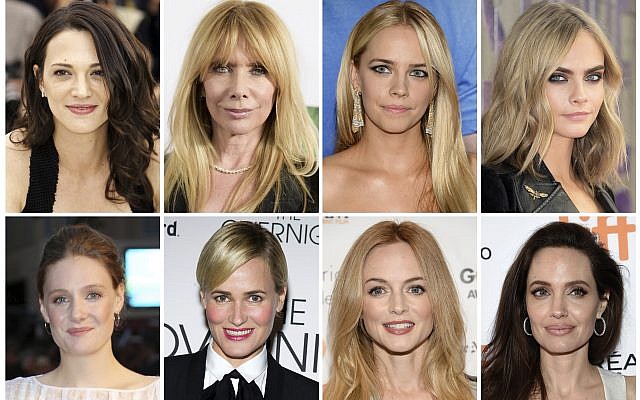
“Those of us in Hollywood who don’t represent an impossible standard of beauty have the ‘luxury’ of being overlooked and, in many cases, ignored by men in power unless we can make them money,” Bialik wrote.
The actress, an Orthodox Jew, says she dresses and behaves conservatively to be “self-protecting and wise” and while women should be able to wear whatever they choose and behave however they choose, because why should women have to police their behavior, “we can’t be naive about the culture we live in.”
“We live in a society that has treated women as disposable playmates for far longer than Mr. Weinstein has been meeting ingenues in luxury hotel rooms,” she said.
The bright spot in the unfolding scandal surrounding Weinstein, she said, was that “women and men are waking up to the fact that it is on us all to sound the alarm on unacceptable behavior.”









The Times of Israel Community.