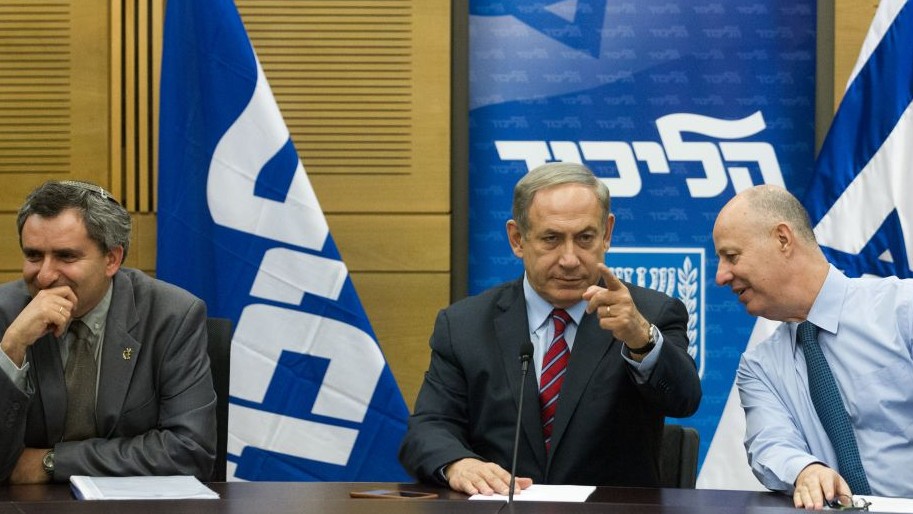
Benjamin Netanyahu, center, with Tzachi Hanegbi, right, and Zeev Elkin at a Likud faction meeting on October 19, 2015 (Miriam Alster/Flash90)
Israel could easily destroy Jerusalem’s flashpoint Al-Aqsa mosque, but emphatically does not want to, Prime Minister Benjamin Netanyahu said.
In remarks to Likud colleagues, Netanyahu said Israel could rid the Temple Mount of the mosque with little effort, but that to do so would contradict everything that Israel represents.
If Israel “wanted to destroy Al-Aqsa, it would not require a great effort… but it goes against everything we stand for,” the prime minister told his party’s Knesset faction on Wednesday, in a recording played by Army Radio on Thursday afternoon.
The mosque atop the Temple Mount — which is the holiest place in Judaism as the site of the two biblical temples — has been at the heart of a wave of Palestinian terrorism and clashes between Palestinians and Israeli security forces in recent months. Palestinian leaders and media have alleged that Israel intends to change the decades-long arrangements under which Jews are allowed to visit but barred from praying on the Mount — something Netanyahu has repeatedly insisted is not the case.
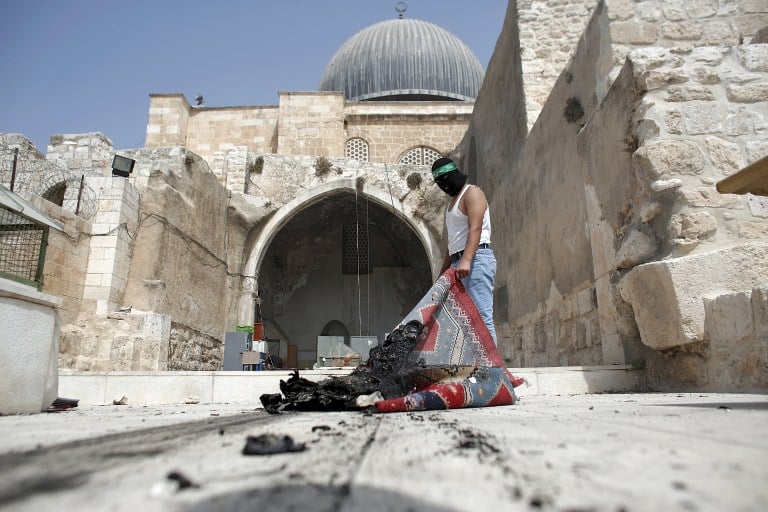
A masked Palestinian wearing a Hamas headband takes a burnt carpet out of Al-Aqsa mosque in Jerusalem’s Old City during clashes at the compound on September 13, 2015, just hours before the start of the Jewish new year. (AFP PHOTO/AHMAD GHARABLI)
In the same meeting, Netanyahu also derided opposition leader Isaac Herzog for lacking the security credentials necessary to run Israel.
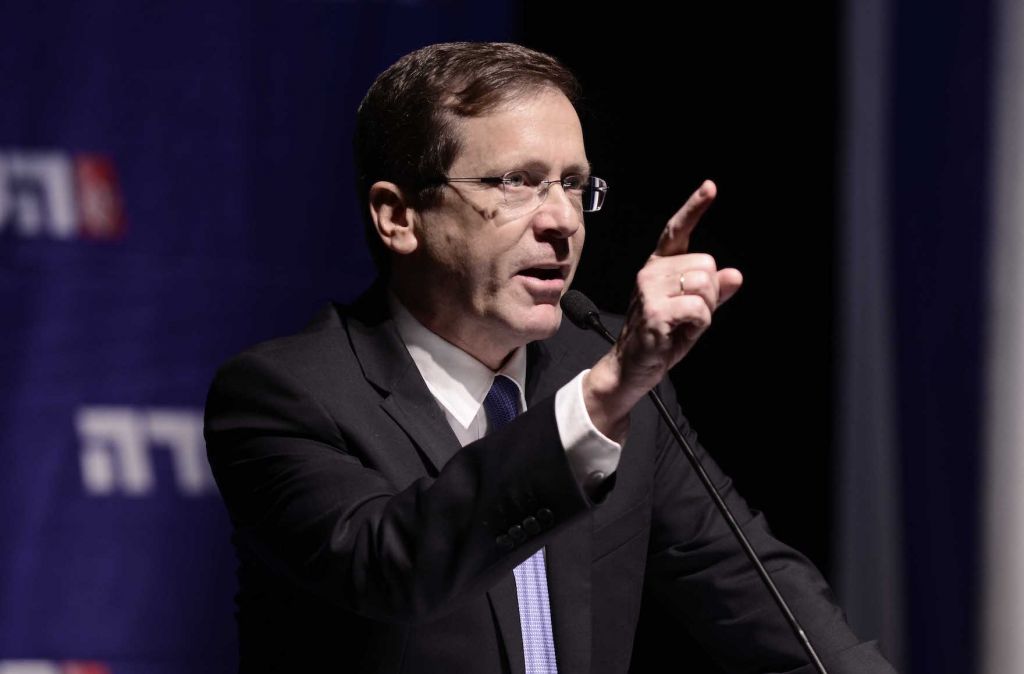
Zionist Union party leader Isaac Herzog speaking at the party’s convention in Tel Aviv, November 8, 2015. (Tomer Neuberg/Flash90)
Herzog retorted in an interview with Amry Radio that the prime minister is “weak when it comes to deeds, and strong only when it comes to words.” The Zionist Union party chief said he’d be able to bolster Israel’s security, improve its international standing, and even “bring international recognition for the Etzion Bloc” of settlements south of Jerusalem.
Advertisement
Help us report truthfully on social media
As a multimedia journalist, my job is to take the quality, fact-based journalism produced by The Times of Israel newsroom and make it accessible across every platform — from Instagram posts to podcasts to short-form videos.
This is how many, especially young people, consume news these days. But misinformation is rampant on social media. Our team at ToI produces accurate, responsible short-form reporting on Israel and the Jewish world.
If you believe in the importance of factual social media journalism, please consider joining our reader support group, The Times of Israel Community. Your financial support is essential to sustain responsible multimedia reporting.
We’re really pleased that you’ve read X Times of Israel articles in the past month.
That’s why we started the Times of Israel - to provide discerning readers like you with must-read coverage of Israel and the Jewish world.
So now we have a request. Unlike other news outlets, we haven’t put up a paywall. But as the journalism we do is costly, we invite readers for whom The Times of Israel has become important to help support our work by joining The Times of Israel Community.
For as little as $6 a month you can help support our quality journalism while enjoying The Times of Israel AD-FREE, as well as accessing exclusive content available only to Times of Israel Community members.
Thank you, David Horovitz, Founding Editor of The Times of Israel


 Add ToI as a Preferred Source on Google