

NIS 17 million funding plan approved for Arava oil cleanup
Team to investigate activities of secretive Eilat Ashkelon Pipeline Company
Lazar Berman is The Times of Israel's diplomatic reporter
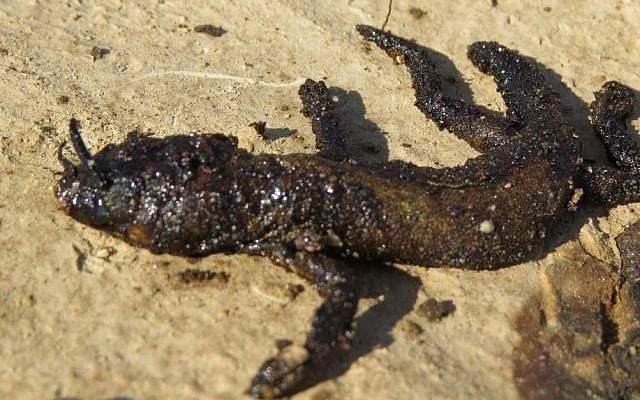
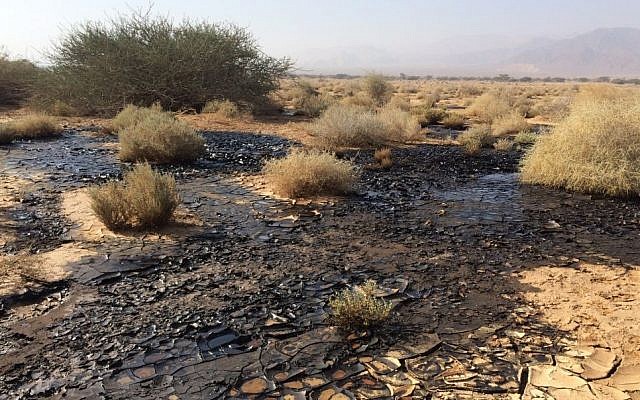
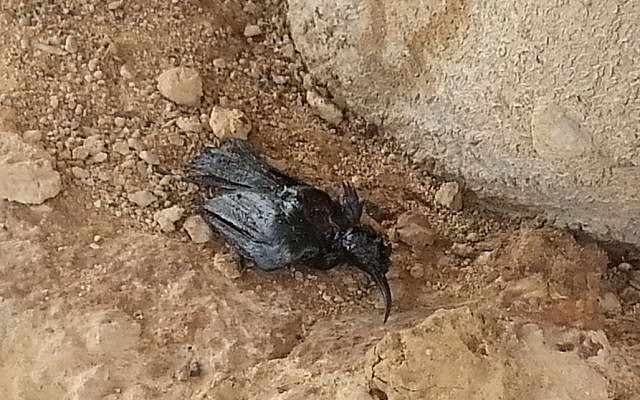
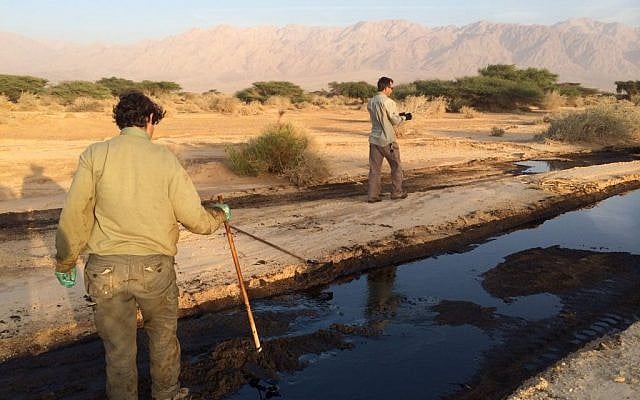
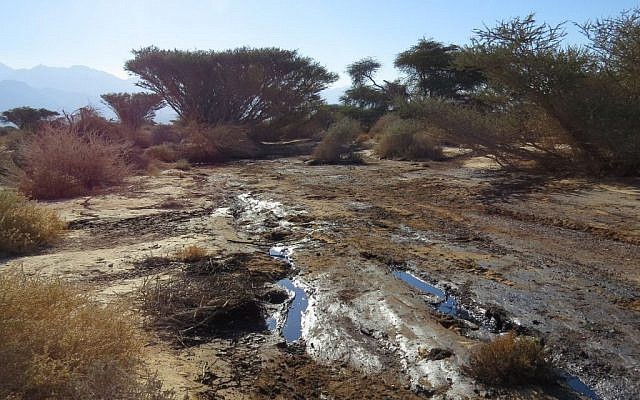
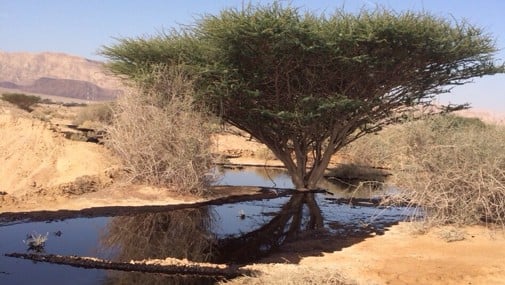
The cabinet approved Sunday a NIS 17 million ($4.4 million) plan to rehabilitate areas in the south of the country that were affected earlier this month by a massive oil spill described as the worst ecological disaster in the country’s history.
The plan, put forth by Deputy Environmental Protection Minister Ofir Akunis, would seek to reverse damage caused to the Arava desert and the Evrona nature reserve, where some 5 million liters of oil spilled from a damaged pipeline on December 4.
In addition to the funding, a specialized team will be established to investigate the environmental aspects of the Eilat Ashkelon Pipeline Company’s land and sea activities, and will examine the possibility of opening for public use the EAPC’s closed beach in Eilat, which is said to contain rare sea life, the NRG website reported.
The plan includes a directorate to oversee the cleanup efforts. Among the initiatives will be environmental surveys and ground treatment to aid areas harmed by the spill, and the construction of passages for animals over the Arava highway.
The Environmental Protection Ministry will also purchase new equipment that will allow better initial response to emergencies.
Parcels of land adjacent to the Evrona reserve will also be identified for use by visitors and for the reintroduction of animals while affected sites are dealt with.
Also Sunday, the Supreme Court ruled that the state has 30 days to respond to a petition by the environmental group Israel Union for Environmental Defense demanding that the confidentiality on the EAPC be lifted.
The IUED wants to have the company reveal details of its operation of the pipeline, and of its handling of the spill’s aftermath.
The EAPC operates in secrecy, as a result of ongoing legal proceedings between Israel and Iran, which was a partner in the pipeline before the Islamic Revolution in 1979.
The plan approved by the cabinet would force the EAPC to contribute to clean-up efforts.

“This is an initial and immediate response to the harm caused to the entire public and to the fauna and flora in the Arava area. We will apply the Polluter Pays principle on the EAPC,” Akunis had said in a statement when he proposed the plan.
The Polluter Pays act allows the incarceration of polluters for up to three years and the imposition of fines of up to NIS 2.4 million ($ 600,000).
The EAPC said that the Trans-Israel pipeline was damaged during maintenance, sending millions of liters of oil gushing into the southern desert and severely damaging a nature reserve and other areas.
An EAPC spokesperson said the line, which facilitates the transport of crude oil between Europe and Asia, burst due to “a technical error.”
Over 80 people were treated for medical problems on both sides of the Israel-Jordan border following the spill, as crude oil flooded the Route 90 highway leading into Eilat. The vast majority of those initially affected were in Jordan.
The Eilat Ashkelon Pipeline Company was established in 1968 as a joint Israeli-Iranian venture to carry Asian oil from Eilat to Europe via a network of pipelines that reach from Eilat to Ashkelon and cover the length of Israel to Haifa.
According to the EAPC website, the company operates 750 kilometers of pipelines in Israel.
As relations between Israel and Iran deteriorated, the latter partner dropped out of the arrangement and the company is now managed only by Israel.
According to the Hebrew daily Yedioth Ahronoth, the oil company’s pipelines have suffered a series of contaminating leaks over the past eight years.
In 2007, some 40 tons of oil leaked from a pipe near Tirat Carmel in the north of the country. In 2011, a tractor working on an EAPC project hit one of the company’s pipelines, releasing 1.5 million of liters of jet fuel into the Nahal Zin river in the south of the country. Weeks later, another company tractor hit the same pipe barely half a kilometer away, causing yet-another leak.
In 2012, seepage from an EAPC pipe near the Givati Junction near Ashkelon required the removal of some 2,000 tons of contaminated soil.
Other incidents included a burst pipe near Poleg in 2008, and oil leaks into the sea in 1998,1999, and 2002 that eventually saw the company fined NIS 100,000.
Eight months ago, there was another leak at a facility in Eilat.
Yedioth Ahronoth reported that, so far, no individuals have even been brought to trial over the leaks.
Stuart Winer and Adiv Sterman contributed to this report.








The Times of Israel Community.