

Not just Netanyahu: The other 4 lawmakers who may need immunity from prosecution
Gambit to save PM could also help prevent corruption charges against Shas leader Deri, Likud’s Haim Katz and David Bitan; UTJ chief Litzman accused of aiding alleged pedophiles

 Add ToI as a Preferred Source on Google
Raoul Wootliff is a former Times of Israel political correspondent and Daily Briefing podcast producer.

Prime Minister Benjamin Netanyahu’s reported plan to advance legislation to render himself immune from prosecution in three criminal cases, and also to prevent the Supreme Court from intervening in this effort, may benefit other lawmakers as well.
In addition to Netanyahu, four other lawmakers — both MKs and ministers — are facing their own legal troubles, to different degrees, and the gambit for automatic immunity could benefit them just as much.
Netanyahu is a suspect in three criminal probes, dubbed by police cases 1000, 2000 and 4000, in which investigators have recommended graft indictments. Attorney General Avichai Mandelblit announced in February that he intended to indict Netanyahu in all three cases, pending a hearing, which is expected to take place in October.
In a 55-page draft indictment issued on February 28, Mandelblit, who has overseen the criminal investigation of the prime minister, said he intends to charge Netanyahu with fraud and breach of trust in all three cases, and with bribery in one of them. Case 1000 involves accusations that Netanyahu received gifts and benefits from billionaire benefactors including Israeli-born Hollywood producer Arnon Milchan in exchange for favors; Case 2000 involves accusations that Netanyahu agreed with Yedioth Ahronoth newspaper publisher Arnon Mozes to weaken a rival daily in return for more favorable coverage from Yedioth; and Case 4000, widely seen as the most serious against the premier, involves accusations that Netanyahu advanced regulatory decisions that benefited Shaul Elovitch, the controlling shareholder in the Bezeq telecom giant, to the tune of hundreds of millions of dollars, in exchange for positive coverage from its Walla news site.
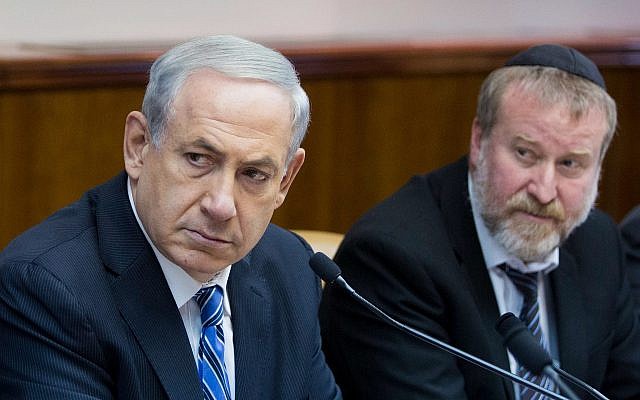
Netanyahu denies any wrongdoing. He has alleged that the investigation, the police recommendation to charge him, and Mandelblit’s decision to press charges pending a final hearing, constitute a witch hunt involving the political opposition, the media, the police and the state prosecution.
Speculation has swirled that, following his reelection last month, Netanyahu may use his election victory — which his allies have touted as proof that Israelis don’t want to see him indicted — to advance legislation that would immunize him from prosecution as long as he remains prime minister. He is reported to be considering conditioning entry to his new government on potential coalition parties’ support for one of a variety of possible legislative initiatives, including changing the current immunity law and/or a so-called “French law” sheltering a sitting prime minister from prosecution.
It has also been reported that Netanyahu wants to advance legislation that would prevent the Supreme Court from subsequently overturning a Knesset decision to grant him immunity, as part of a highly controversial legislative initiative to curb the powers of the Supreme Court to “override” Knesset legislation and administrative decisions, and government decisions, that the court regards as unconstitutional. In response to those reports, Netanyahu last week wrote in a Facebook post that he has always supported “a strong and independent court — but that does not mean an all-powerful court.”
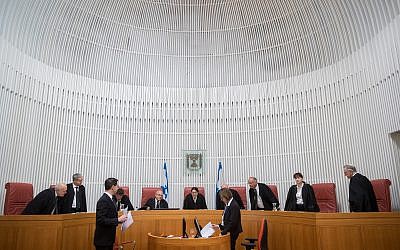
The efforts to pursue legislative immunity have drawn deep criticism from political opponents and legal scholars, who warn that such personalized legislation designed to render a prime minister immune from prosecution for alleged offenses committed while in office would place him above the law and erode the system of checks and balances.
But while Netanyahu’s efforts may indeed be designed to protect help himself from prosecution, he is not the only person who could benefit from granting automatic immunity to lawmakers. And while some have called for the prime minister’s potential coalition partners and own party members to oppose the immunity bid, for at least some of those politicians, doing so could take away their own chance at salvation.
Here are the main suspicions and legal proceedings currently open against Shas leader Aryeh Deri, United Torah Judaism head Yaakov Litzman, and Likud MKs Haim Katz and David Bitan.
Aryeh Deri
In November 2018, police recommended filing charges against Shas chairman Interior Minister Aryeh Deri on suspicion of committing fraud, breach of trust, obstructing court proceedings, money laundering and tax offenses involving millions of shekels. Some of the incidents allegedly occurred while Deri was a cabinet minister.
Mandelblit and State Prosecutor Shai Nitzan are reportedly expected to press charges against Deri by as early as the end of the month.

Deri is suspected of diverting hundreds of thousands of shekels in state funds to NGOs run by members of his immediate family, as well as suspected tax fraud linked to the sale of apartments to his brother.

Police said the investigation into Deri found evidence of “committing offenses of fraud and breach of trust with respect to his conduct in the case of a businessman while serving as minister, as well as for the commission of tax offenses in significant amounts of millions of shekels, money laundering, disruption of court proceedings and making false statements to the Speaker of the Knesset about his assets and revenues.”
The suspicions against Deri did not include allegations of bribery which, according to media reports in April, were dropped due to lack of evidence. Deri, who has denied wrongdoing, “welcomed” the conclusion of the investigation and said he was “satisfied” that several suspicions initially investigated were not included in the indictment recommendations.
No stranger to corruption allegations, Deri served 22 months in prison from 2000 to 2002 after he was convicted of taking bribes as interior minister in the 1990s.
He reclaimed the leadership of his Shas party shortly before the 2015 Knesset elections, replacing Eli Yishai. He returned to his Interior Ministry post in 2016, after a court ruled his prior conviction did not disqualify him from the position.
Ya’akov Litzman
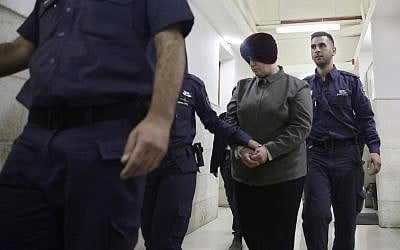
Deputy Health Minister Yaakov Litzman Litzman, who heads the United Torah Judaism party and is expected to remain in his government post in the next government, has been under police investigation since February on suspicions he sought to obtain a falsified psychiatric report that would have prevented charged sex offender Malka Leifer from being extradited to Australia, as well as suspicions that he helped other accused sex offenders.

Leifer, a former principal at the Adass Israel school in Melbourne, has been charged in Australia with 74 counts of sexually abusing her students. Her extradition from Israel has been delayed by her claims to be mentally unfit to stand trial. An Israeli citizen, she slipped out of Australia and went back to Israel in 2008, days before allegations of sexual abuse against her surfaced, in an escape plan allegedly orchestrated by members of the Gur Hasidic community, to which Litzman belongs.
Police also reportedly suspect that Litzman and his chief of staff pressured a psychiatrist, Moshe Birger, to ensure that another imprisoned sex offender close to the Gur sect was placed in a rehabilitation program. Participation in the program can lead to home-visit rights and early release from prison.
According to an investigative Channel 13 report last month, Litzman allegedly helped at least 10 serious sex offenders obtain improved conditions, including home visits and other benefits, by pressuring state psychiatrists and prisons service officials.
Litzman has denied any wrongdoing, saying his assistance to Leifer was part of his general effort to assist any citizen who appeals to his office for help, and calling the other suspicions “lies and slander that never happened.”
Haim Katz
Welfare Minister Haim Katz, a veteran Likud MK, is a criminal suspect in two separate corruption investigations, one over allegations he used insider information for financial gain and may have received funds in return for political favors, and a second over suspicions that he used his position as head of the Israel Aerospace Industries workers’ union to advance his own interests.
Last May, Mandelblit informed Katz that he would be charged with bribery, fraud and breach of trust pending a hearing, over an illicit quid pro quo with Mordechai Ben Ari, a leading figure in capital markets, in which Katz allegedly accepted financial benefits in return for using his position in the Knesset to advance the businessman’s interests.
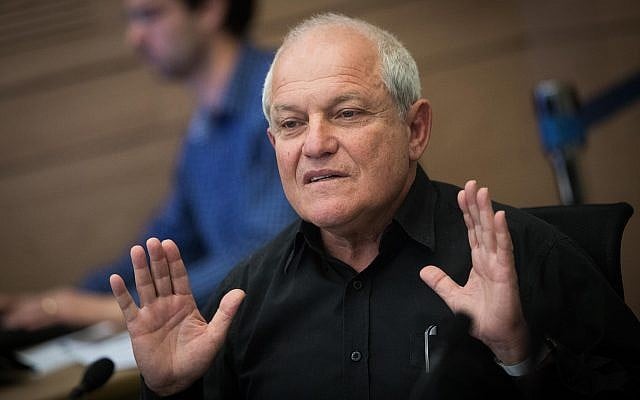
Prosecutors suspect that during the years 2010-2015 Katz and Ben Ari developed a mutually beneficial relationship. Ben Ari, who was a financial adviser for a major public holding company, is suspected of providing free financial management for Katz, earning him millions of shekels. In return, Katz, who in 2009-2013 was the chair of the Knesset Labor and Welfare Committee, allegedly advanced business interests for Ben Ari.
Separately, in February this year, police recommended that Katz be indicted on bribery, fraud, extortion and breach of trust charges over suspicions that he used his position as head of the Israel Aerospace Industries workers’ union to advance his own interests, including promising lucrative employment — both inside and outside the company — to IAI board members who cooperated with him. Katz was head of the powerful union for two decades before becoming a Likud minister in 2015.
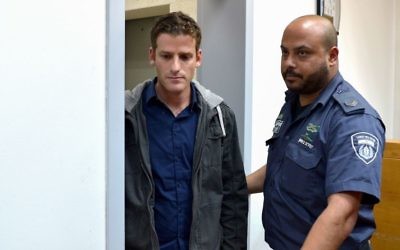
The investigation is part of an ongoing probe into corruption suspicions at Israel Aerospace Industries with other dubious links to Katz. His son, Yair Katz, who serves in the senior management of the IAI and has been a member of the workers’ union for four years, was arrested last year on suspicion of coercing employees into joining the Likud party. Police said they were looking into allegations that employees at IAI who refused to register as members of the Likud party may have been systematically denied promotions or raises in salary, and in some cases were even fired.
The labor union at IAI, which employs some 16,000 people and is Israel’s largest state-owned company, is known as a Likud stronghold.
Katz, like Netanyahu, has denounced all the allegations as a “witch hunt” aimed at harming his reputation.
David Bitan
Last month police recommended that Likud MK and former coalition chairman David Bitan be indicted on multiple corruption charges including bribery, fraud and money laundering.
In a statement, police said a two-year investigation has yielded sufficient evidence to charge Bitan, a key Netanyahu ally, with accepting money in exchange for political favors while he served as an MK and previously as deputy mayor of Rishon Lezion.
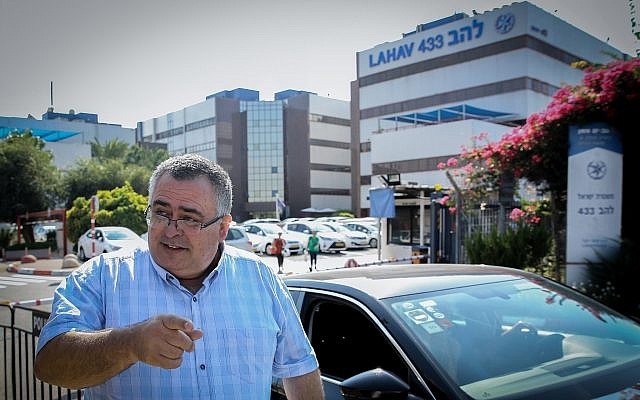
Bitan, 58, stepped down from his role as coalition whip in 2017 after police announced they were investigating him for corruption. He has remained in the Knesset as a Likud lawmaker.
He is accused of receiving bribes from his business associate Moshe Yosef and from businessman Dror Glazer, both while serving as deputy mayor of Rishon Lezion, Israel’s fourth-largest city, and, later as a member of Knesset. Both men have testified against him.
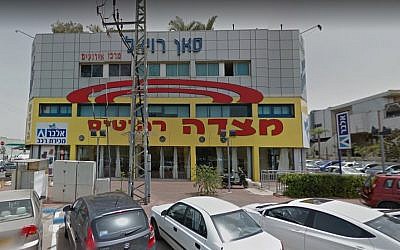
Deputy Tel Aviv Mayor Arnon Giladi and then-Rishon Lezion mayor Dov Zur are also suspects in the alleged bribe-taking scheme that took place between 2011 and 2017. The investigation, dubbed Case 1803, has seen the arrests of a number of suspects, including Rishon Lezion city officials, local businessmen, and organized crime figures.
Police say that Bitan advanced the interests of construction company Danya Cebus by approving real estate deals in Rishon Lezion in exchange for a NIS 430,000 ($119,000) cash payment. The sum paid to Bitan was to secure Danya Cebus’s bid to win a municipal tender to build a gas station on the outskirts of the city as well as approval for another construction project outside Jerusalem on Route 38.
Lahav 433 anti-corruption investigators also said they uncovered evidence that Bitan and Giladi accepted a bribe of NIS 385,000 to secure building permits for three real estate projects in Tel Aviv. Police said some of the bribe money was transferred to Bitan using fake invoices.
Bitan has denied any wrongdoing.
Times of Israel staff contributed to this report.








The Times of Israel Community.