

Opening the door of communication for the ‘locked-in’
Using computers to record neural activity related to speech, a team from the Technion and UCLA is developing a ‘language’ for those who are unable to communicate
 Add ToI as a Preferred Source on Google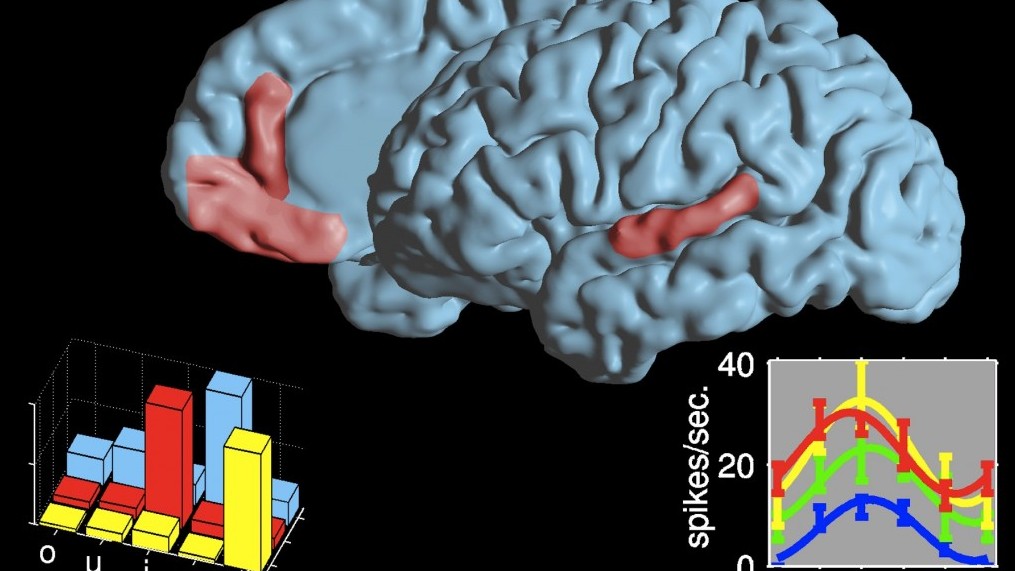
Individuals who are completely paralyzed may one day be able to “speak” using a brain-computer interface that would read the sounds that they are thinking of, based on brain activity.
Research by teams at the Technion and California’s UCLA may lead to technology that could be used to open up a world of communication with people who are unable to speak or even move parts of their body to communicate (known as “locked-in syndrome”). It may even help people who are unable to benefit from the system used by theoretical physicist Prof. Stephen Hawking, which requires slight head or eye movements to work.
In an article in the scientific journal Nature Communication, researchers outlined their work on understanding how neurons in different areas of the human brain encode different speech segments (vowels) when an individual speaks. By reading those signals, the scientists were able to chart which speech segments the study participant intended to say. Using a computer interface to read and interpret that neural activity, paralyzed individuals would only need to think of a letter, or perhaps even a word, in order to get their message out.
The researchers — Prof. Shy Shoham and Dr. Ariel Tankus of the Technion Department of Biomedical Engineering, together with Prof. Itzhak Fried of the University of California Los Angeles (UCLA) and the Tel Aviv University and Medical Center departments of Neurosurgery — studied 11 UCLA epilepsy patients who had electrodes implanted in their brains to pinpoint the origin of their seizures. Using the electrodes, they recorded neuron activity as the patients uttered one of five vowels, or syllables containing the vowels. While the subjects in the experiment were able to speak, the neuron activity would be the same in any individual capable of understanding those speech segments, even if they could not articulate them, the researchers said.
During their examinations of the epilepsy patients, the researchers discovered that two areas of the brain (superior temporal gyrus and medial frontal lobe) react differently when various vowels are spoken. Correlating the information, the team was able to discover a common “language” for the neural activity that could be analyzed using the electronic data generated by the brain’s neural activity.
“In our experiments we identified cell populations that distinctly participate in the representation,” said Shoham. “For example, cells we registered in an area in the medial frontal lobe that includes the anterior cingulate cortex, surprised us in the manner in which they ‘sharply’ represented certain vowels but not others, even though the area is not necessarily known as having a major role in the speech generation process.”
That data, he added, allowed the team to begin what is likely to be a long process of establishing the parameters of this neural language, and developing practical applications to help people. “There are diseases in which the patient’s entire body is paralyzed, and he is effectively ‘locked in,’ unable to communicate with the environment, but with a mind that still functions,” Shoham said.
“Our long term goal is to restore these patients’ ability to speak using systems that will include implanting electrodes in their brains, decoding the neural activity that encodes speech, and sounding artificial speech sounds.”
And once that is accomplished, said Tankus, the world of those with locked-in syndrome may well become an open book. “We have developed a new algorithm that improved greatly the ability to identify from brain activity which syllable was articulated, and this algorithm has allowed us to obtain very high identification rates,” he said.
“Based on the present findings, we are currently conducting experiments toward the creation of a brain-machine interface that will restore people’s speech faculties.”










The Times of Israel Community.