

Palestinians say Marwan Barghouti’s health ‘dangerously deteriorating’
Israel Prisons Service spokesman says he’s ‘not aware’ of decline; adds, ‘If he does not feel well, he can eat’
 Add ToI as a Preferred Source on Google
Dov Lieber is a former Times of Israel Arab affairs correspondent.
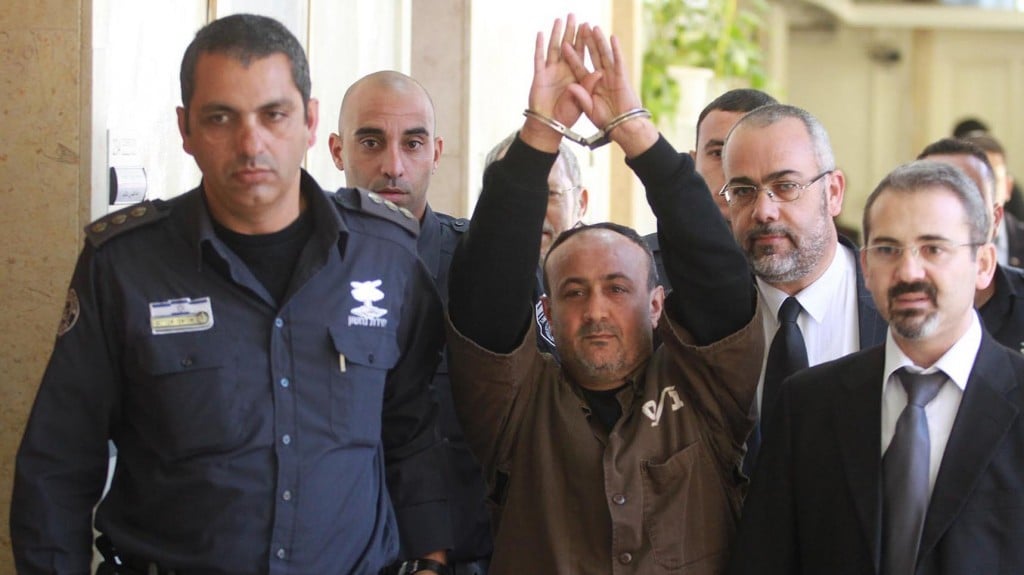
Palestinian officials said the health of jailed Fatah leader Marwan Barghouti, who has been leading a hunger strike since last Monday, is “dangerously deteriorating.”
According to the Media Committee for the Palestinian Prisoner Hunger Strike, the director of the Kishon Prison in northern Israel has asked Barghouti to get medical treatment. Barghouti has declined the treatment, according the report published by the official Palestinian Authority news agency Wafa.
A spokesperson for the Israeli Prisons Service said he was “not aware” of any signs that Barghouti’s health was declining.
“The hunger strike is his choice. If he does not feel well, then he can eat,” the Prisons Service spokesman said.
Barghouti, a Fatah party leader, is serving five life sentences after he was convicted in 2004 in a civil court of initiating and planning multiple deadly terror attacks against Israeli civilians during the Second Intifada.
An estimated 1,000 Palestinian prisoners, mostly from the Fatah organization and including many convicted terrorists, are taking part in the open-ended hunger strike announced last week in a bid to improve their conditions in Israeli prisons.
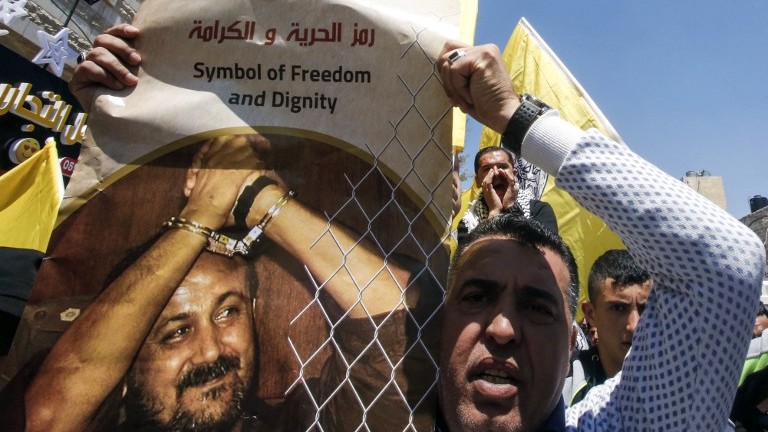
Many Israeli and Palestinian analysts have speculated that Barghouti organized the strike in a bid to boost his declining power in Palestinian politics.
It is not clear how the Palestinians would know of Barghouti’s health, as he has been held in solitary confinement since the start of the strike of the strike.
However, according to the report in Wafa, fellow prisoner Nasser Abu Hamid was asked by the IPS to convince Barghouti to get medical treatment.
Hamid declined, according to the report, saying if Barghouti did die, “he will die a martyr.”
Hamid was then transferred from Kishon to Eshel prison, the report said.
Barghouti was apparently moved to solitary confinement as punishment for submitting an op-ed to the New York Times announcing the hunger strike without first obtaining the Prisons Service’s permission, a violation of prison rules.
Some 6,500 Palestinians are currently detained by Israel for a range of terror offenses and crimes. Around 500 are held under administrative detention, a controversial counter-terror practice that allows for extended imprisonment without charge.
Palestinian prisoners have previously mounted hunger strikes, but rarely on such a scale.
Among the demands made by Barghouti and fellow prisoners are the resumption of a second monthly visit by family members (a benefit that was canceled by the International Committee of the Red Cross last year due to budget cuts), the prevention of family meetings being canceled for security reasons, extending the length of each visit from 45 minutes to an hour and a half, and the restoration of academic studies and matriculation exams for prisoners. Other demands include more television channels being available in cells and the installation of public telephones in security wings.
The IPS has said that 184 prisoners quit the strike, including 84 prisoners affiliated with the Hamas terror group. However, Palestinian Authority Prisoner Affairs Minister Issa Qaraqe denied that any prisoners had quit the strike, and claimed over 80 new prisoners joined it over the weekend.
Times of Israel staff and agencies contributed to this report.








The Times of Israel Community.