

Paternal doomsayer Netanyahu fights virus, and accusation he’s undoing democracy
‘I’m trying to save the citizens, you, my children,’ the PM declared, depicting himself as Captain Bibi steering Israel around icebergs as Titanics founder in its wake

 Add ToI as a Preferred Source on Google
David Horovitz is the founding editor of The Times of Israel. He is the author of "Still Life with Bombers" (2004) and "A Little Too Close to God" (2000), and co-author of "Shalom Friend: The Life and Legacy of Yitzhak Rabin" (1996). He previously edited The Jerusalem Post (2004-2011) and The Jerusalem Report (1998-2004).
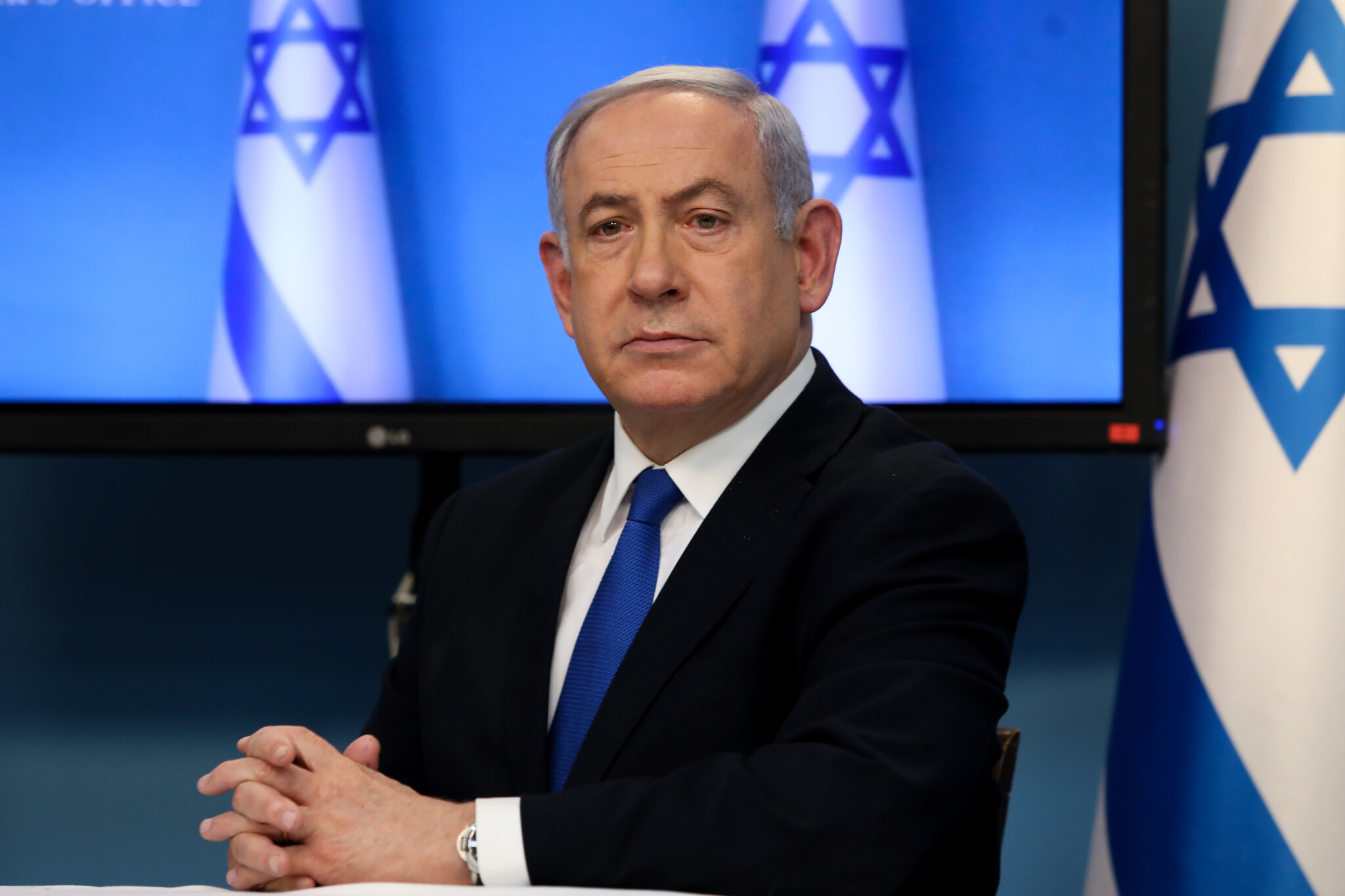
On Saturday night, Prime Minister Benjamin Netanyahu gave a remarkable television interview. He was alternately terrifying, aggrieved and paternal. But never — in the midst of both a pandemic and a political fight in which he is accused of seeking to neuter Israeli democracy, and under questioning by an accomplished interviewer who made plain the widespread mistrust of his integrity — was he remotely discomfited.
Speaking soon after the end of Shabbat to Channel 12 news — the country’s most popular television station, at a time of peak viewing further enhanced by the fact that the coronavirus semi-lockdown has rendered the entire country a near-captive audience — Netanyahu sketched out a global doomsday scenario in which he, alone, is awake and astute at the helm, steering Israel between icebergs as other nations sink like “Titanics” behind him.
Ten days ago, he compared the coronavirus pandemic to the Spanish flu, which killed an estimated 50 million people in 1918. On Saturday night, he repeated that parallel but warned that it might not prove sufficiently grim. This could turn out to be the worst threat to humanity since the Middle Ages, he suggested; even the scientists, he asserted, were praying to the Creator for inspiration and salvation.
Evidently untroubled by the prospect of US President Donald Trump being briefed on everything he was saying, he predicted that healthcare systems the world over would collapse if the virus is not soon stopped, said countries like Spain, Italy, France and the UK that didn’t quickly close their borders were now “on the edge of losing control,” and then added, in soft and fearsome tones, that the US too was in big trouble, similarly at risk of being overwhelmed by astronomical numbers of ailing citizens.
When his interviewer, the skilled Dana Weiss, tried to interrupt him and move the conversation on to issues such as Israel’s economic meltdown, the too-slow pace of testing, and the lack of protective gear for medical workers, Netanyahu, aggrieved, assured her he would answer her questions, but first wanted to stress that everything he was doing, as he worked night and day and, yes, even on the Shabbat, was aimed at trying “to save the citizens, you, my children.”
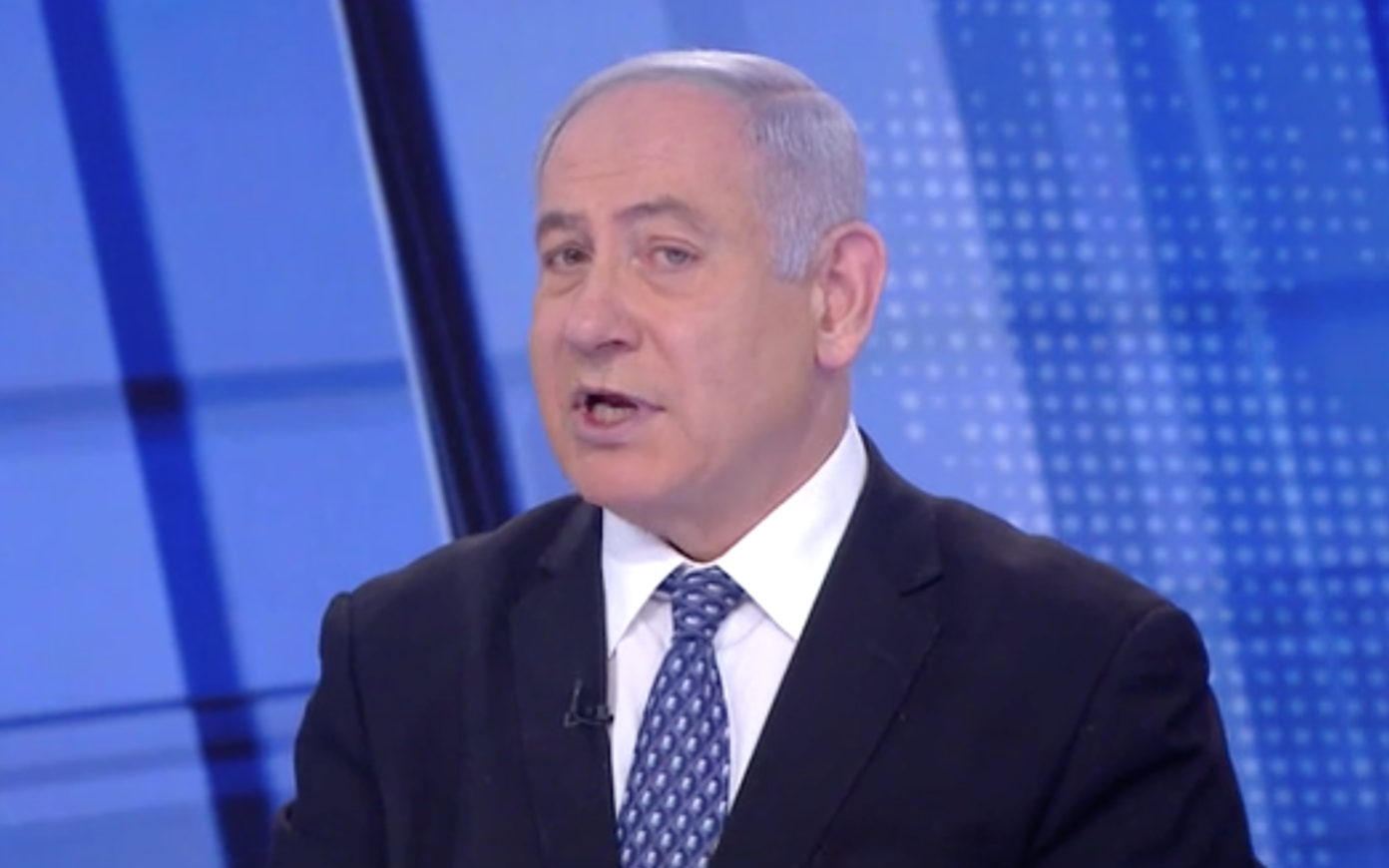
True to his word, he did then address all her questions. He acknowledged that “we’re destroying the economy” right now. He acknowledged that the rate of testing needs to improve. He acknowledged that Israel was short of protective gear for its heroic medical professionals. And he promised that he was doing everything in his power to address all these matters — as he doubtless is.
He also posited a strategy for beating the virus and healing the economy, via huge numbers of blood tests to establish which Israelis were healthy, had developed antibodies to beat the virus, and could quickly get back to work.
Next, with Weiss shifting the interview toward Israel’s simultaneous political deadlock, Netanyahu set out his “super-generous” terms for a unity partnership with his political rival, former IDF chief Benny Gantz. The way Netanyahu told it, he has proposed a beyond-fair power-sharing arrangement, Gantz is inclining to accept it, but others in Gantz’s Blue and White party are preventing it — a narrative that Blue and White denies; on Sunday, indeed, Blue and White said it has received no such offer.
Under Netanyahu’s terms, he would stay on as prime minister for the next 18 months, leading an emergency coalition whose central initial focus would be to battle the virus, and then make way for Gantz who would take the helm for another year and a half. Weiss, aware of how utterly Netanyahu is mistrusted by Gantz, asked him to look into the camera and swear that he would really, truly, hand over power as that deal would require in September 2021. Thoroughly unfazed by this challenge to his honesty, Netanyahu immediately assented, staring into the lens and promising Gantz and the rest of the watching nation that he would indeed step aside on the due date “with no tricks, no messing about.”
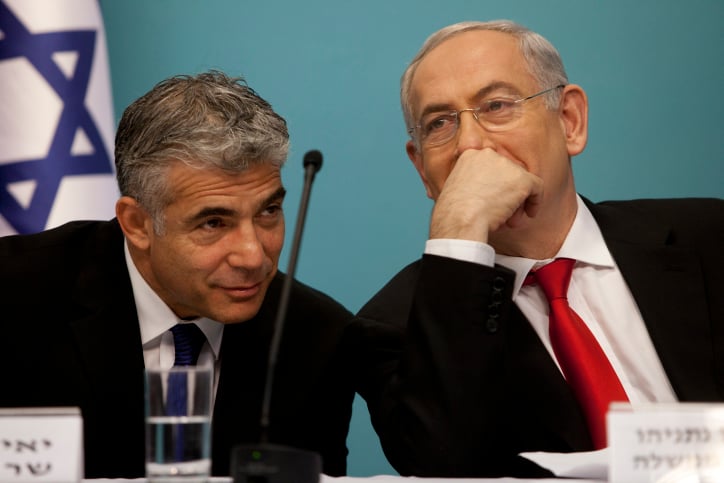
Netanyahu has long since calculated that if Gantz joins him in government, Blue and White will likely collapse; the party’s only unifying purpose, after all, is to oust him. And if Gantz resists, and tries to form a government without Likud and supported by the Joint List of mainly Arab parties, he’ll either fail in the act or the coalition will collapse soon after — leaving Netanyahu supremely well-placed for yet fourth elections.
Unity, Netanyahu insisted repeatedly on Saturday night, was the imperative of the hour. And those who are resisting it — specifically Blue and White No. 2 Yair Lapid — are essentially acting against the national interest. Tellingly, it is indeed Lapid and Blue and White No. 3 Moshe Ya’alon who most mistrust Netanyahu; both previously served as ministers in his governments.
Minutes after Netanyahu had concluded his interview, Ya’alon was appearing on the same channel to accuse Netanyahu of dragging Israel into a dictatorship — with the Knesset temporarily suspended, and no parliamentary oversight of radically intrusive measures to monitor all Israelis’ movements and warn them if they have been in unwitting contact with coronavirus carriers. But Netanyahu had preemptively moved to defuse the accusation that he was destroying democracy, by blaming the intransigent Blue and White for the Knesset deadlock that led Likud Knesset Speaker Yuli Edelstein to shutter the plenum on Wednesday.
Netanyahu could be right: The pandemic could end up taking tens of millions of lives worldwide. The 1%-4% death toll figures he cited for those infected could turn out to be accurate. Or they could drop drastically as more and more people are tested and found to be infected but well able to shrug off the contagion. Right now, nobody, no matter how expert, can make definitive assessments.
If things prove as chillingly appalling as he suggested, he will be vindicated. If his stewardship proves capable of sparing Israel from the worst of such ravages, he will be rightly adulated.
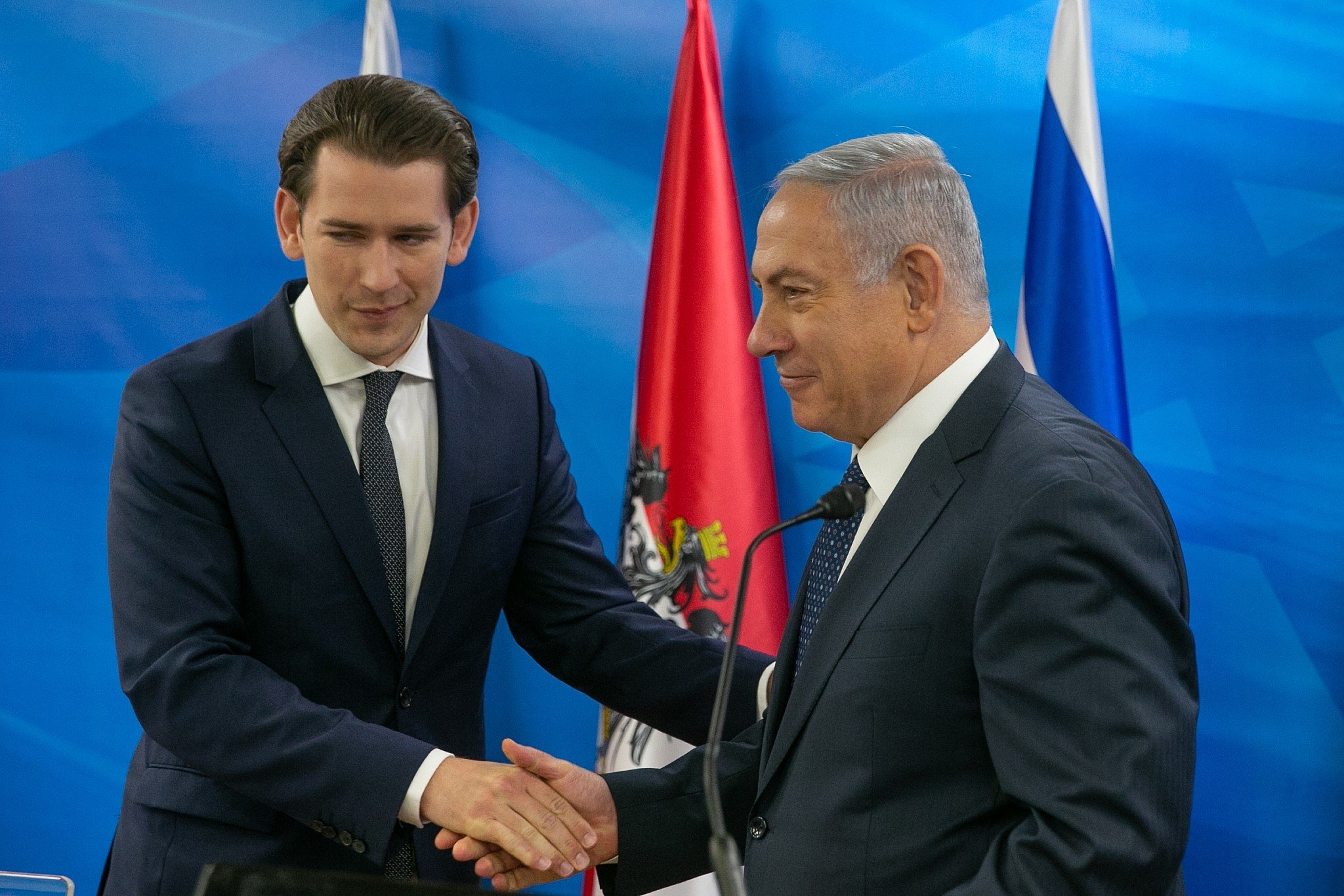
And here’s the thing: If his horrifying assessments prove wide of the mark, he will be able to argue that he was at the forefront of saving not only Israel but also some of the rest of the world from devastation. For it was he who acted so promptly to close off Israel, and also to advise other world leaders wise enough to heed him on the actions they should be taking. (Sebastian Kurz said Friday that it was a phone conversation with Netanyahu that “shook” him into instituting stringent measures in Austria to battle the spread of the virus.)
As the world struggles to deal with this terrifying pandemic, and he concurrently battles the virus and allegations that he’s subverting democracy, Netanyahu is managing to keep his head far, far above water, Captain Bibi guiding the good ship Israel as other vessels in less experienced hands founder in its wake.
Who remembers that it was Gantz who was charged by the president last Monday with forming Israel’s next government?







The Times of Israel Community.