

PM’s harsh reaction to EU initiatives may come back to haunt him
Invoking the Holocaust in critiquing Europe’s latest actions, Netanyahu might score some points locally, but he’s not making friends overseas
Raphael Ahren is a former diplomatic correspondent at The Times of Israel.
When it became clear earlier this month that Israel was headed for early elections, some international policymakers were undecided as to whether to maintain their push for an Israeli-Palestinian agreement or take a hiatus of three-plus months.
Some European officials figured that it wouldn’t make much sense to press ahead until Israel had a new government with a fresh mandate from the people to take the decisions required for an accord. Overt pressure on Jerusalem in the course of the campaign would also likely help the right-wing parties, these officials calculated, and they consequently urged their governments to refrain from announcing additional measures that could be perceived as anti-Israeli.
Not all the players held that view. Others considered the issue too urgent, and the situation on the ground too volatile, for the process to be frozen. And anyway, they figured, Benjamin Netanyahu would probably still be prime minister after the elections, so there was no reason for further delay.
And yet the events of the past few days, which the Israeli media have taken to repeatedly describing as a “diplomatic tsunami,” were set in motion before the coalition collapsed.
The Palestinians had long threatened to go to the United Nations Security Council with a resolution calling for the swift creation of their state and an imposed timetable for an Israeli withdrawal to the pre-1967 lines. They finally had Jordan submit the resolution on Wednesday because of mounting pressure on Mahmoud Abbas to do something in the face of diplomatic stalemate, not because of Israel’s domestic political situation. The decisions by the European Union’s parliament in Brussels, to support “in principle” the recognition of a Palestinian state, and by the EU Court of Justice in Luxembourg, to temporarily remove Hamas from its list of terrorist organizations for technical reasons, had also been in the pipeline for quite some time. Similarly, the call to investigate Israel for alleged violations of the Geneva Convention arose from a gathering arranged long before Israel’s unexpected lurch to elections.
The almost hysterical way in which the Israeli government has reacted to these events, however, does have a great deal to do with the elections. It was to be expected that Netanyahu and Foreign Minister Avigdor Liberman would reject efforts to condemn Israel or to coerce it into concessions vis-à-vis the Palestinians. But the furious vigor with which they responded, notably including the invoking of the Holocaust by Netanyahu in his responses, was transparently intended to impact far more upon the voters at home than the critics in the international community.
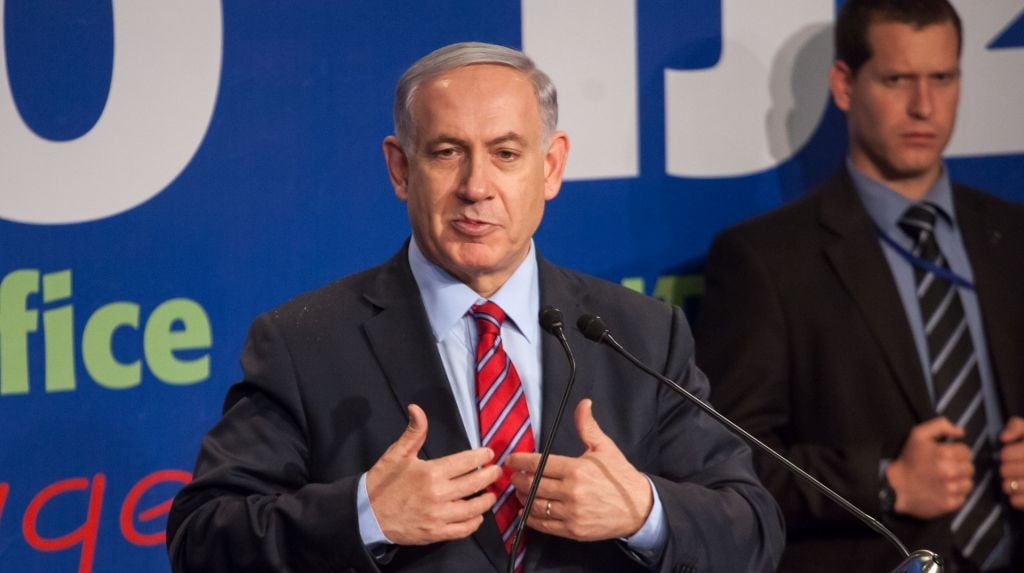
On Wednesday, Netanyahu spoke of the Europeans with utter contempt, mixed with a dose of presumption. “Today we witnessed a series of examples of European naivety, and may I add, hypocrisy,” he told foreign reporters in Jerusalem. The decisions in Luxembourg, Brussels and Geneva — “all these point in the same direction. They point to a spirit of appeasement in Europe of the very forces that threaten Europe itself.”
The Europeans are calling on Israelis to make concessions that would not only endanger the Jewish state, he charged, “but also paradoxically, the security of Europe itself because Israel is the forward position of European civilization. Israel is the bulwark of European values. Israel is a pluralist, vibrant multiparty democracy.”
Earlier on Wednesday, Netanyahu had sounded even more vitriolic. Europe’s hypocrisy is “staggering,” he declared. “It seems that too many in Europe, on whose soil six million Jews were slaughtered, have learned nothing.”
To at least some Israeli voters, the prime minister presumably calculated, this would have sounded like a strong Jewish leader saying what needed to be said in the face of blatant anti-Semitism. To many Europeans, equating a legal glitch and some symbolic pro-Palestine resolutions with the Holocaust must have sounded tasteless, cynical, defamatory and unjustified.
Netanyahu’s bitter statements, needless to say, will not shift the EU’s Middle East policies by one iota. Unless, that is, they make Eurocrats even more keen to turn the screws on Israel.
After the ambiguous outcome of this summer’s Gaza war, it will be difficult for the prime minister to claim that he’s “tough on Hamas,” as his former campaign slogan promised. At least he can now pride himself on being tough on the European Union.
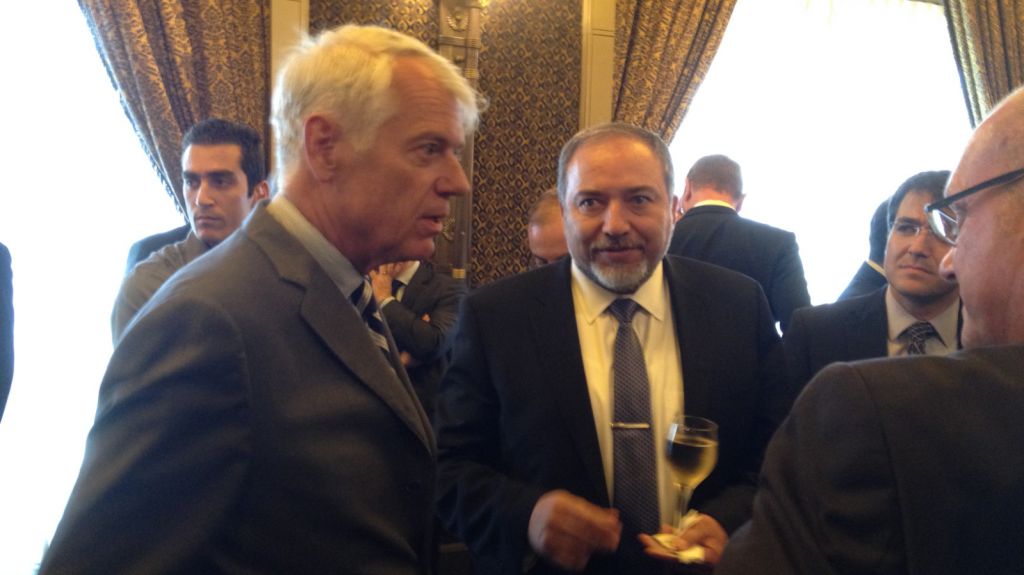
Meanwhile, Liberman — who in recent weeks had been trying to sound like the government’s responsible adult, admonishing the prime minister for his lack of a peace plan — also lashed out at the Europeans.
EU states promoting pro-Palestine initiatives are akin to a “person who brings a burning match to someone holding a powder keg in his hand,” the foreign minister declared. “These countries help no one and are simply acting out of their own internal political and social interests, without caring about the results here in the Middle East.”
Liberman also decided to boycott the upcoming Israel visit of Swedish Foreign Minister Margot Wallström, because Sweden was the first Western European state to recognize the state of Palestine. The move got the Yisrael Beytenu chief some applause from nationalist-minded Israelis. It, too, however, will do nothing to improve ties with Europe.
For the remainder of the election campaign, the EU will probably tone down its criticisms of Israel (unless there are new announcements of construction beyond the Green Line, which draw automatic condemnations). No new sanctions or pro-Palestine resolutions are likely to be introduced before Israel has a new government.
But the EU will not forgive and forget. If Netanyahu and Liberman are returned to office, the Europeans will be back with a vengeance. Their barely suppressed hope, shared with the Obama administration, however, is that there will be new, more receptive leaders in Jerusalem.







The Times of Israel Community.